
As the country moves into 2026, the grocery industry stands at a pivotal moment in time. Inflationary pressures may have eased, but retailers still face persistent cost challenges, Trump tariffs and higher expectations from consumers. In response, grocers are embracing bold, hyper-local strategies designed to deliver
relevance, resilience and growth in an era best defined by disruption.
For 2026, the industry is expected to see moderate growth with a continued focus on value and price, alongside a shift toward more experience-driven physical stores. Key trends include offering more foodservice options, AI for personalization, a rise in private label products, and evolving consumer priorities around health and simplified sustainability. Automation in areas like inventory management will also continue to increase operational efficiency.
Consumers Cautious but Some Growth
Sujeet Naik, analyst at Coresight Research, estimates that the U.S. grocery retail sector will grow 3.2% in 2026 to reach $1.59 trillion, driven largely by average grocery inflation of about 2.7%, while volume growth remains muted at just 0.5% as consumers stay cautious. He notes that this backdrop will reinforce value-seeking behaviors, sustaining trade-down trends and accelerating share gains for mass merchandisers, warehouse clubs and discounters.

“Main trends in 2026 will center on value, wellness and convenience. Private label will continue to expand as shoppers look for better prices without sacrificing quality. Health-driven categories — such as high-protein; portion-controlled, functional beverages; and ‘GLP-1-friendly’ assortments — will see strong momentum, following consumer adoption of GLP-1 drugs and demand for healthier eating options,” Naik explains.
He adds that in terms of services, retailers will broaden same-day and ultra-fast delivery offerings, expand in-store retail media networks (RMNs), and integrate AI into pricing, promotions and product discovery, including emerging agentic commerce tools that help shoppers generate lists, meals and orders through natural language assistants like ChatGPT.
Shift to Lower-Priced Brands
“As we look toward 2026, supermarkets must recognize that affordability and convenience have become nonnegotiable for today’s shoppers. Research from our ‘Consumer Outlook: Guide to 2026’ report shows that 32% of consumers are switching to lower-priced brands, while 30% are deciding to purchase private label/store brands as intentional cost-saving strategies,” says Steve Zurek, vice president of thought leadership at NielsenIQ.

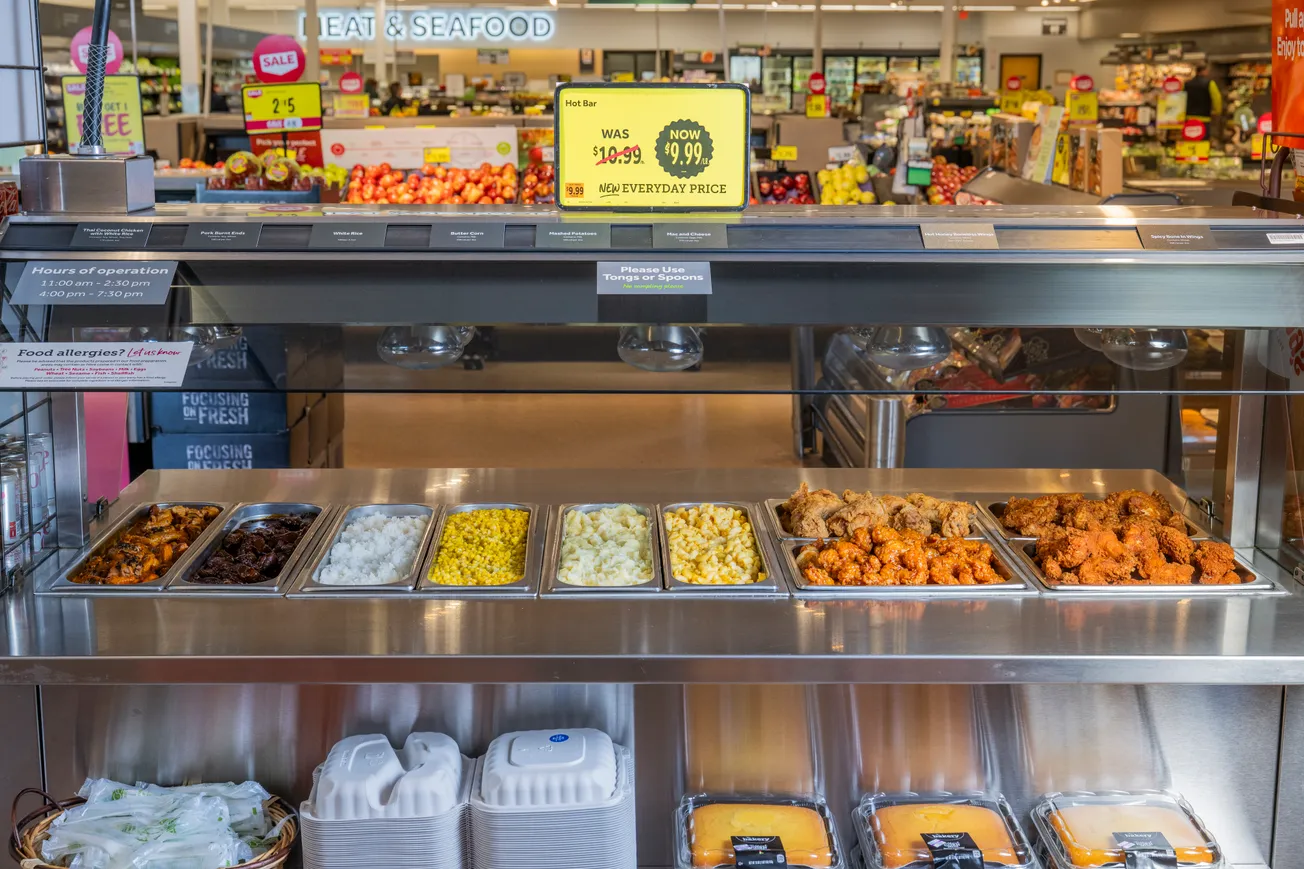
“However, this isn’t simply about trading down. It’s about trading smart. Private label is no longer viewed as a compromise. In fact, private labels are delivering over 3.6% value growth. Retailers who invest in elevating their private label offerings with better packaging, cleaner ingredients and localized trust will capture the loyalty of budget-conscious yet quality-focused consumers. At the same time, convenience formats that support seamless shopping experiences, from click-and-collect to grab-and-go prepared meals, will be essential for meeting consumers where they are in their increasingly time-pressed lives,” he adds.
Zurek points out that equally important to value and convenience is the health and wellness movement, which is no longer relegated to specialty aisles. “It’s reshaping core categories across the store. 38% of U.S. consumers say they take proactive measures to look after their health to prevent issues in the future, signaling a shift toward preventive wellness rather than reactive treatment. This trend is being accelerated by the global rise of anti-obesity medications (AOMs), with over one-third of global consumers saying they’re likely to use a medication or drug to support weight loss. The AOM effect is already reshaping consumption patterns, with research showing that consumers taking these medications are consuming up to 40% fewer calories, leading to a 6% reduction in grocery spend overall and 9% for high-income households. For supermarkets, this means significant opportunity in functional snacking, portion-controlled formats and metabolic health-focused products.”
AOM Products on the Rise
“Retailers should look to products with AOM-friendly claims, which are already generating $271 million in sales in the U.S., while products that qualify to make these claims represent $117 billion in total sales. Beyond AOMs, consumers are increasingly willing to pay premiums for products that align with their wellness values. More than 50% of consumers are willing to pay more for fresh products without preservatives; healthier options; and GMO-free/organic/natural products,” he adds.
He says supporting both these consumer priorities (value-seeking and wellness-focused shopping) will require supermarkets to embrace technology that creates more personalized, efficient and engaging experiences. RMNs are transforming how brands and retailers collaborate, with projections showing a gain of $1.3 trillion in enterprise value from retail media in the U.S. by 2026.
“These platforms enable retailers to monetize attention and shelf space while offering consumers more tailored product recommendations and exclusive promotions. Meanwhile, AI-powered product discovery is becoming the go-to for consumers, though trust remains a critical factor. The stakes for getting this right are high: Inflated ad costs from AI scrapers and bots cost businesses $238.7 billion in 2024, and almost 50% of internet traffic is non-human, with ‘bad bots’ comprising nearly one-third of all traffic. Retailers who can leverage AI to create authentic, value-driven experiences rather than merely automated ones will build deeper customer relationships,” says Zurek.
“The omnichannel revolution underscores why this technology investment matters so much. Amazon commands 17.5% share of value and is seeing over 1.1 point growth year over year, while value retailer Walmart attracts 85.0% buyer share with more than 0.1 point growth. The message is clear: Seamless commerce across digital and physical touchpoints, supported by intelligent personalization, will be the baseline expectation for shoppers in 2026. Supermarkets that can deliver on the trifecta of value, wellness and tech-enabled convenience will be the ones that thrive in the year ahead,” he concludes.
Many Drivers of Change in 2026

Rob Dongoski, Kearney’s global lead of the food and agriculture sector, says that many have talked for a while about the food system transformation but he thinks 2025 will be marked as the pivotal year. “We are seeing both structural and systemic change, and there is no expectation this will slow down in 2026 or subsequent years,” he says. There are many drivers of change, but he highlights the following:
• Consumer preferences — Gen Z, GLP-1, increased focus on health and desire for natural versus artificial — these are some of the factors that are shaping the food consumer diet, which will be filled with more fresh, protein and whey and less processed, carbonated and alcohol.
• MAHA and state-level regulations — Bans on artificial dyes, critical reviews of vaccines at the federal level and state-by-state bans, and warning labels on food packaging are creating tremendous challenges. Reminiscent of the “Vermont label law” issue several years ago, we are now facing contradictory regulations from one state to another with limited federal guidance, CPGs are faced with increased costs and complexity in an already challenging environment.
• Uncertain geopolitics and domestic policy — From tariffs to immigration, the food system has seen price and inflation volatility. At the farmer end of the value chain, they are facing increased input costs, lower commodity prices, uncertain export demand and compliance costs.
“Some structural moves are in motion, with KraftHeinz announcing a split, the previous split of Kellogg businesses (i.e., Kellogg and Kellanova) now being sold to Mars and Ferrero and several other brand-level divestitures. Routine portfolio shaping is normal, but the effort now is moving at a frenetic pace, and it is expected to be a multiyear journey for many leading players. Part of this shaping includes packaging renovation and ingredient reformulation based on consumer preferences, commodity volatility (e.g., cocoa) and regulatory compliance. But the transformation is not just about packaged products,” Dongoski explains.
He says fresh produce is in high demand and there is real potential to disrupt the California Central Valley production center. “With high costs to agriculture production in California (e.g., labor, compliance, logistics, etc.) and the consumers’ desire for fresh and local, I would expect to see more innovation in how the fresh category is sourced and delivered in the coming years. We have already seen Schnuck’s move past pilot stage for their concept of bringing the local farmers market concept into the store. On the protein front, there are really two dimensions to consider. First, traditional production and packing across the three main species, which will continue to see price fluctuations from herd sizing, flock disease and normal supply/demand economics. Pork is the one specie that may be most challenged, as Gen Z consumers do not favor pork and will likely increase their protein consumption in other species, including aquaculture. The second area to watch is the protein-infused category, with fermentation techniques gaining traction from both a cost and application basis. Whey is now a primary product that is in high demand, and certain foods are becoming protein fortified as consumers’ protein appetite is not slowing down.”
He concludes by saying, “Bottom line, expect even more innovation, transformation and disruption in 2026 following 2025, a year which witnessed a turning point for the U.S. food system.”
Submit Your Press Release
Have news to share? Send us your press releases and announcements.
Send Press Release