
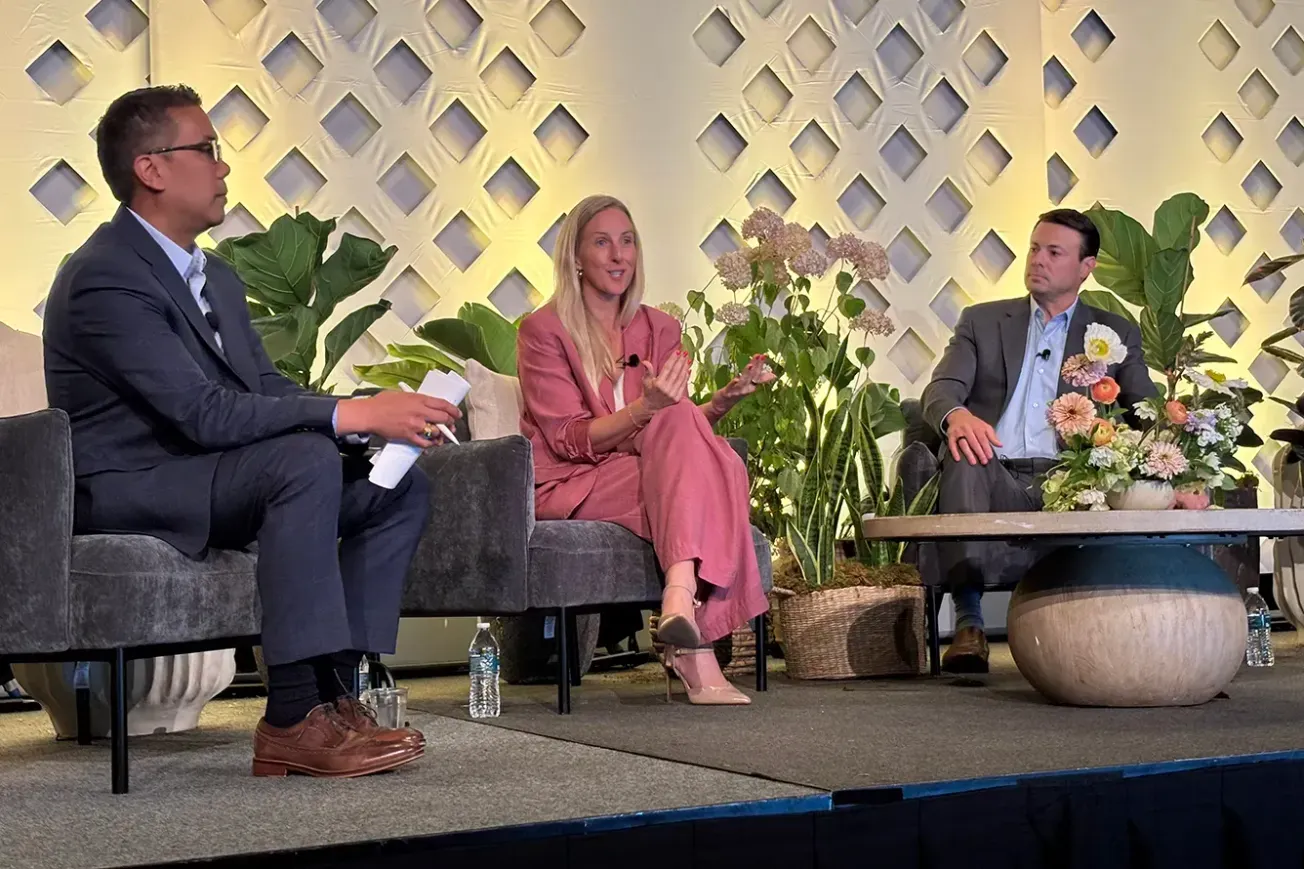
NASHVILLE, Tenn. — For decades, a pharmacy inside a supermarket was an underutilized resource — a draw for some customers, but often not central to the retailer's larger strategy. That view is changing fast.
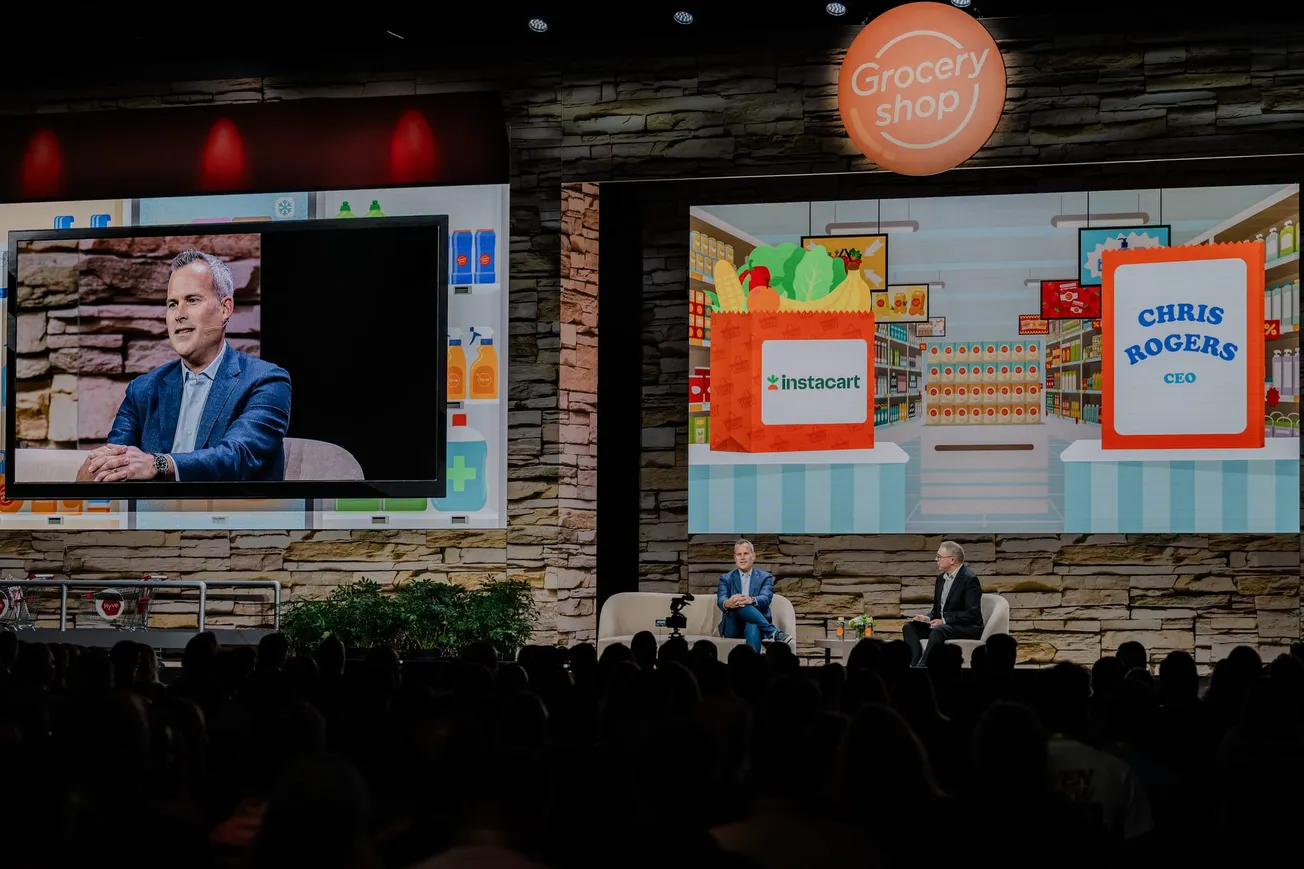
At last week's Future of Commerce conference in Nashville, executives from two of the country's largest grocery chains argued that the supermarket pharmacy is not just a profit center or a foot-traffic driver. It is, increasingly, the backbone of customer loyalty in an industry under siege from discount competitors, rapid e-commerce growth, and shoppers armed with price-checking apps.
"Pharmacy is our best loyalty program," said Katie Scanlon, vice president of pharmacy at Publix Super Markets. "It keeps people. They come in and say, 'This is my Publix, my pharmacy.'"
The numbers behind that claim are hard to argue with. Tony Del Ponte, president of pharmacy and health at Albertsons Cos., told the audience that pharmacy-engaged customers represent roughly 7% of Albertsons' households, but account for approximately 30% of the company's total revenue. "They visit the store more often, they use pickup and delivery more than other customers, they're two to three times more likely to engage in loyalty programs, and they churn much less frequently," he said. "There has to be something to keep them engaged within your four walls, and I truly believe it's the pharmacist."
A Tale of Two Entrances
The panel, moderated by Joe Sta-Romana, US chief customer officer at Haleon, opened with a frank admission: grocery retailers have spent years inadvertently reinforcing the divide between their two most complementary assets.
"Even if you think about a grocery store today, we say the entrance by the pharmacy is the drug entrance and the entrance on the other side is the food entrance," Del Ponte said. "We're unintentionally making this divide."
It is a division that costs retailers real money. A customer picking up a prescription who does not wander into the grocery aisles represents a missed basket. A shopper who does not realize the store has a pharmacy at all — a problem Scanlon acknowledged is more common than chains would like — represents an entirely missed relationship.
The antidote, both executives agreed, is not a physical redesign but a philosophical one: stop organizing the store around internal P&Ls and start organizing it around the customer's actual life. Del Ponte offered the analogy of a bakery selling birthday cakes with candles stocked in a distant seasonal aisle. "The customer doesn't care," he said. "The customer wants it easy, they want it connected."
GLP-1s: Threat or Opportunity?
No conversation about pharmacy retail in 2025 is complete without addressing GLP-1 weight-loss drugs, and the Nashville panel was no exception.
Sta-Romana cited recent consumer research indicating that roughly one in five U.S. households has now used a GLP-1 medication — up from one in eight as recently as mid-2024. The trajectory toward 30% penetration, he suggested, is a near-term reality that will reshape grocery economics in ways the industry is still absorbing.
For pharmacy operators, GLP-1s present what Del Ponte candidly called a "love-hate relationship." The drugs drive enormous prescription volume but carry thin margins. Yet the downstream opportunity may dwarf the pharmacy economics. Albertsons has found that GLP-1 patients are not spending less in the grocery store — they are spending differently, migrating toward higher-margin fresh categories and responding well to targeted cross-sell programs. "We've run programs with GLP-1 customers — tying seafood went really, really well, tying additional protein supplements went really, really well," Del Ponte said. "These customers are not taking dollars and just stripping them away. They're reinvesting them in other places."
Publix has taken a structured approach to this customer cohort, launching a whole-store program called "Creating a Lifestyle That Lasts" that guides GLP-1 patients through the store with QR codes pointing to high-protein, high-fiber items on sale that week. The initiative required cross-functional collaboration spanning the pharmacy, produce, bakery, and seafood departments — a meaningful organizational feat for a retailer of Publix's scale.
The pharmacist's role in supporting these patients extends beyond dispensing. Scanlon noted that the majority of patients discontinue GLP-1 therapy within 90 days, often due to unmanaged side effects. Intervening at the first fill — what she called "such a huge opportunity" — with samples, education, and category introductions can dramatically improve adherence. "That builds trust with the pharmacist and keeps the customer coming back," she said.
Haleon's Sta-Romana added that the side-effect burden is already moving the needle on heritage OTC brands. With roughly 80 to 90 percent of GLP-1 patients experiencing headaches or digestive issues, products like Excedrin, Tums, and Preparation H are seeing accelerated growth attributable to the GLP-1 wave — a dynamic that is drawing CPG companies into closer partnership with pharmacy teams.
Data Rich, Insight Poor
Both retailers acknowledged that the most powerful tool at their disposal — pharmacy data — remains significantly underutilized.
Pharmacy transaction records carry information that grocery loyalty programs can only approximate: a patient's chronic conditions, their stage of life, a new diagnosis, a change in therapy. Combined with grocery purchase history, this data creates a profile of the whole person rather than a series of transactions.
Del Ponte illustrated the gap between unsophisticated and sophisticated data use with a story. During a whooping cough outbreak, one of Albertsons' district managers achieved 10 to 15 times the pertussis vaccination rate of peers. The reason: the manager noticed that a disproportionate share of customers seeking the vaccine were new grandparents wanting to safely hold a newborn. The district responded by marketing specifically to that cohort and bundling care packages — thermometers, syringes, and other new-grandparent essentials — that sold in the hundreds per store. "They were using very unsophisticated data mining," Del Ponte said. "Now we have AI on top of AI on top of AI, and it's how you better leverage this to not just look at transactional data but to actually pull insights out of it."
Scanlon described a live program at Publix where the pharmacy's clinical platform automatically flags patients starting a therapy known to cause dry skin, prompting pharmacists to hand out coupons for relevant skincare products. "We know the pharmacist recommendation is so powerful," she said. "And we're seeing great success with that right now."
The guardrails matter as much as the data itself. Del Ponte offered a straightforward test for whether personalization has crossed a line: "If you're using data to help solve a need, to help solve a problem, to help engage in a way that changes their life for the better, typically you're pretty safe. When your frequency or the sensitivity of the data you're using become to a point where customers become uncomfortable, that's when you start to get nervous."
The Pharmacist as Front Door
Underlying the entire discussion was a conviction that the pharmacist — not the app, not the loyalty card, not the promotional circular — is the irreplaceable differentiator for grocery retail.
"The pharmacist really is the most trusted position in the store," Del Ponte said. "Trust drives loyalty, and right now customers are using AI and price-check apps to move their business to seven different places to find the lowest basket. There has to be something to keep them engaged within your four walls."
Scanlon drew on her background in hospital pharmacy to articulate a shift in mindset she believes is still underway in the industry. "A lot of people think, 'Oh, I go to the pharmacy when I'm sick,'" she said. "But in the community, you're really a part of this person's wellness." She recalled teaching basic nutrition label reading to diabetic patients 18 years ago and encountering patients who said no clinician had ever explained it to them. "We don't need a revolutionary solution," she said. "It's connecting with people and having very simple conversations about lifestyle modifications, step by step."
Looking ahead, Scanlon envisions pharmacists as the primary access point for a healthcare system that cannot otherwise reach millions of Americans — providing test-and-treat services, chronic disease management, and blood pressure checks at the same counter where customers pick up their weekly prescriptions. Automation of the dispensing workflow, she noted, is already freeing pharmacists to spend more time with patients rather than filling bottles.
What CPG Brands Need to Do Differently
Sta-Romana, whose company sells consumer health brands including Sensodyne, Advil, and Voltaren, used the session to draw out lessons for manufacturer partners navigating this new landscape.
The consistent advice from both retailers: stop leading with the product and start leading with the patient problem. Del Ponte urged brands to share the customer insights they have access to, to engage in joint digital campaigns, and above all to invest in educating pharmacists — because a pharmacist who understands a brand's role in a patient's care pathway can drive meaningful incremental sales in a way no shelf placement can replicate.
"When we run a pharmacist recommends program," Del Ponte said, "we see jumps in sales of 20, 25% on those particular items."
The harder challenge, both agreed, is replicating in-store what is already achievable digitally. Triggered digital recommendations — the pharmacy equivalent of "you bought this flashlight, now don't you want the batteries" — are table stakes. Achieving the same consistency of personalized recommendation across thousands of store locations, through individual pharmacists, in real time, remains the defining execution challenge for the category.
The Bottom Line
The strategic logic that emerged from Nashville is simple even if the execution is not: in a retail environment where price is increasingly table stakes and e-commerce has compressed the path from discovery to delivery to minutes, the supermarket pharmacy offers something no algorithm can yet replicate — a trusted human relationship, anchored in health.
"Pharmacy engaged customers account for about 30% of total revenue," Del Ponte said. "The data is just way too powerful to ignore."