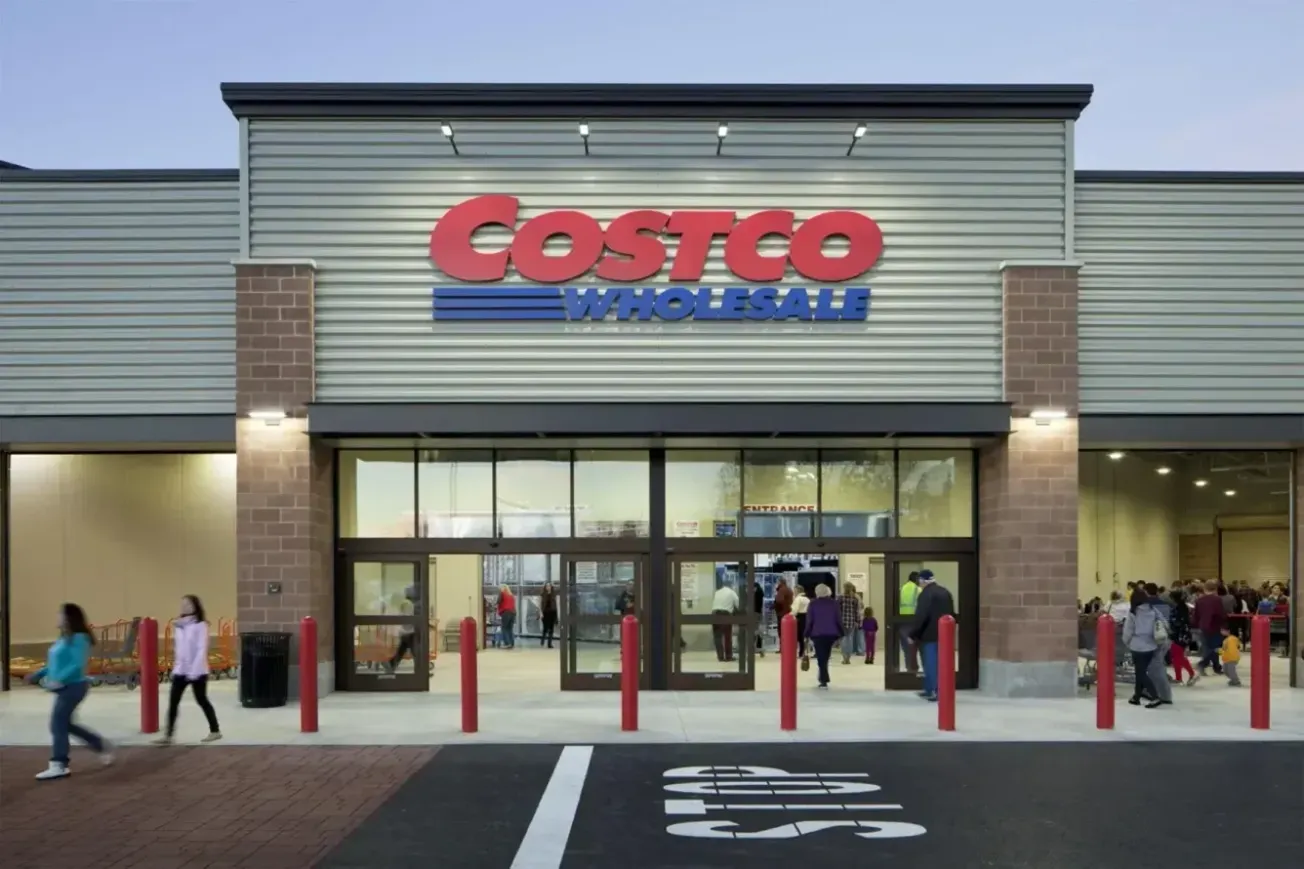

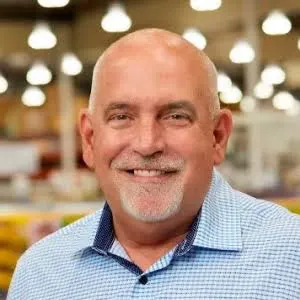
ISSAQUAH, Wash. – Like the company he now leads, Ron Vachris traces his roots in business back to Price Club, the progenitor of the membership warehouse club format, which first opened its doors a half a century ago. Now president and chief executive officer of Costco Wholesale Club, Vachris started his career in 1982 as a seasonal employee working on a receiving dock at a Price Club in Arizona; 11 years later the company founded by Sol Price merged with Costco.
Price’s imprint on Costco predated the merger. Jim Sinegal, who, together with Jeff Brotman, started Costco in Seattle in 1982, worked for Price at FedMart, a discount department store chain, and briefly at the eponymous warehouse club chain prior to striking out on his own. A culture of conviction — one centered on members and employees — was the common denominator between Price Club and Costco, Vachris recalls, and continues to guide the latter retailer to this day.
From the time that he started at Price Club, which then had 15 warehouses, Vachris made it a point to discover what made the company tick: “Right out of the chute you found that employees were very important and it was all about taking care of people,” he says. “I wanted to find out what the company stood for, and the answer was consistent: ‘We’re going to grow. We’re going to get big. We’re going to develop people from inside, so you’re starting a career, not just a job. And if you work hard, take care of others around you and always do the right thing, you’re going to be successful here.’ ”
Since then, Vachris, who served in various management roles in warehouse operations for 28 years before becoming senior vice president of operations for Costco’s Northwest region in 2010, has worked to preserve and nurture that ethos. The corporate culture — together with its commitment to offer sharp prices on a limited selection of products that turn quickly in a no-frills setting — have enabled Costco to expand its footprint to 924 locations in the U.S. and 13 other nations, and generate sales of $269.9 billion in fiscal 2025, more than twice those of its nearest competitor in the warehouse club business.
An Enviable Record in Employee Retention
“In my earliest years as a warehouse manager I had the epiphany that it’s not about you anymore, it’s about the people that work with you,” said Vachris. “I learned that their success is my success, as well as the importance of putting the right people in the right positions all around you. An intense focus on the staff and how you keep good people with you was shared by both Price Club and Costco.”
Thanks to its investments in salary and benefits, Costco has an enviable record of employee retention. The average wage for Costco workers in the U.S. is $32 per hour, and that figure rises to $46 when health care, retirement and other benefits are included. Both figures are among the highest in the retail industry.
Having devoted most of his career to mastering warehouse operations, Vachris broadened his scope when he served as senior vice president of real estate development and then executive vice president of merchandising. Calling the experiences invaluable, he says they deepened his understanding and appreciation of aspects of the business essential to Costco’s continued growth and appeal to members.
“I got to spend two years with Jeff Brotman traveling the world,” he recalls. “We opened up China, Iceland, France and Spain. We really were very active in our global expansion during that period. For me, it was a great lesson in international business.
Operations and Buying: Costco's Core Competencies
Vachris gained equally useful experience during his tenure as Costco’s chief merchant, a position he held from June 2016 to February 2022. The challenges of that pivotal role were exacerbated by the COVID pandemic, which seriously disrupted global supply chains.
“Operations and buying are the two core competencies at Costco,” he said. “It’s really what it comes down to in the end, and I had the opportunity to lead fantastic groups on both sides. It was a great education for me along the way.
“On the operations side, the feeling was that buyers never bought enough of the good stuff and they bought too much of the bad stuff. Then when you go to the other side, you see what the buyers are dealing with, sourcing globally and ordering 10 months out before they even can get a product into our system. You develop a real respect for the whole procurement process, how deep we go on items, how much we know about the merchandise, the relationships with the big CPG companies, and how we continue to tell our story about why we’re a good business partner.”
COVID created a host of new challenges, including delays in the delivery of merchandise, abrupt changes in consumer demand, and the need to find alternative means of transportation and new sources of supply. At the same time, it highlighted a major benefit of Costco’s limited-assortment, large-pack-size business model.
Passing Along Savings to the Customer
“Our focus on large sizes really derived from a quest for the most efficient way to bring goods to market,” Vachris explained. “When we meet with the CPG companies, we always want to know where we can get that price break by leveraging their manufacturing process, so we can pass along savings to the consumer. CPG companies or suppliers say, ‘You’re in an eight pack now, but if you go to a 12 pack, we can get this much more on a truck and you’ll reduce shipping costs.’ And that’s what we’ll do.”
He cites the ability to work with suppliers to optimize pack sizes and create value for members as one of Costco’s core competencies. It was even more important during the pandemic.
“Many factories encountered a lot of disruption during COVID and were limited in what they could do,” said Vachris. “In most cases, our package size was the most efficient for those companies, so even as they stopped making other sizes, they stayed with this one because, as far as line efficiency goes, it was the best. That was really advantageous for us staying in stock.
'Our Suppliers are Our Business Partners'
“That’s not to say we didn’t have our fair share of challenges. The chicken processing lines, for example, were not processing product like they did prior to the pandemic, so we had to wrap it ourselves when we got it to the warehouses. You became very nimble during that time, but, overall, the experience demonstrated the limited SKU model really works.”
Vachris emphasizes that product quality is never allowed to suffer as a result of the drive for greater efficiency and low prices: “Costco will never agree to the removal of ingredients from a product simply to cut costs, but it will happily limit the color range in an apparel line to do so. Our suppliers are our business partners and when we can align like that with them, knowing we’re going to pass that value on to the consumer and sell more of their goods, they’re normally very interested.”
The wisdom of Costco’s unwavering commitment to quality is reflected in the performance of its Kirkland Signature private label brand. The line — which debuted in 1995 and now includes groceries, household products, apparel and electronics — resonates deeply with members. Last year alone, they spent $90 billion on Kirkland products.
“The Kirkland brand exemplifies our culture in a physical form,” Vachris noted. “It’s about doing the right thing. It’s about quality and value, and really there’s great rigor put into every Kirkland item that is developed. From the inception of the brand, every item has had a final sign-off by the CEO. There’s never been a Kirkland item that’s been marketed without going through a full review of all the levels of buying and then up to myself or our two prior CEOs.”
The Heart of the Business Remains the Warehouse
The heart of Costco’s business remains the warehouse, which, despite the no-frills approach and emphasis on efficiency, has always offered members a “treasure hunt” experience. Frequent changes to the merchandise mix, limited-time deals and shifts in store layout lend a sense of excitement to the shopping experience. That hasn’t stopped the company from investing in digital shopping tools, which are consistently generating sales gains in the 20% range.
“As we continue to make investments in technology, we are building a multi-year road map to create a more seamless digital experience for our members,” Vachris said. “In 2025, we delivered numerous enhancements to the member experience, both in the warehouse and online.
“Our members are responding to our offerings across platforms. They tend to shop purposefully online and shop the environment when they’re in a brick-and-mortar location. When they go to a warehouse, they want that treasure hunt experience. We call it the things that you never know you had to have: ‘I never knew I had to have that screwdriver until I got here today and it’s a screaming deal.’ We have a good hybrid mix.”
Personalization Matters
Putting digital technology in the hands of members and employees will enable Costco to realize an objective long sought by all retailers — personalization. In the future, the retailer will help members address specific need states or occasions rather than satisfy searches for a specific product.
“The uniqueness about Costco is that we have a wide array of offerings, even though we have a very limited SKU lineup,” he explained. “We’re very enthusiastic about where we think this is going to go. It will enable us to take personalization to the next level and give us a more holistic view of each of our members.
“You’re not a Costco travel member or a tire center member or a warehouse member — you’re one member now. And we’ll communicate with you one on one. For instance, if we know it’s been three years since you purchased hearing aids, we’ll suggest that you might want to come in and get them checked. Every three years you’re supposed to — based on the doctor’s recommendation — upgrade those devices and make sure that they’re right for what you are hearing currently. At the same time, we’re going to maintain the treasure hunt aspect of the shopping experience that our customers expect from us.”
The combination of traditional strengths — many of which had their beginnings 50 years ago at Price Club — and the willingness to innovate bodes well for Costco’s future. Vachris is confident that the retailer will continue to be the pacesetter in the warehouse club sector.
“We’re a growth company, and we want to continue to see growth both digitally and physically around the world,” he said. “We feel that we’re on a great trajectory. We feel that we can expand our reach into markets that we’re not in now, as well as in-filling existing markets. Most importantly, we want the trust and reputation we have established among members to grow. We want to make sure that they feel as good — if not better — about Costco and our values and ability to make their lives better as they do today.
“We’re always looking ahead. We’re always looking at that next category that we can do. E-commerce gives us a wide reach. We can do some fun things with e-commerce, including offering an expanded product assortment and testing new products and services. We learn a lot about our brick-and-mortar business by trying things online. If they are a big success, we roll them right into the warehouses and go from there.”