
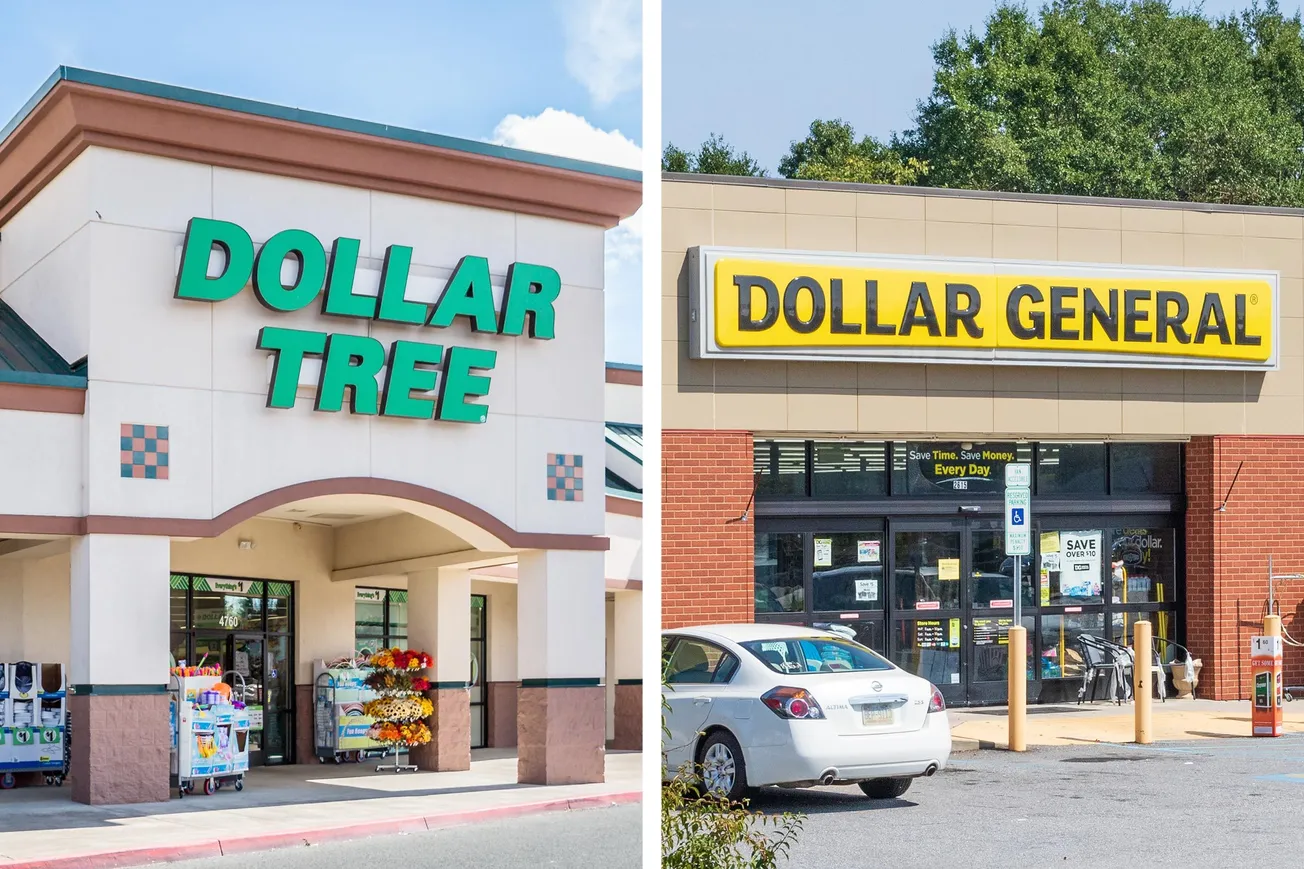
For years, Dollar General and Dollar Tree have reshaped U.S. retail by offering consumers convenience and low prices in a shifting economic environment. Their growth has been fueled by geographic expansion, fleet density, and consumer demand for affordable essentials. Now, with inflation still straining household budgets and discounters gaining cultural relevance, the question is whether the two largest dollar chains are running out of room or just beginning to tap into new opportunities.
Dollar Tree’s Refocus: A Leaner, Stronger Banner
Dollar Tree’s recent sale of Family Dollar marked one of the most consequential portfolio shifts in its history. Shedding a troubled brand has allowed the company to dedicate resources to strengthening its core banner. Management has been explicit: the goal is long-term growth, profitability, and improved returns on capital.
The payoff has been swift. Same-store and overall visits surged in Q2 2025, according to Placer.ai data. The gains reflect not only fresh consumer momentum but also disciplined expansion. Unlike the Family Dollar footprint, which had been fragmented and weighed down by operational inefficiencies, the Dollar Tree fleet is showing consistent organic performance. This sharper focus could help the retailer position itself as a growth vehicle in a segment where every percentage point of traffic matters.
Dollar General: Slower Growth, But Still Dominant
Dollar General remains the undisputed heavyweight in the space. The chain accounted for 58.7% of combined visits between the two companies in the first half of 2025. Yet, its growth trajectory has moderated. After a robust 12.2% year-over-year increase in traffic between July 2023 and July 2024, growth slowed to just under 3% in July 2025.
Deceleration is partly a reflection of maturity. With more than 20,000 locations across the country, incremental gains are harder to achieve. Still, Dollar General’s deep operational expertise, broad assortment, and track record in serving rural and lower-income markets provide durable advantages. Its sheer scale, combined with an ability to open stores in communities overlooked by larger retailers, ensures that it remains a powerful force even as expansion slows.
Mapping the Competitive Divide
A geographic analysis reveals the core of both companies’ expansion potential.
- Dollar Tree strongholds: Western DMAs, particularly urban and suburban markets where the chain’s $1.25 price point resonates with value-oriented but brand-conscious shoppers.
- Dollar General strongholds: The Midwest and South, where rural towns often rely on the banner for groceries, household goods, and essential products.
Rather than overlapping heavily, the two chains have developed regional footholds. The West remains Dollar General’s biggest opportunity, as its format is well-suited to communities underserved by supermarkets. For Dollar Tree, the South and Midwest, where Dollar General dominates, represent white space where it can leverage its momentum and banner simplicity to capture market share.
Beyond Geography: Macro Forces at Play
Expansion isn’t just about white space, it’s about aligning with broader retail trends:
- Consumer trade-down behavior: Persistent inflation, higher tariffs, and rising living costs have led more middle-income households to frequent dollar stores. Both chains are positioned to capture this migration.
- Grocery and consumables: Dollar General has invested heavily in fresh and frozen food assortments, making it a stronger competitor to supermarkets. Dollar Tree, with a narrower grocery footprint, may expand in this direction as well.
- Real estate strategy: Dollar General’s edge lies in rural and exurban areas with low competition for space. Dollar Tree, with its suburban tilt, may accelerate urban formats in growth markets.
- Technology and operations: Streamlined supply chains, self-checkout expansion, and localized assortments are becoming differentiators. Both companies are investing in these areas to improve productivity.
Growth Potential: More Room Ahead
Despite maturity, neither chain is close to saturation. Dollar Tree’s sharper focus and traffic momentum give it long-term growth potential, while Dollar General’s size and resilience make it a cornerstone of the discount retail industry. The interplay between their strongholds, Dollar Tree's push into the South and Midwest, and Dollar General's expansion into the West, will define the next decade of competition.
Crucially, their strategies align with a U.S. consumer landscape increasingly defined by value-seeking behavior. As household budgets tighten, the ability of these chains to balance scale, efficiency, and affordability ensures that their growth story is far from over.
Bottom Line
Dollar General and Dollar Tree have built distinct, powerful networks across the country. Far from being boxed in, both chains have ample white space in each other’s markets. With macroeconomic conditions continuing to favor value players, the next chapter for dollar retail is likely to be one of continued expansion, just in different directions.
For a closer look at traffic trends and competitive dynamics, visit Placer.ai’s free chain analysis tools.