
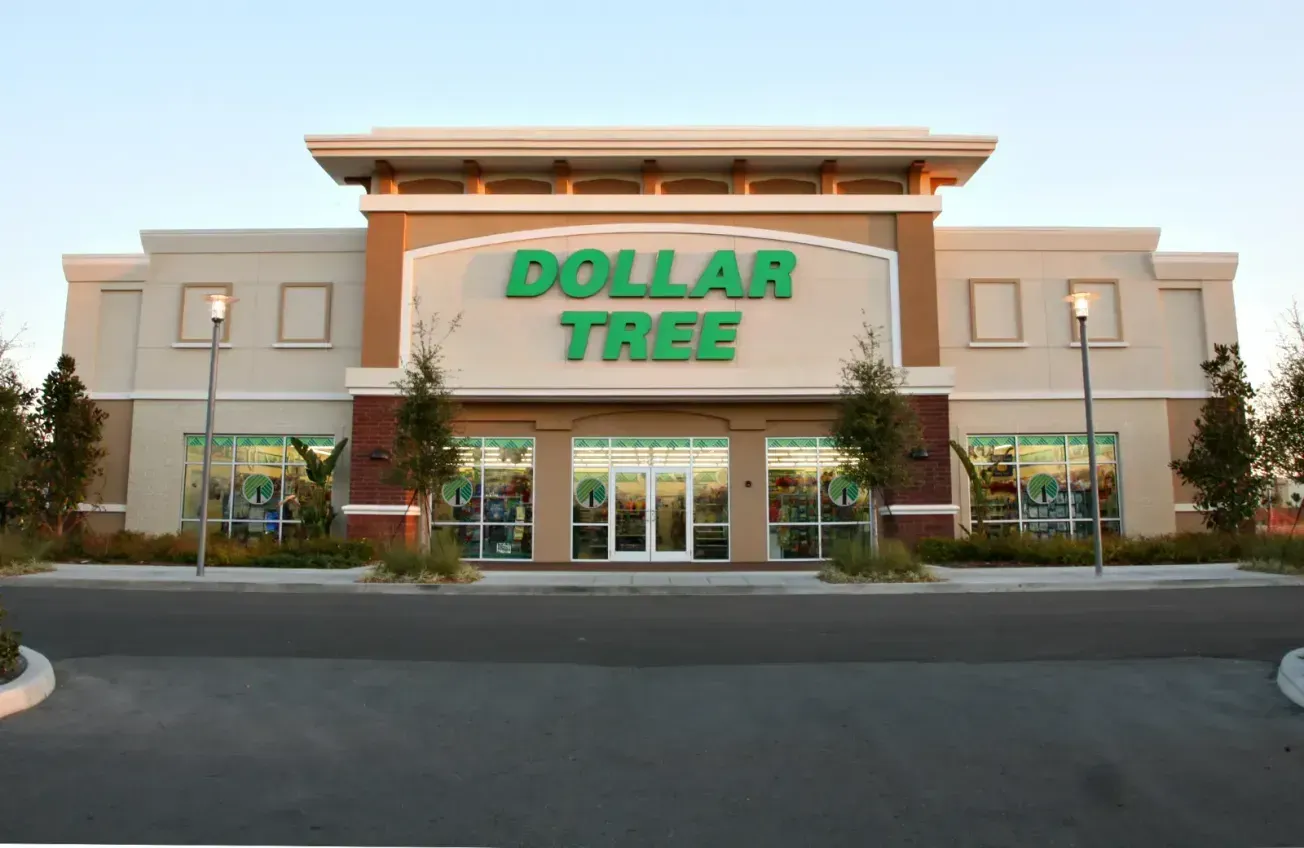
CHESAPEAKE, Va. — Dollar Tree reported solid gains in sales and profit for the fourth quarter and full fiscal year, highlighting continued momentum for the value retailer as it expands its multi-price store format and grows its national footprint.
The company said fourth-quarter net sales increased 9.0% to $5.45 billion for the period ended Jan. 31, 2026. Same-store sales rose 5.0%, driven primarily by a 6.3% increase in average ticket, partially offset by a 1.2% decline in customer traffic.
Chief executive officer Mike Creedon said the results reflect the continued strength of Dollar Tree’s value-focused model and the retailer’s ability to deliver both low prices and a distinctive shopping experience.
“Our strong results this quarter show that Dollar Tree remains America’s retail destination for value, convenience and discovery — underscored by our 20th consecutive year of positive same-store sales,” Creedon said. “By delivering great value at low prices, with disciplined execution, we continue to expand our reach and drive long-term growth.”
Sales and Margin Gains
Dollar Tree also reported significant improvement in profitability during the quarter. Gross profit rose 13.3%, while gross margin expanded 150 basis points to 39.1%.
The margin improvement was primarily driven by pricing initiatives that increased merchandise mark-on, along with lower domestic and import freight costs. Those gains were partially offset by higher tariff-related costs, the company said.
Selling, general and administrative expenses declined slightly as a percentage of sales, falling 10 basis points to 26.9% of revenue. The improvement was largely attributed to prior-year software impairment charges and contract termination costs, as well as lower stock-based compensation.
Operating income increased 30.2% during the quarter. Income from continuing operations totaled $511.7 million, and diluted earnings per share from continuing operations reached $2.56.
On an adjusted basis, which excludes certain one-time items, earnings per share were also $2.56.
Dollar Tree also continued returning capital to shareholders. During the quarter, the company repurchased 2.2 million shares of its common stock for $232 million. As of Jan. 31, the retailer still had $1.8 billion remaining under its share repurchase authorization.
The company ended the fiscal year with $717.8 million in cash and cash equivalents and no borrowings under its credit facilities.
Strong Full-Year Performance
For the full fiscal year, Dollar Tree reported net sales of $19.4 billion, representing a 10.4% increase from the prior year.
Same-store sales for the year rose 5.3%, driven by a 4.3% increase in average ticket and a 1.0% gain in customer traffic.
Operating income increased 13.1% to $1.7 billion, while operating margin improved slightly to 8.5%.
Income from continuing operations totaled $1.2 billion, and diluted earnings per share from continuing operations reached $5.94. On an adjusted basis, diluted earnings per share were $5.75.
The company also generated strong cash flow during the year, producing $2.2 billion in operating cash flow and approximately $1.1 billion in free cash flow.
Dollar Tree repurchased about $1.6 billion in shares during fiscal 2025.
Store Growth and Multi-Price Expansion
The retailer continued to expand its store base and refine its pricing strategy throughout the year.
Dollar Tree opened 402 new stores in fiscal 2025 while continuing to roll out its Dollar Tree 3.0 multi-price format, which allows stores to offer merchandise at price points above the traditional $1.25 threshold.
During the year, the company converted or added about 2,400 stores to the multi-price format, ending fiscal 2025 with roughly 5,300 locations operating under the updated concept.
The format expansion has been a central element of Dollar Tree’s merchandising strategy, enabling the retailer to broaden its assortment while maintaining its core value positioning.
Family Dollar Exit Reflected in Results
The financial results were reported on a continuing operations basis following the company’s strategic separation from the Family Dollar business, which is now treated as discontinued operations.
Continuing operations now reflect the performance of the Dollar Tree banner along with corporate and support functions.
The company also recorded $23.1 million in income related to transition services provided to Family Dollar following the divestiture.
Outlook for Fiscal 2026
Looking ahead, Dollar Tree expects continued growth in fiscal 2026, supported by store expansion and the ongoing rollout of its multi-price format.
The company projects net sales in the range of $20.5 billion to $20.7 billion for the year, representing continued growth from fiscal 2025 levels. Comparable store sales are expected to increase between 3% and 4%.
Dollar Tree plans to open approximately 400 new stores during fiscal 2026 while closing about 75 locations.
Adjusted diluted earnings per share are expected to range from $6.50 to $6.90 for the year.
For the first quarter of fiscal 2026, the company forecasts net sales between $4.9 billion and $5.0 billion, with comparable store sales growth again projected in the 3% to 4% range. Adjusted diluted earnings per share are expected to be between $1.45 and $1.60.
With two decades of positive same-store sales growth and a continued focus on value and assortment expansion, Creedon said Dollar Tree remains well positioned to capitalize on strong consumer demand for value-oriented retail.
“Dollar Tree remains America’s retail destination for value, convenience and discovery,” he said, adding that the company’s strategy continues to focus on disciplined execution and long-term growth.
Submit Your Press Release
Have news to share? Send us your press releases and announcements.
Send Press Release