
Katherine Black is a partner at global management consulting firm Kearney, where she leads food, drug and mass market retail. Here she offers five major forces that will help reshape grocery and mass retail in 2026.

• Agentic Commerce Blows Up the Retail Funnel: AI shopping agents become the front door of grocery. In 2026, consumers increasingly outsource trip planning to autonomous “shopping copilots” that find, compare and potentially even transact across banners — long before a retailer’s website or app enters the picture.
“Retailers begin to lose control of discovery, forcing a new discipline: Agentic Engine Optimization (AEO) to ensure products and stores even show up in AI-driven missions. Price accuracy, real-time inventory and clean product data shift from operational hygiene to competitive weapons. Retail media must reinvent itself for AI-first, mission-based advertising or it becomes invisible,” Black says.
• The Great Rebalancing of the Store: fewer SKUs, more velocity, new nutrition. The seismic shock of GLP-1 adoption meets AI-driven assortment rationalization. “Expect 10% to 30% SKU reductions in bloated categories and a corresponding surge in high-protein, low-sugar, fresh and ready-to-eat solutions. Center store volume erosion accelerates as consumers genuinely eat less, not just “trade down.” Growth is driven by product innovation in both premium and value. Retailers face a fast-moving identity shift. Winners use micro-local clustering, wellness-driven product development and private brands to rebuild relevance.”
• The Retail Worker Becomes the AI Orchestrator: Automation doesn’t eliminate all labor, but it changes the roles.
“Frontline associates morph into orchestrators who resolve exceptions, triage automation failures, coach customers and manage smart devices. This role is more technical, more customer-facing, and it requires new skills and a rethink of the roles. The real cost of automation isn’t the tech, it’s the reskilling gap. Skipping this step will mean falling behind on return on tech investment and productivity.
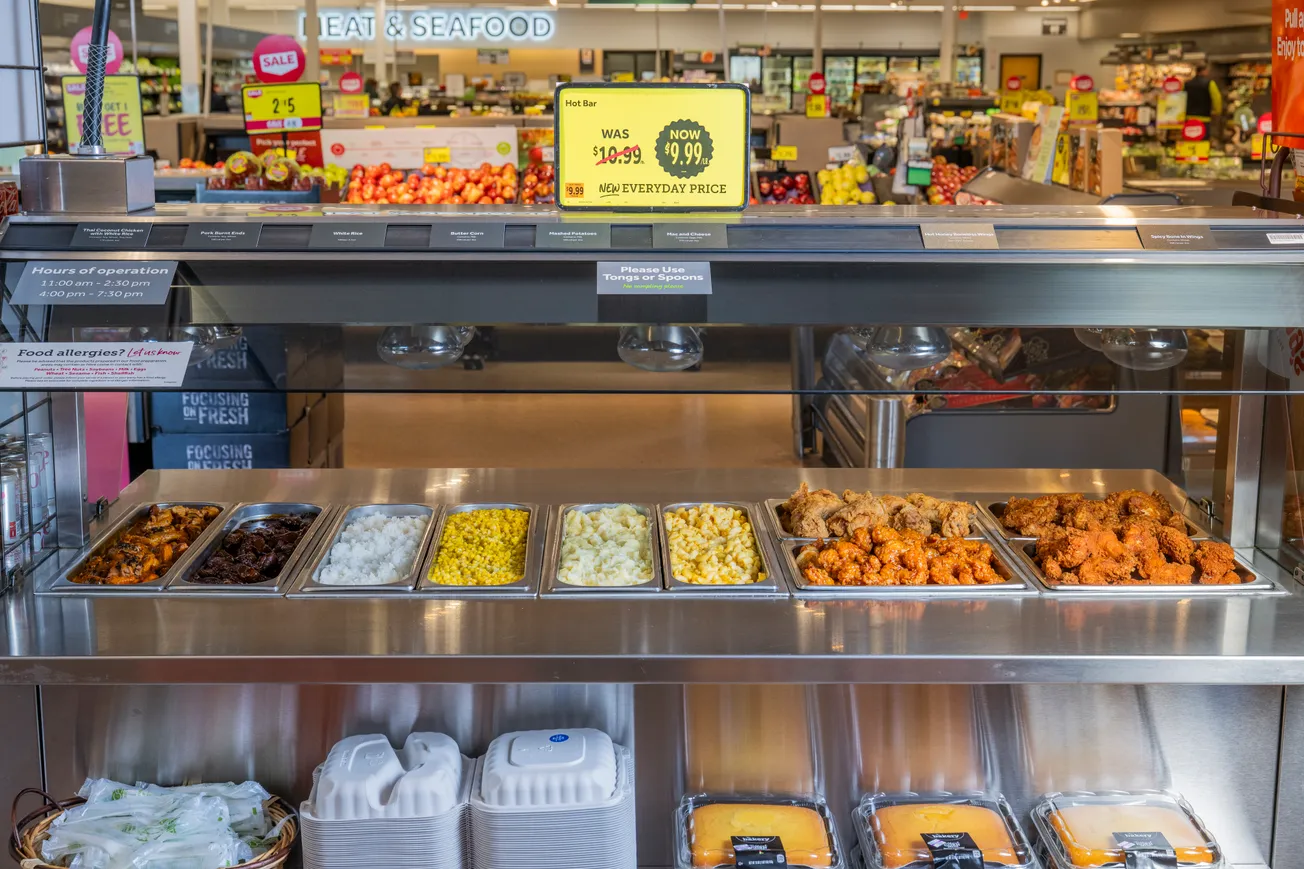
• Price Wars Without Promotions: the new EDLC arms race — More banners shift to Every Day Low Cost models as promo elasticity weakens and shoppers burn out. “Mid/low and high/low retailers face pressure to simplify while also offering great value. Category roles shift; some promotional categories lose strategic weight entirely.”
• The Store Itself Becomes the Last Great Media Channel: As agentic commerce erodes digital retail media’s grip on the funnel, physical stores become the highest-fidelity media surface left. “Screens, smart shelf labels, guided missions, demos and pop-ups turn the store into a living content network. In-store media is agent-proof: Even if the AI chose the store, what the shopper sees, touches and tastes inside is still up for grabs. Retailers integrate associate-led experiences, nutrition coaching, theater around foodservice, and localized events as monetizable media. The retail media narrative shifts from on-site ads to in-journey influence — with the store as the anchor asset,” Black concludes.
Submit Your Press Release
Have news to share? Send us your press releases and announcements.
Send Press Release