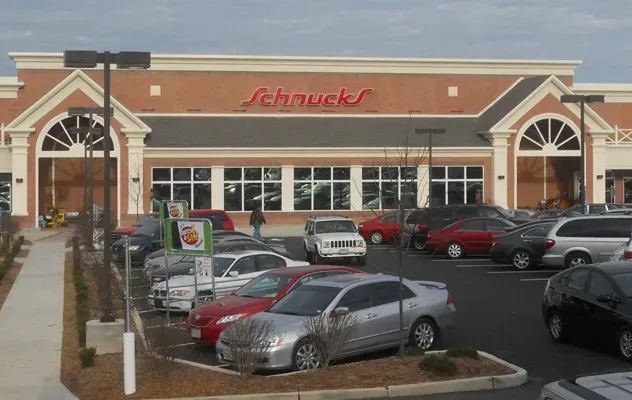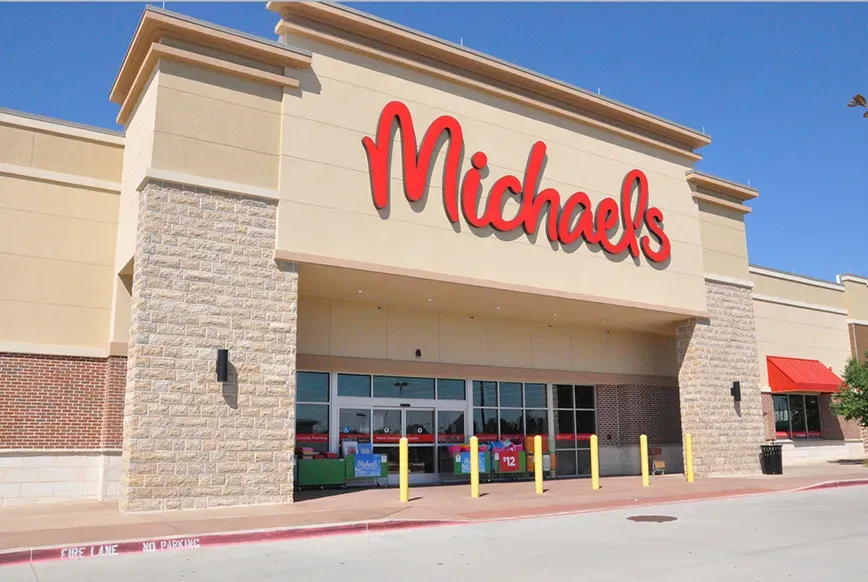


SEATTLE — When Quincy Lee founded Electric Era in 2020, his goal was straightforward yet ambitious: to make electric-vehicle fast charging common, affordable, and dependable. Five years later, that mission has grown into something even more impactful — transforming the EV charger into a new digital touchpoint for retailers.
A former SpaceX engineer, Lee views energy infrastructure through the same systems approach that helped launch satellites. “I became obsessed with energy economics and the grid,” he said. “At SpaceX, I learned how to solve reliability issues in systems where you can’t just send a repairman to fix it. That’s exactly the challenge we’re tackling in EV charging.”
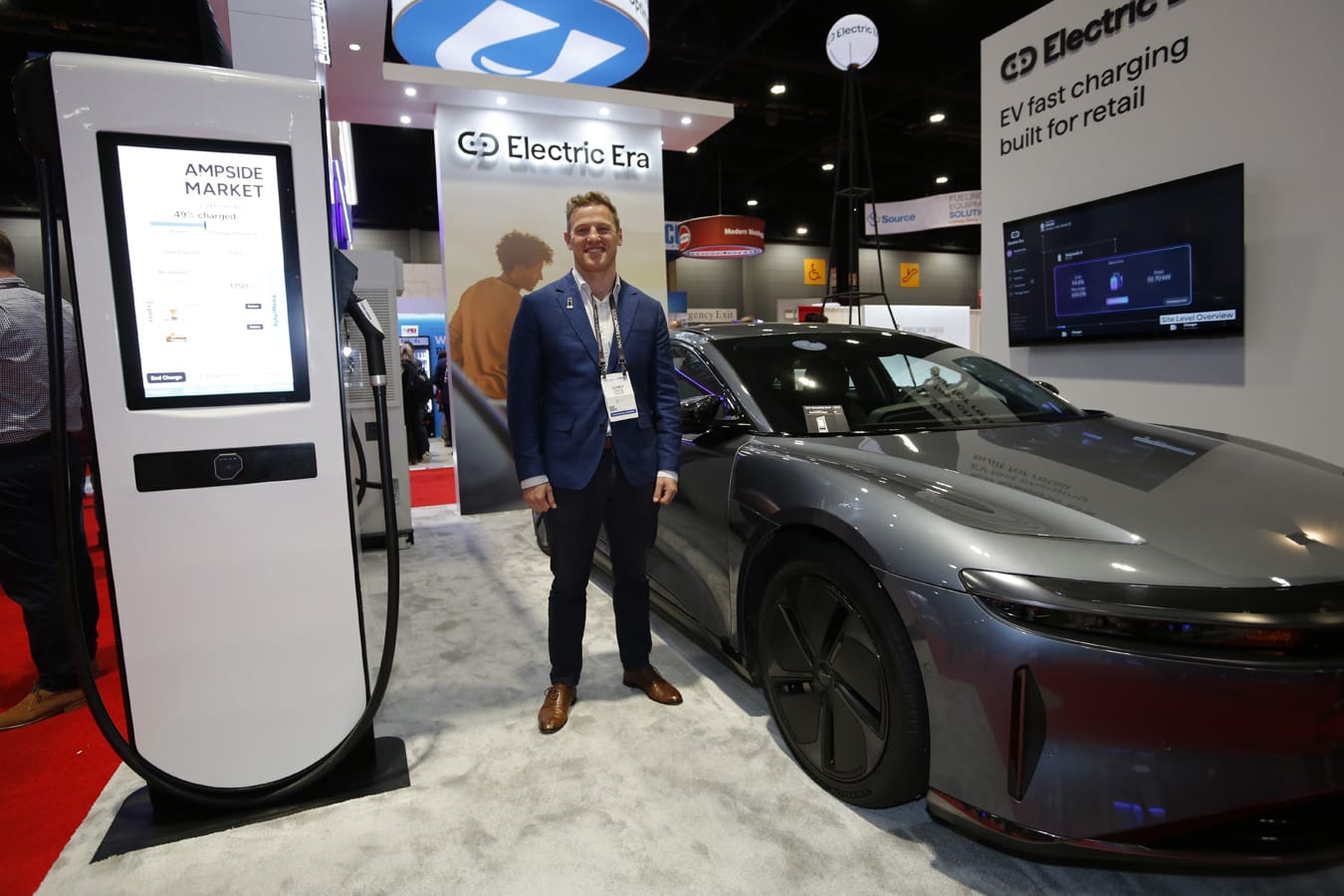
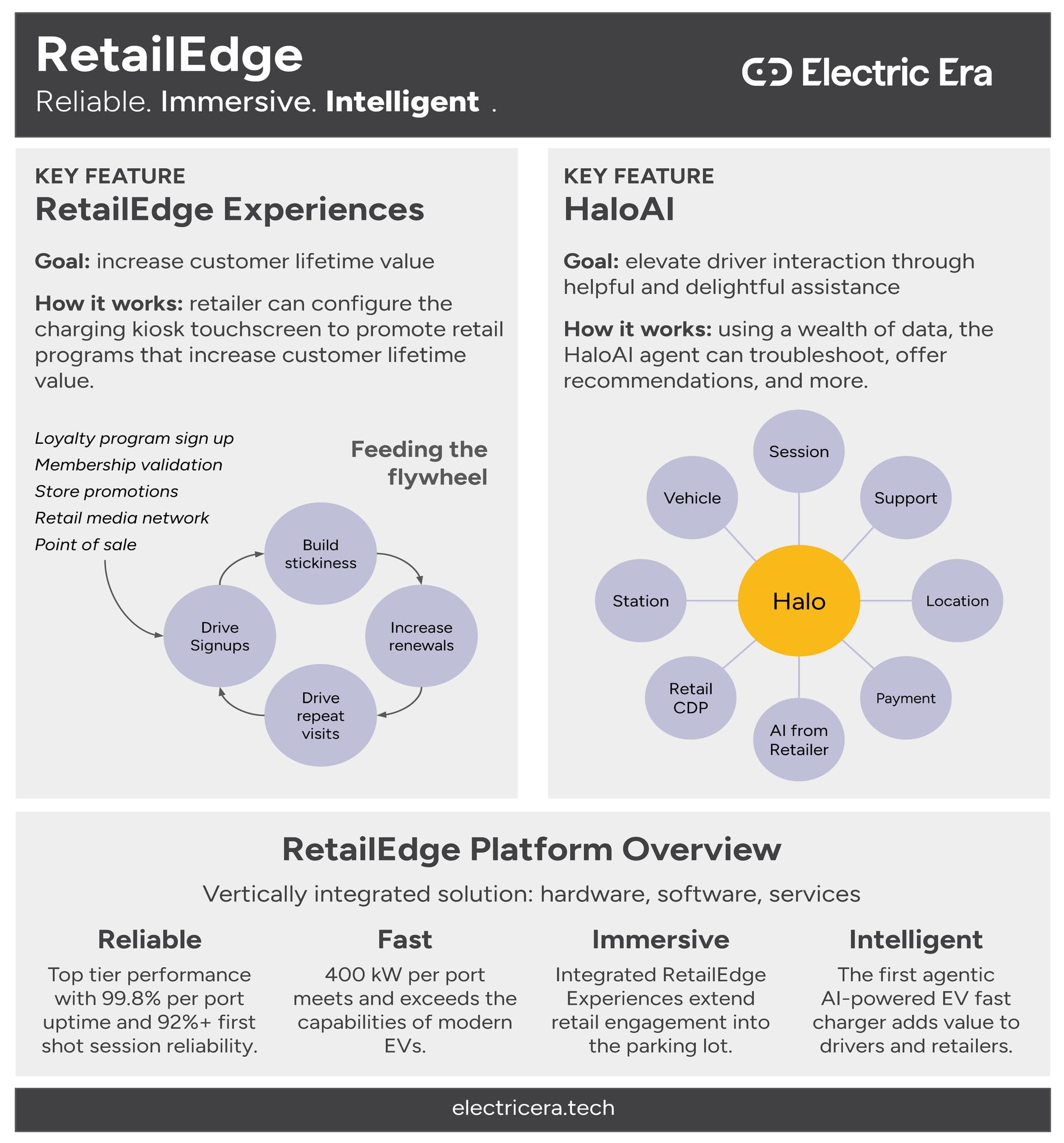
Electric Era’s flagship platform, RetailEdge, made its public debut at the NACS Show in Chicago this fall. The system represents what Lee calls “the industry’s first intelligent and immersive EV fast-charging platform purpose-built for retailers.” Built with the company’s proprietary HaloAI software, RetailEdge is designed to provide a faster, more reliable and more profitable charging experience.
“An average EV station pulls as much power as 1,000 homes,” Lee said. “We’ve engineered a patented energy-management suite that lowers those requirements by a factor of three to four. That means retailers can deploy charging more easily, at lower cost, and at locations where grid access would normally be a deal-breaker.”
Reliability is the second pillar of Electric Era’s differentiation. Borrowing lessons from Starlink’s satellite networks, the company has developed software that automatically monitors and manages charger uptime. “If a station goes down, it self-recovers almost instantly,” Lee explained. “You can’t grow EV adoption if drivers don’t trust the charger to work. We solve that.”
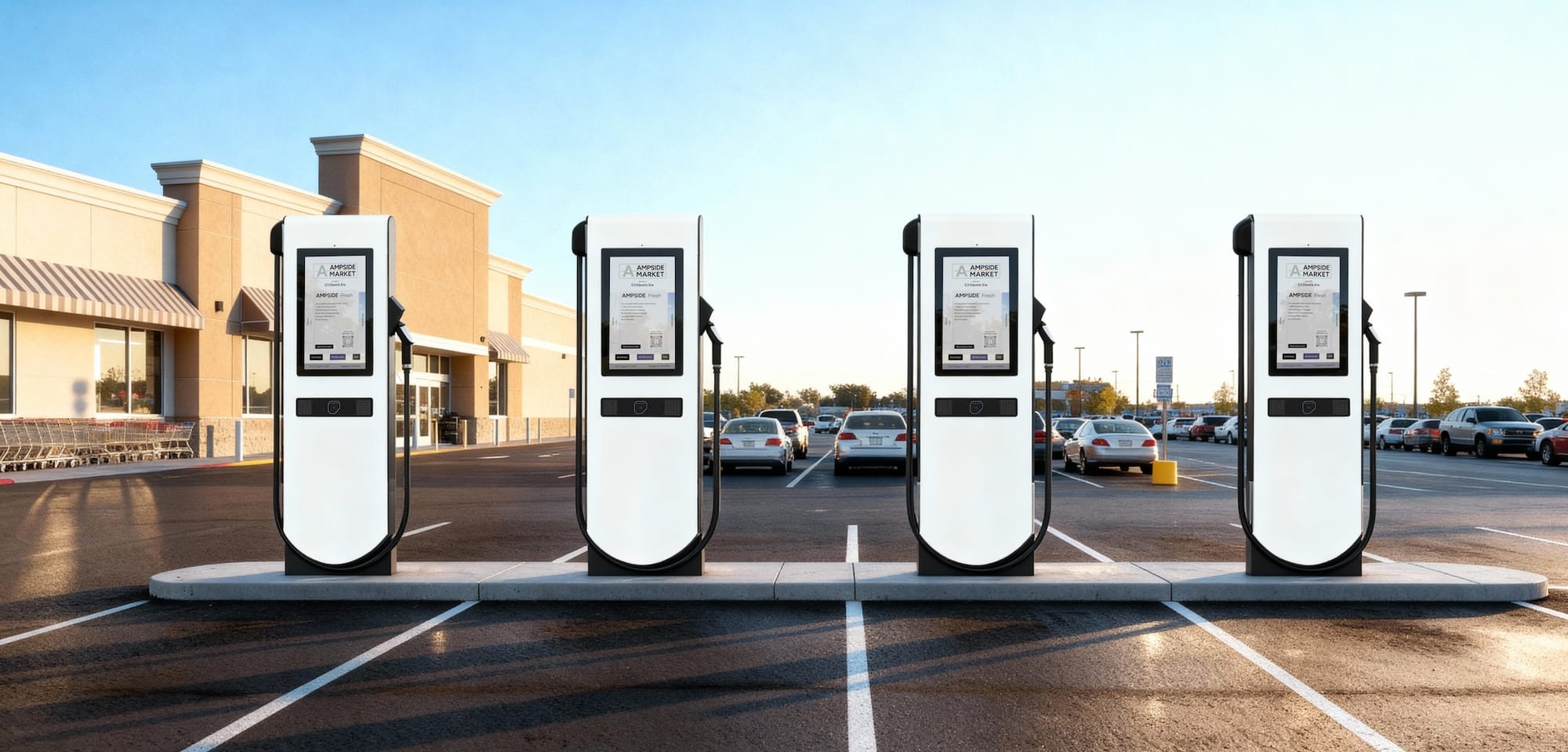
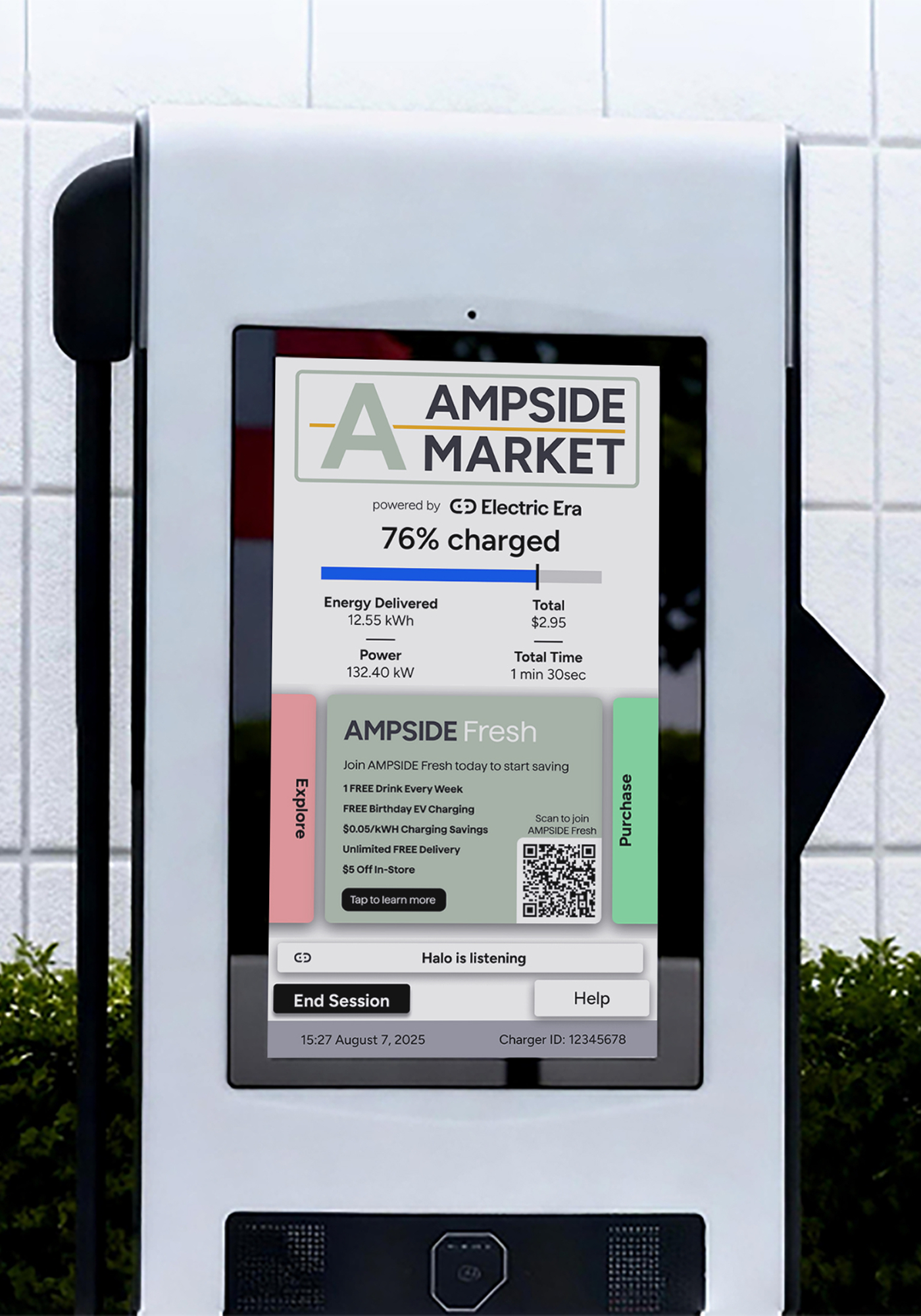
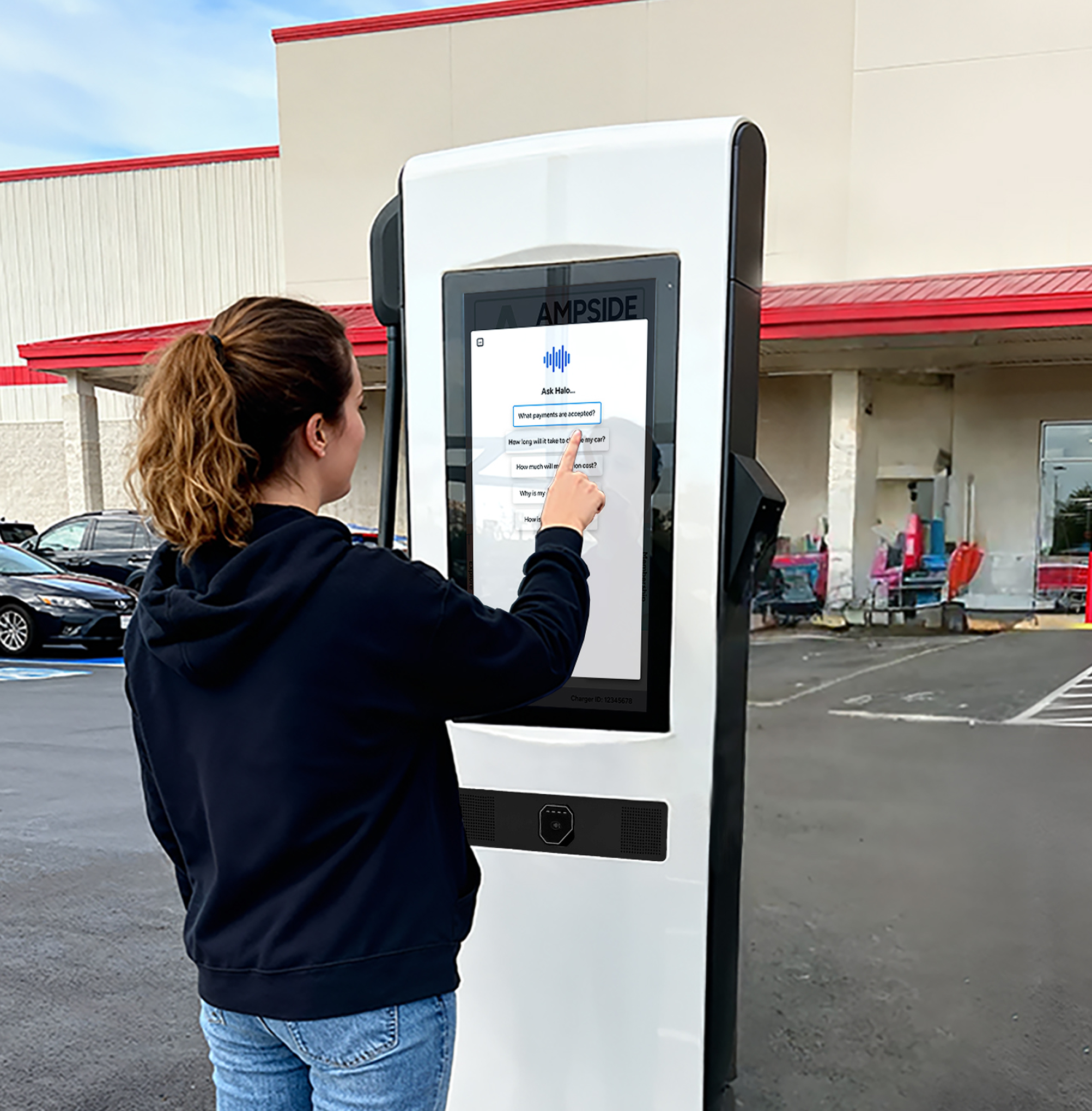
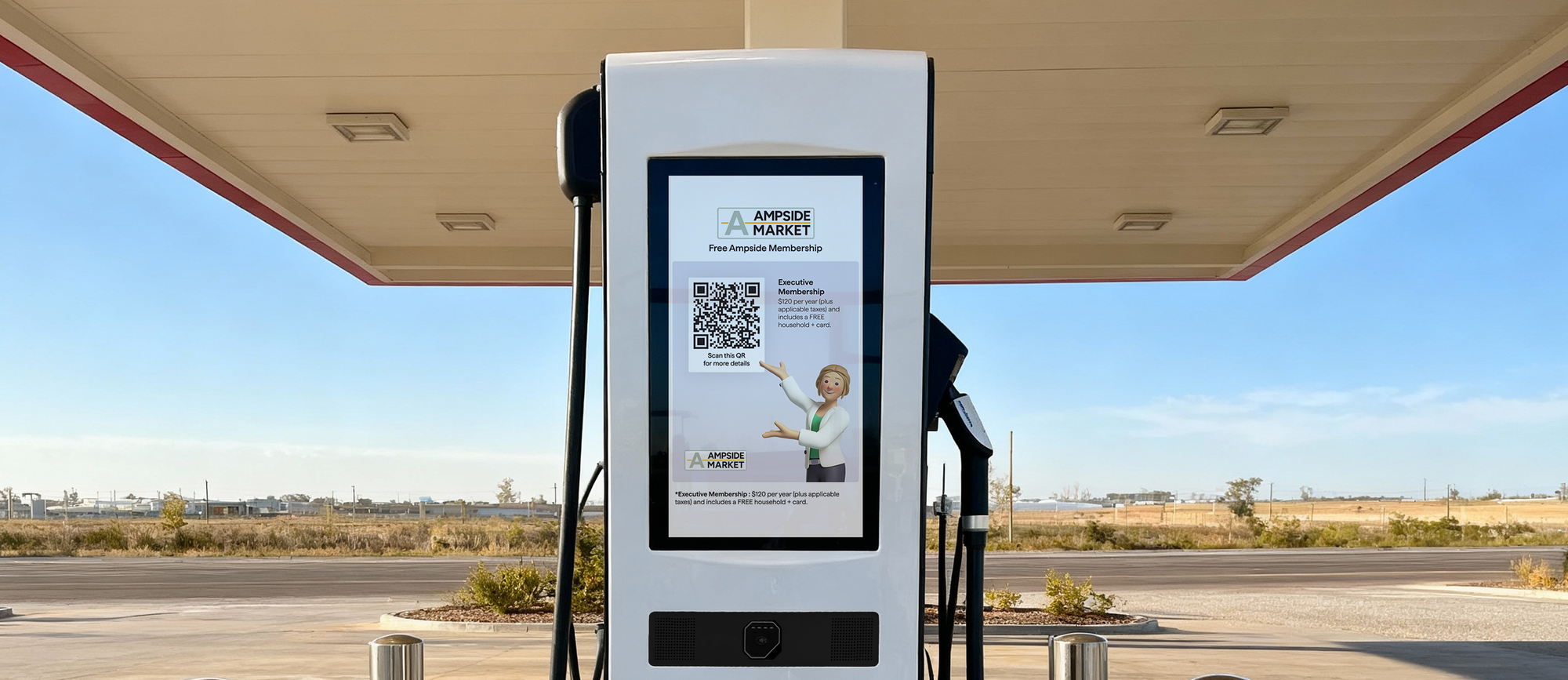
But the third innovation that has captured the retail industry’s attention is the RetailEdge driver interface, which enables shoppers to interact with loyalty programs, promotions, and memberships directly at the charger screen. “We’ve built modules for loyalty sign-ups, retail-media integration, and personalized offers,” Lee said. “Retailers can turn a charge session into a customer-engagement moment.”
That potential has already attracted strong interest from convenience and grocery retailers seeking new ways to connect digital loyalty with in-store experiences. “Retailers are under enormous competitive pressure,” Lee said. “Charging becomes part of that modernization cycle. It’s existential for them to stay relevant for the next generation of drivers.”
Electric Era currently operates 22 locations and 130 charging stalls nationwide, growing approximately threefold each year. Lee expects this growth to continue in 2026, with new retail partnerships expanding across multiple regions. “There’s a total addressable market of more than 650,000 retail-site charging ports in the U.S.,” he said. “We aim to capture a significant share of that in the years ahead.”
Though the company receives inquiries from international retailers “every other day,” Lee said the team is focused on executing its U.S. growth plan before expanding abroad. Electric Era now employs about 40 people — a lean organization built for engineering intensity and rapid deployment. “It’s all about execution at this point,” he said.
For Lee, the intersection of sustainability, technology, and commerce remains deeply personal. “My passion has always been about moving society forward,” he said. “EV charging doesn’t just decarbonize transportation. Done right, it creates better experiences for drivers and new business models for retailers. That’s what motivates us every day.”