
BOSTON — Dramatic change for the retail industry is inexorable.
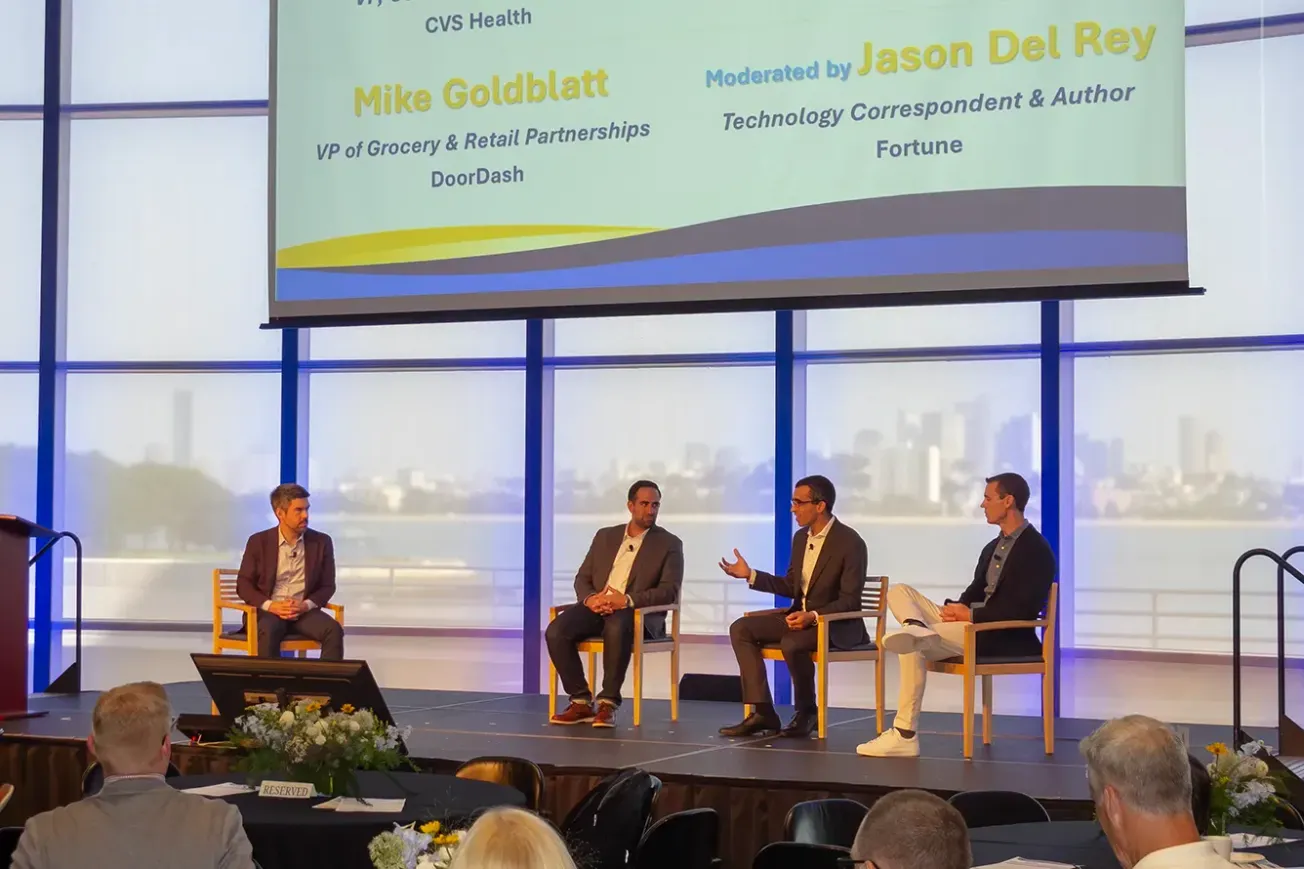
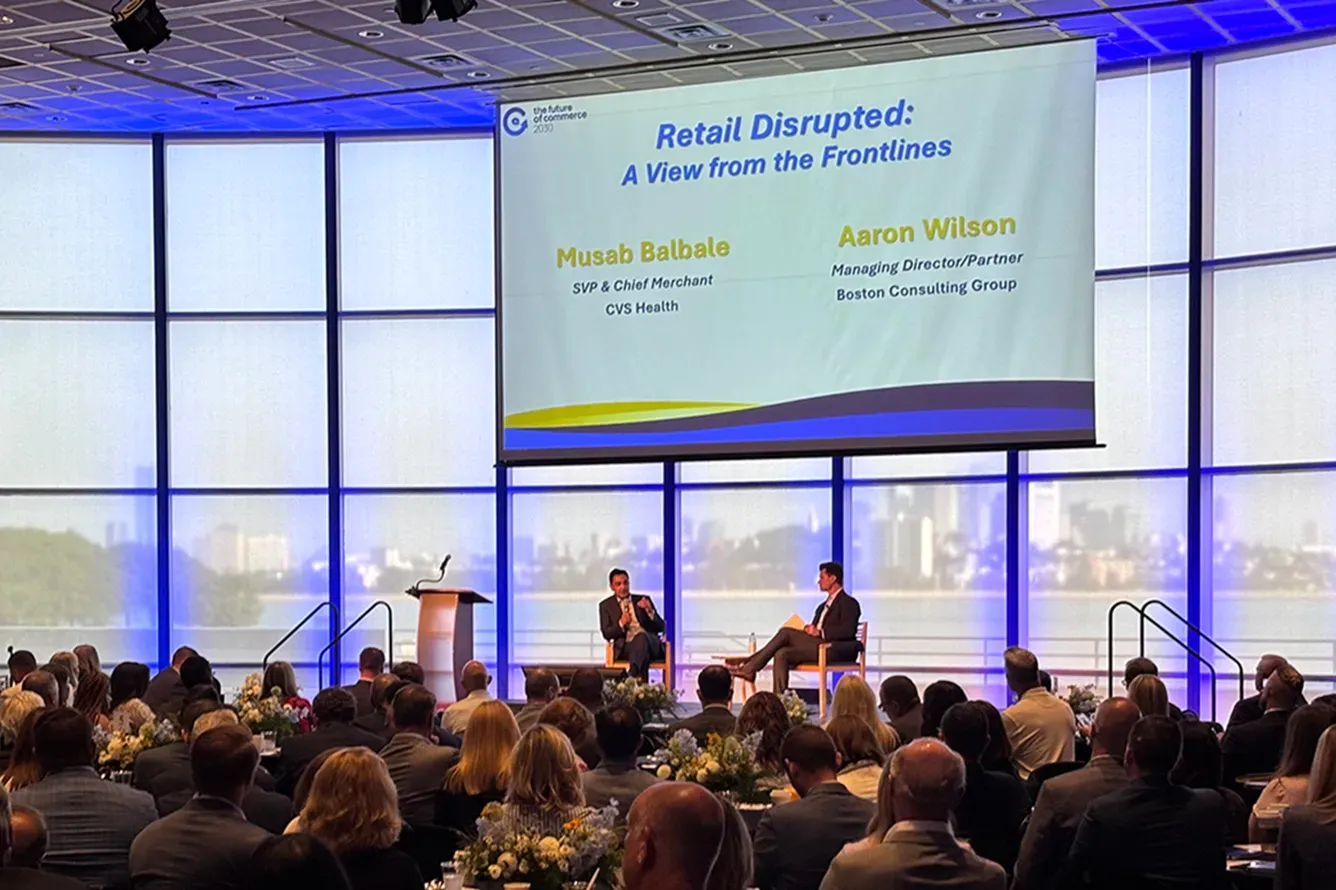
That was the message of the latest installment of The Emerson Group’s series, The Future of Commerce 2030, held Tuesday at the JFK Presidential Library and Museum.
Executives from CVS Health, suppliers and market research firms portrayed a retail environment being recast by AI, omnichannel shopping and powerful influencers.
“The old rules don’t hold anymore,” said Emerson Group vice president of strategic initiatives Elizabeth Karvonen. “Consumers are shopping differently.”
CVS can be said to be going back to the future, by aspiring in a sense to be the general store of old, said Musab Balbale, the company’s chief merchant.
CVS wants to be at the heart of the community, meeting people’s most acute and immediate needs, he said.
And those needs can be met with omnichannel offerings. CVS’s biggest growth hours in stores, he noted, are before 9 a.m. and after 5 p.m. Consumers click on its digital site not necessarily to make a purchase, but to find out if a product is available in their local store, he explained.
“Everything’s omnichannel,” he commented. “It’s sort of how people shop today.”
CVS, he added, is “trying to use digital tools to follow where the customer is versus trying to force the customer to transact online and ship to home.”
In the brick and mortar sphere, Balbale said he’d rather have one product that moves in certain stores than lots of products in every store that flounder.
For merchandising generally, he added, it’s time for retailers and suppliers jointly to get past “only end-caps, promos and product placement” and consider “the entire ecosystem as to how customers find products.”
Erin Condon, chief marketing officer for pharmacy and consumer wellness at CVS, said it’s imperative to recognize “microsegments.” Her 18-year-old daughter can remember living without TikTok, she said, but her 13-year-old has never known a world without it.
Likewise, CVS vice president of consumer health care Zach Dennett said while his age group trusts the expertise of PhDs and people in lab coats, his children trust social media.
CVS has seen a spike in nicotine replacement patch sales, he noted, because TikTok and Instagram have linked them to weight loss and enhanced focus.
“People are wildly influenced not by ‘experts,’” he said, but by influencers.
When it comes to cosmetics, fragrances and skin care, Michelle LeBlanc, vice president of beauty, personal care and Hispanic COE at CVS, said the days of domination by legacy brands are long gone.
“Choice has exploded,” she said, while observing that consumers still want to experience beauty in a retail setting. The category’s “moments of joy” come to life “first and foremost in store,” she asserted.
Andy Murray, executive chairman of Saatchi & Saatchi X, described a 35-year-old woman of the near future, who refilled her multivitamin supply based on a message on her mirror when she woke up.
“She didn’t shop, commerce came to her,” he said.
The future will bring such “instant commerce,” which closes the gap between the moment of inspiration and action, he said.
Other new features of shopping to expect are “Invisible interfaces,” “radical transparency,’ and “mass customization at community scale.”
The current “dragons” to overcome are complexity, erosion of attention, agentic AI (no one knows what it’s leading to), “uncertainty fatigue,” and the speed of change,
Karvonen quoted John F. Kennedy: “Change is the law of life. And those who look only to the past or the present are certain to miss the future.”