
CHICAGO — According to a new analysis from Numerator, U.S. consumers are gearing up for very different viewing and shopping moments as two of the world’s biggest sporting events align on the same weekend. The 2026 Winter Olympics begin Friday, Feb. 6, followed by Super Bowl LX on Sunday, Feb. 8, creating a rare clash that matters for retailers, brands, and foodservice operators.
Survey data show that the Super Bowl remains the top single-day viewing event. Nearly 70% of U.S. consumers plan to watch the game, compared with 58% who expect to watch the 2026 Winter Olympics. However, the overlap is notable: 45% of consumers intend to follow both events, underscoring the significant attention on one weekend.
Streaming leads, but viewing contexts diverge
Streaming continues to reshape sports viewing habits. More than half of viewers plan to stream both events, with streaming slightly more popular for the Olympics. Cable remains relevant, used by about half of viewers for each event, while social platforms play a supporting role, especially for Olympic highlights.
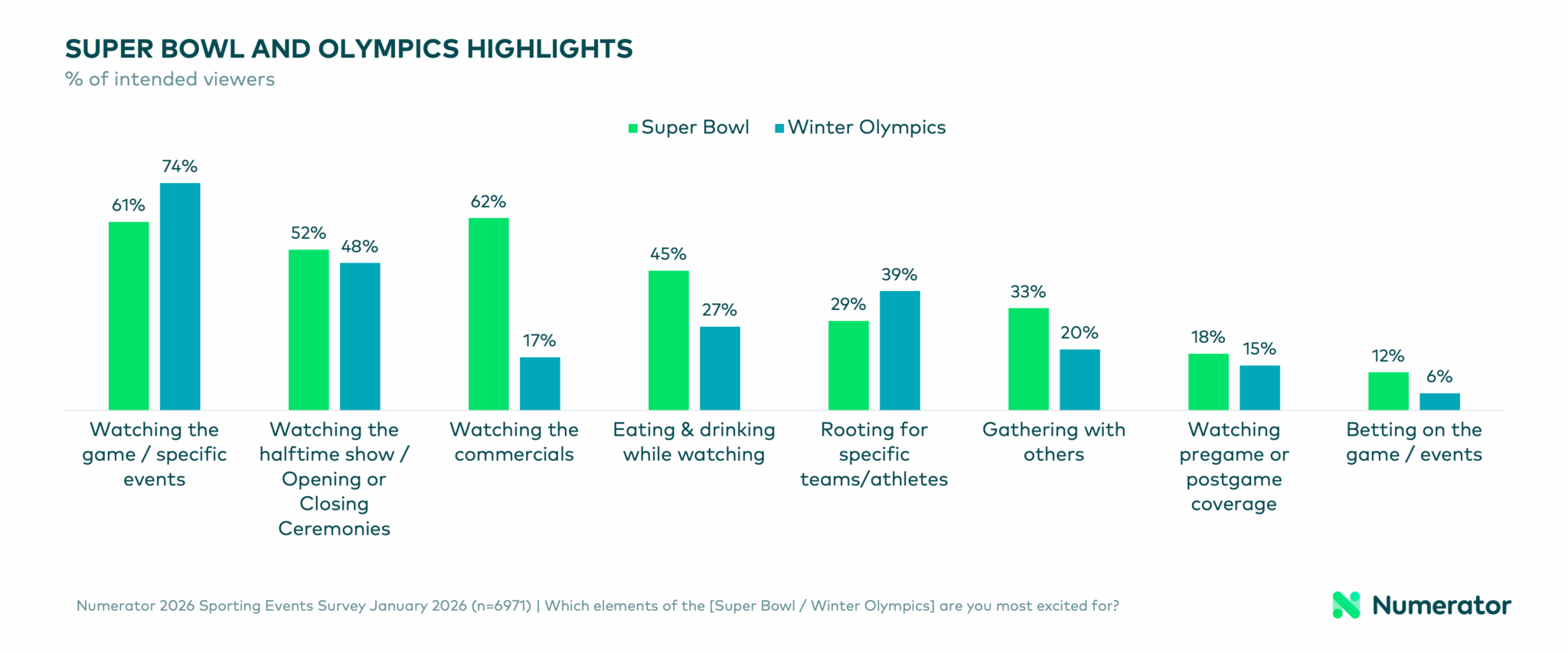
Where the events differ sharply is in how and where people watch. The Super Bowl remains a communal ritual, with more than half of viewers watching with others outside their household or hosting guests at home. Olympic viewing tends to be quieter and more flexible: over three-quarters of Olympic viewers plan to watch alone or with household members, reflecting the multi-day, multi-event format.
Bars, restaurants, and public spaces will benefit more from Olympic coverage than many retailers expect. Olympic viewers are more than twice as likely as Super Bowl viewers to watch outside the home, generating extra foodservice traffic over a longer period.
Super Bowl drives the biggest basket
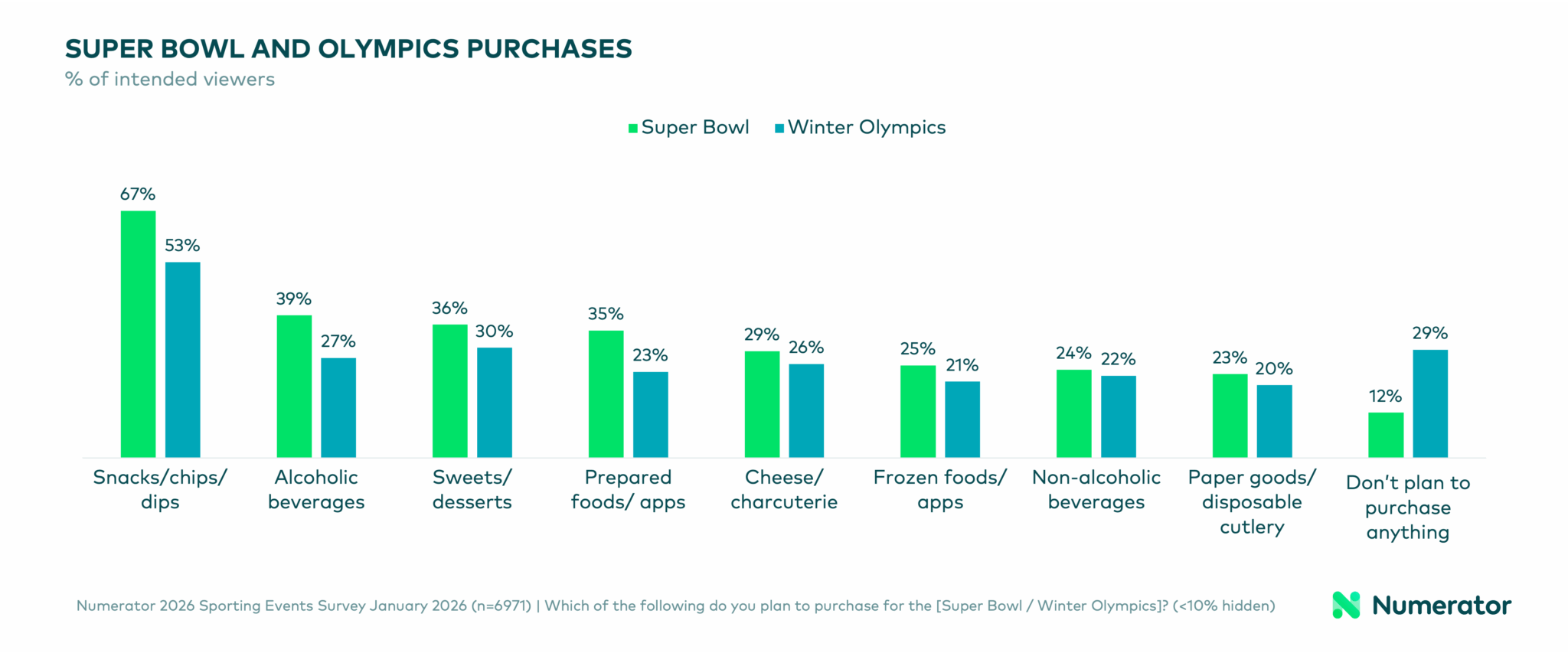
From a retail perspective, the Super Bowl remains unparalleled. Nearly 90% of Super Bowl viewers intend to purchase game-related items, mainly snacks, chips, and dips, followed by alcoholic beverages and desserts. Historically, the Saturday before the Super Bowl is among the top grocery sales days of the year, highlighting the event’s significant effect on sales volume and basket size.
Olympic viewers are less likely to shop, but they remain engaged. About seven in 10 plan to make purchases, mainly snacks and sweets, with alcohol playing a smaller role.
Different moments, distinct opportunities
Together, the Super Bowl and Winter Olympics highlight two powerful but contrasting consumption patterns: one driven by a single, high-impact day of communal viewing and peak spending, and the other by sustained, at-home engagement that encourages repeat occasions. For mass merchants, grocers, and brands, winning the weekend means understanding both dynamics—and customizing assortments, promotions, and messaging accordingly.
To learn more about how viewing and spending patterns across cultural moments can impact business, contact Numerator.
Submit Your Press Release
Have news to share? Send us your press releases and announcements.
Send Press Release