
WASHINGTON — Credit card swipe fees will add a record $3.4 billion to the cost of school and college supplies this year, costing the average family as much as $34, the Merchants Payments Coalition said Monday.
"With swipe fees rising year after year, this hidden tax undermines affordability and drains money from families that need it," said Doug Kantor, an MPC Executive Committee member and general counsel for the National Association of Convenience Stores. "A family could buy superhero lunchboxes for two kids or a backpack for their college sophomore with the money credit card companies are swiping from them. Congress should protect families trying to deal with the high cost of putting their children through school by passing the Credit Card Competition Act."
Swipe fees average 2.36% of a transaction, and run as high as 4%, making them most merchants' largest operating cost after labor. Because few consumers pay with cash and card network rules limit discounting, the coalition said the fees are built into prices paid by all shoppers regardless of how they pay.
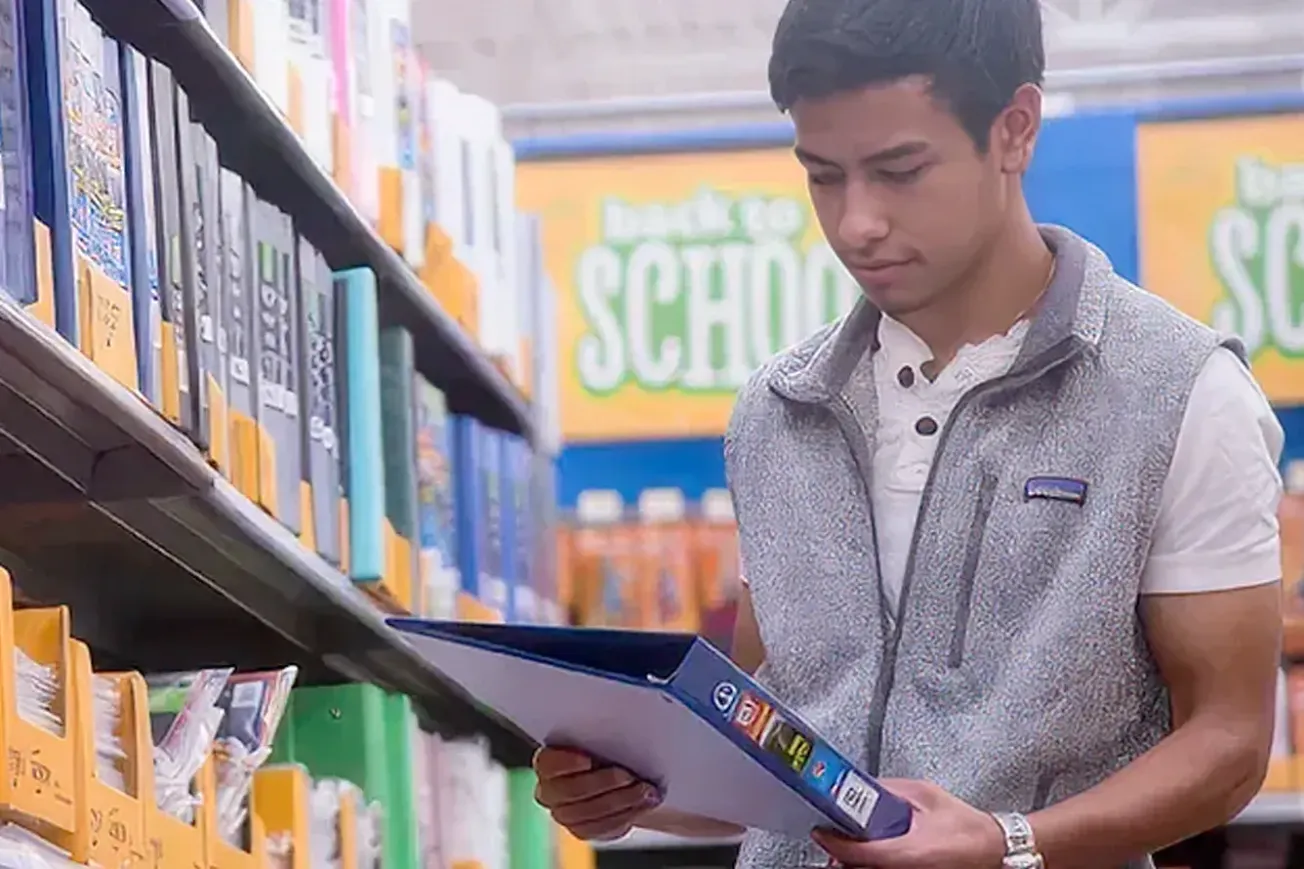
Families are expected to spend an average of $864 on K-12 school supplies, clothing and related items this year, for a national total of $43.3 billion, according to the National Retail Federation. MPC estimates swipe fees account for $20 of that per-family total and $1.02 billion nationally. Back-to-college spending is projected to average $1,438 per family, or $103.5 billion overall, with swipe fees adding $34 per family and $2.4 billion in total. Combined, the coalition estimates swipe fees on back-to-school and back-to-college spending will reach $3.4 billion.
Within K-12 budgets, the coalition estimates $146 in average spending on school supplies carries $3.46 in swipe fees, $293 in electronics spending carries $6.92, and $424 in clothing and shoes spending carries $10.01. For college students, it estimates $194 in dorm furnishings carries $4.58 in swipe fees, $182 in clothing carries $4.30, and $342 in electronics carries $8.07. The coalition says the $20 average swipe-fee cost to a K-12 family would cover a pair of superhero lunchboxes, while the $34 average for a college family would cover a backpack, with money left over. It also estimates swipe fees make up $2 of an $85 elementary supply list, $3.30 of a $140 graphing calculator, $3.19 of a $135 basic supply list, and $15.34 of a $650 laptop.
Swipe fees on Visa and Mastercard credit cards alone have more than quadrupled since 2010, reaching $118.8 billion last year, while total credit and debit card swipe fees hit a record $198.25 billion, adding more than $1,200 a year in costs for the average family, according to the coalition. It attributes the increases largely to a lack of competition, noting that Visa and Mastercard control 80% of the market and each centrally set the rates charged by banks issuing their cards, while restricting processing to their own networks.
The report comes as Congress considers the Credit Card Competition Act, which President Donald Trump has said is needed to "stop the out of control Swipe Fee ripoff." The bill would require banks with at least $100 billion in assets to enable card processing over at least one unaffiliated network, such as Star, NYCE or Shazam, in addition to Visa or Mastercard. Proponents say the resulting competition over fees, security and service would save merchants and consumers $17 billion a year.
The Merchants Payments Coalition represents retailers, supermarkets, convenience stores, gas stations, online merchants, hotels and other businesses advocating for a more competitive and transparent card payment system.