

MINNEAPOLIS — Target Corp. reported second-quarter results that showed modest improvement from the first quarter but continued challenges in winning over shoppers, as the company simultaneously announced a CEO transition that will reshape its leadership going into 2026.
 MMR
MMR
Financial Performance
For the quarter ended August 2, Target reported net sales of $25.2 billion, a decrease of 0.9% from the same period in 2024. Comparable sales declined by 1.9%, primarily due to a 3.2% drop in store sales, while digital comparable sales increased by 4.3% driven by strong growth in same-day services like Drive Up and Target Circle 360.
Earnings per share came in at $2.05, a decline of about 20% year over year, but slightly above Wall Street estimates of $2.01 to $2.03. Operating income fell nearly 19% to $1.3 billion, pressured by higher markdowns, purchase order cancellations, and category mix shifts toward lower-margin goods.
Target also reported a 14.2% increase in non-merchandise sales, reflecting strength in its Roundel advertising arm, membership programs, and marketplace business. Executives highlighted these fast-growing revenue streams as a key buffer to soft retail traffic.
The company reaffirmed its full-year 2025 guidance of a low single-digit decline in sales and adjusted EPS between $ 7.00 and $ 9.00.
CEO Transition
The earnings report was accompanied by news that Michael Fiddelke, Target’s Chief Operating Officer, will succeed Brian Cornell as CEO effective February 1, 2026. Cornell, who has led the company since 2014, will transition to the role of Executive Chair of the Board.
Fiddelke, 49, has spent two decades at Target in roles spanning finance, merchandising, operations, and human resources. On a call with reporters, he outlined three priorities:
- Reestablish Target’s identity as a destination for unique, stylish products.
- Deliver more consistent customer experiences, both in stores and online.
- Leverage technology and efficiency to strengthen operations.
“Now's the time to take full advantage of our strengths, embrace change with pace and purpose, and regain our momentum,” Fiddelke said.
Cornell praised his successor, saying Fiddelke “brings a remarkable level of resolve in the face of complex challenges, a deep passion for growth, and a natural ability to inspire those around him to define what's next.”
Market Reaction
Despite beating expectations, Target’s stock tumbled nearly 9% in early trading on Wednesday as investors weighed the ongoing sales declines and leadership shift. Shares are now down more than 60% from their all-time high in late 2021, according to CNBC, reflecting Wall Street’s impatience with the company’s uneven performance.
Analysts pointed to four years of stagnant sales, continued weakness in store traffic, and competitive pressure from Walmart, which has gained share in key categories.
Target’s struggles have also been amplified by external pressures, including tariffs on imported goods, accounting for about half of its merchandise mix, as well as consumer backlash to the company’s handling of Pride merchandise and diversity initiatives.
Adding to the disruption, Ulta Beauty and Target recently announced they will end their in-store beauty shop partnership in 2026, a deal once seen as a driver of store traffic.
 MMR
MMR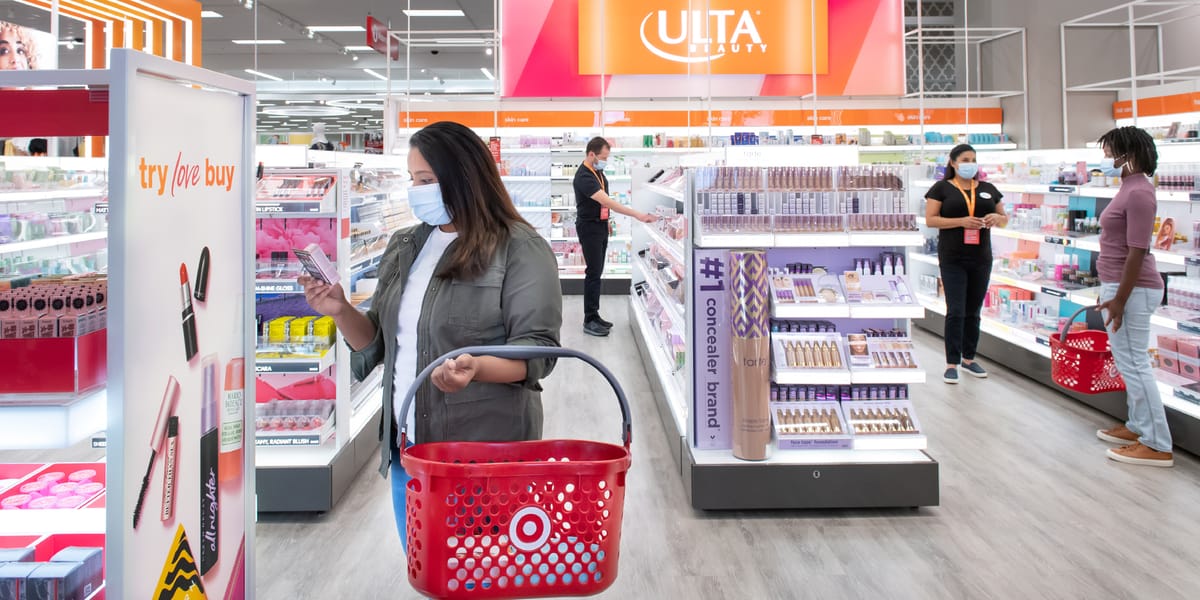
Looking Ahead
Executives noted that sales trends improved from the first to the second quarter, with all six core merchandising categories performing better than in the first quarter. Still, transactions fell 1.3% and average basket size declined 0.6% compared with a year ago.
Fiddelke, who has been leading Target’s Enterprise Acceleration Office, said he sees opportunities to rebuild Target’s reputation in categories such as home goods, where the company “lost some of our fashion and design leadership” after pandemic-era growth. He pointed to recent additions, such as Disney- and Marvel-themed kids’ bedding, as examples of how Target can regain its edge.
As the company heads into the critical back-to-school and holiday seasons, Target is betting on improved cost management, stronger digital engagement, and a leadership reset to restore momentum.