

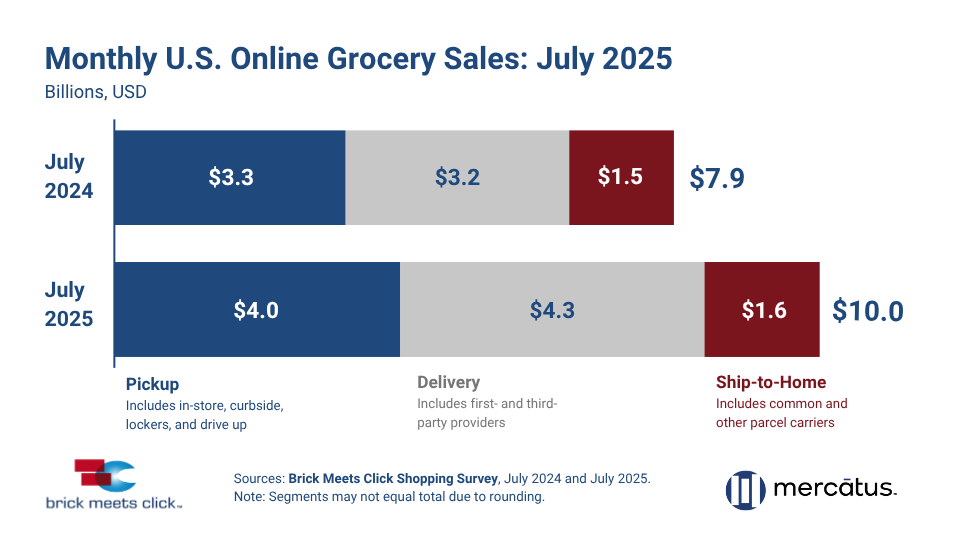
BARRINGTON, Ill. — U.S. online grocery sales hit $10.0 billion in July 2025, a 26% jump from the previous year, driven by record-breaking household penetration, strong order activity and higher spending, according to the latest Brick Meets Click Grocery Shopper Survey sponsored by Mercatus.
All three e-grocery fulfillment methods posted year-over-year gains:
- Delivery sales climbed 36% to $4.3 billion, accounting for more than half of the monthly increase.
- Pickup rose 24% to $4.0 billion.
- Ship-to-Home improved 10% to $1.6 billion.
“The elimination of explicit fees, like the standard delivery cost, via a membership or subscription program, removes a top barrier to increased usage, and customers are taking advantage of it,” said David Bishop, Partner, Brick Meets Click. “This tactic is unlocking latent demand for Deliver,y which is typically viewed as the more convenient but also the more expensive option when compared to Pickup.”
A record 81 million U.S. households, about 61%, purchased groceries online in July, with Pickup usage also hitting an all-time high as more than one-third of households used the service. Monthly active users increased 11% year-over-year, fueled by the return of infrequent or lapsed shoppers.
The average number of orders per active user rose 6.5%, led by shoppers aged 30-60, while the overall average order value grew 7%, driven by an 8% AOV increase for Delivery. More frequent users, those placing four or more orders within a three-month period, spent approximately 50% more per order than first-time customers.
E-grocery share of total grocery spending jumped over 300 basis points to 17.2%, or 14.4% when counting only Delivery and Pickup, as overall grocery spending rose 2.7% compared to July 2024.
"In an era where ‘free’ delivery is setting new customer expectations and Walmart’s retail media revenue fuels its competitive edge, regional grocers face mounting pressure to profitably serve shoppers online,” said Mark Fairhurst, Chief Growth Marketing Officer, Mercatus. “Grocery retailers that own and activate their customer data to target and personalize offers—especially for infrequent or lapsed shoppers—can turn renewed engagement into lasting loyalty, defending both sales and margins."