
Amazon has surpassed Walmart as the world’s biggest company by revenue. Amazon posted sales of $717 billion in 2025 compared to the $713.2 billion reported by Walmart for its fiscal year ended January 31. Both companies generate most of their revenue in the United States.
Amazon’s rise owes largely to the strength of its cloud-computing unit, Amazon Web Services (AWS), a business that Walmart doesn’t operate in.
AWS accounted for nearly $129 billion in revenue in 2025, up 20% from a year earlier. The unit stands to get a significant boost from Amazon’s decision to invest $50 billion in OpenAI, maker of ChatGPT. OpenAI and AWS are also deepening their technical ties, expanding an existing $38 billion multiyear agreement by $100 billion over eight years. OpenAI will run more of its AI workloads on AWS.
Walmart had been the largest company by revenue for more than a decade. It is the biggest physical retailer in the world, with more than 10,000 stores and shopping clubs globally.
Amazon is the biggest online retailer, with its website and mobile apps attracting 2.7 billion visits each month. But Walmart’s e-commerce business is closing the gap with Amazon’s. Walmart recently joined forces with Google on universal commerce protocol standards for agentic shopping.
A standardized agentic environment would likely make Walmart one of the easiest retailers for AI agents to work with as they search, compare, and transact on behalf of consumers.
The agentic-focused partnership should allow Walmart to “reach the customer where they are as commerce shifts,” Daniel Danker, executive vice president of AI acceleration, product, and design, said on Walmart’s latest earnings call. “There are so many shopping occasions that don’t begin as a shopping occasion, and this allows us to serve those moments.”
 MMR
MMR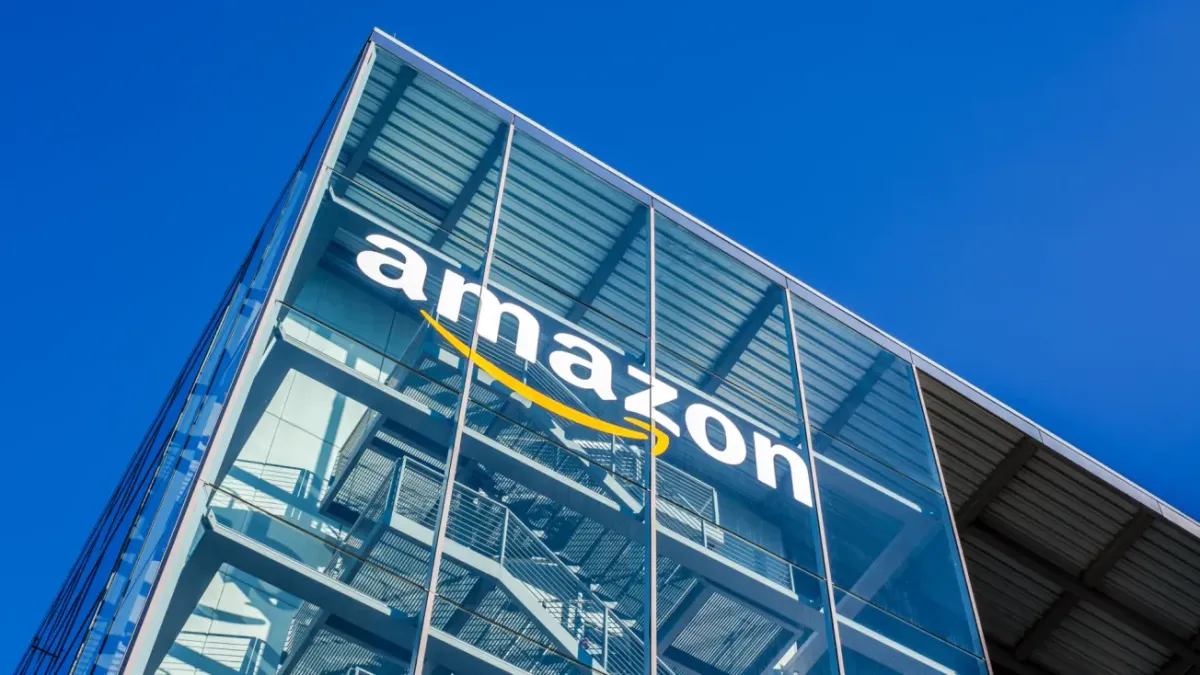
For its part, Amazon is developing its own version of the supercenter, announcing plans for a 229,000-square-foot megastore near Chicago that would effectively merge elements of a supermarket, a big-box outlet and a showroom, offering a local presence and shopper engagement that can’t be matched online and can serve as a fulfillment hub, return center and data-collection point.
Amazon's brick-and-mortar footprint is shrinking, however. The company recently closed the last of its Amazon Go and Amazon Fresh locations, a total of 72 stores nationwide, saying it would focus instead on its Whole Foods Market locations and grocery delivery from Amazon.com.
With the closures, Whole Foods is Amazon’s only physical store brand in the United States. The company said it would continue experimenting with concepts in physical retail and expects to remain a force in groceries, where it is one of the nation’s top three players, with more than $150 billion in gross sales and 150 million customers shopping for groceries each year.
With its massive retail footprint, Walmart is the nation’s largest grocer in term of sales, at $250 billion a year. Food is its largest single product category.
Submit Your Press Release
Have news to share? Send us your press releases and announcements.
Send Press Release