
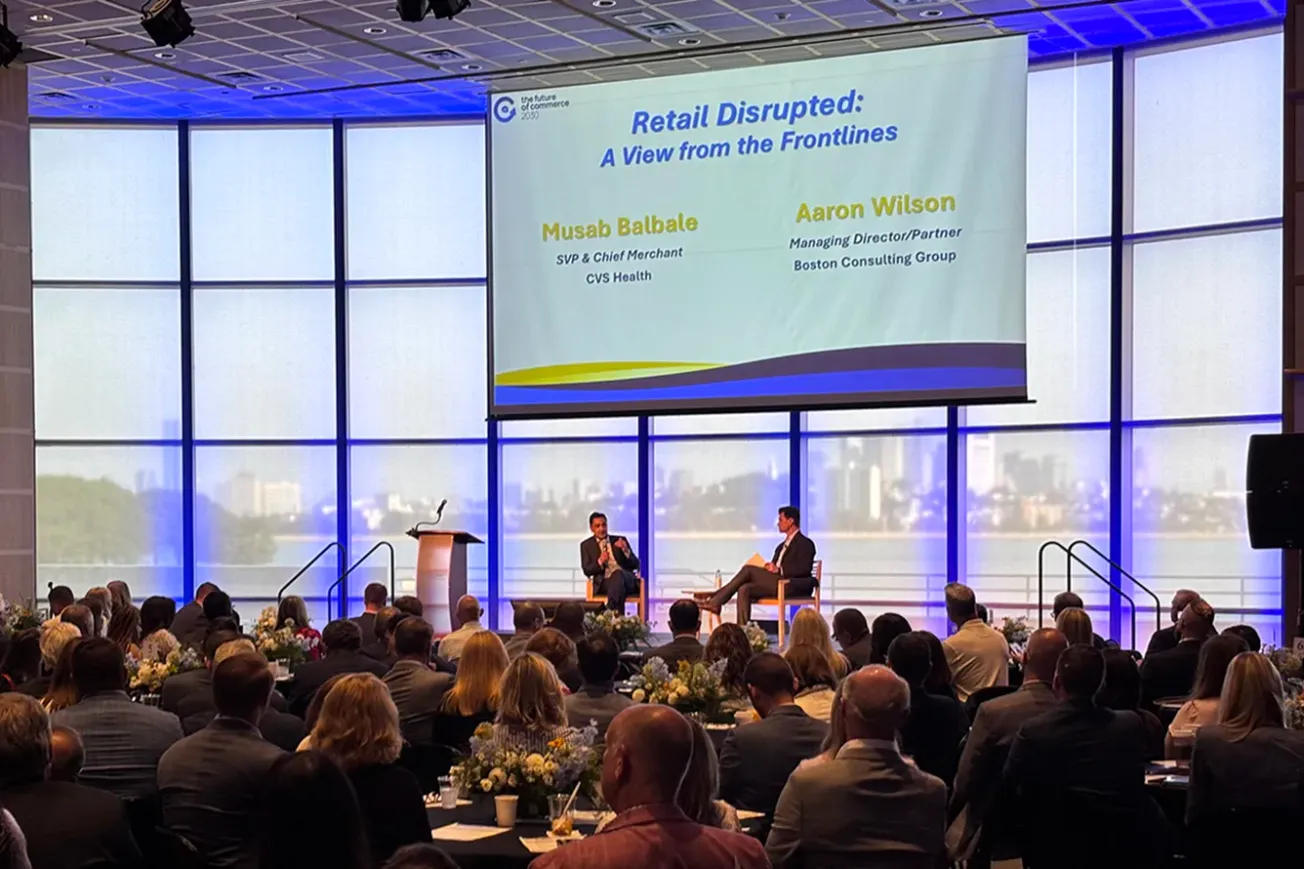
Late last month, CVS, the Emerson Group, WSL Strategic Retail and the editors of MMR chaired a daylong meeting at Boston’s John F. Kennedy Presidential Library and Museum to discuss, debate and argue about the possible future — of commerce, of retailing, of the industries in which the various professional participants toiled.
Amid the various positions, beliefs, certainties and doubts expressed by the participants and absorbed by an invited audience of 350 industry veterans, one subject kept cropping up, sometimes clarifying the discussion, at other times clouding the debate: Definitions.
It’s no new news to acknowledge the fact that the retailing community occupies a world defined and sometimes muddied by the various and sometimes conflicting definitions that dominate that world. Nor is it surprising that we sometimes continue to define our activities by buzz words that have become obsolete — or, at the least, not as precise or informative as they once were.
To attempts to clarify the situation — or, at the least, make the journey into tomorrow a bit less perilous — we offer here five commonly used words, phrases or descriptives that have, let’s say, seen more-accurate days. Here, in no particular order, are the five:
• Grouping Walmart and Target together. Once upon a time, this comparison was shorthand for the discount store segment of the mass market retailing community. Today, we continue to pronounce them together, though, in some minds, they are headed in opposite directions.
• Grouping all drug chains together. Once upon a time, the chain drug industry marched in lock-step toward prosperity. No longer. Today, there are emerging successful drug chains and those that are struggling. Thus, it is perhaps time to cease grouping all chain drug retailers under one broad — and perhaps misleading — banner.
• Continuing to use the words Health & Beauty Aids. This term, again from an earlier era, repeatedly — and erroneously? — calls up two distinctly separate and, say some, unrelated categories. Thus, now might be the time to separate them, at least descriptively, into two distinct product categories.
• Why do we, asked some people in Boston, continue to use the words “trade class” to define and describe the various types of retailers in our community? Good question. Perhaps, then, the time has come to find some new — and arguably more appropriate — ones.
• What does omnichannel really mean? In grammatical terms, it might describe our industry. As an actionable descriptive, said some of the Boston participants, we can do better. And what better time to start looking than now?
Clearly, according to many of the Boston participants, the time has come to throw out the dog-eared dictionary to definitions that sufficed in an earlier retailing generation and replace it with a vocabulary that more closely, clearly and honestly reflects the new era in which the mass retailing community now operates. Doing so, they insist, may not make the road to tomorrow any easier to travel, but it just might make it easier to understand — at least verbally.