

NEW YORK – PepsiCo, Hershey, Mondelez and other leading CPG companies report modest impacts to date from consumer adoption of GLP-1 drugs, likening their emergence to a behavioral trend to monitor and navigate rather than as a fundamentally disruptive force.
Appearing at the 2025 Consumer Analyst Group of New York conference, Mondelez CEO Dirk Van de Put downplayed the drugs’ disruptive potential, estimating a 1% to 1.5% impact on sales volume over 10 years, largely due to limits on the drugs’ accessibility and insurance coverage. Van de Put also noted that most GLP-1 users stop taking the drug within a year, precluding any long-term dietary changes.
 Thorvardur de Shong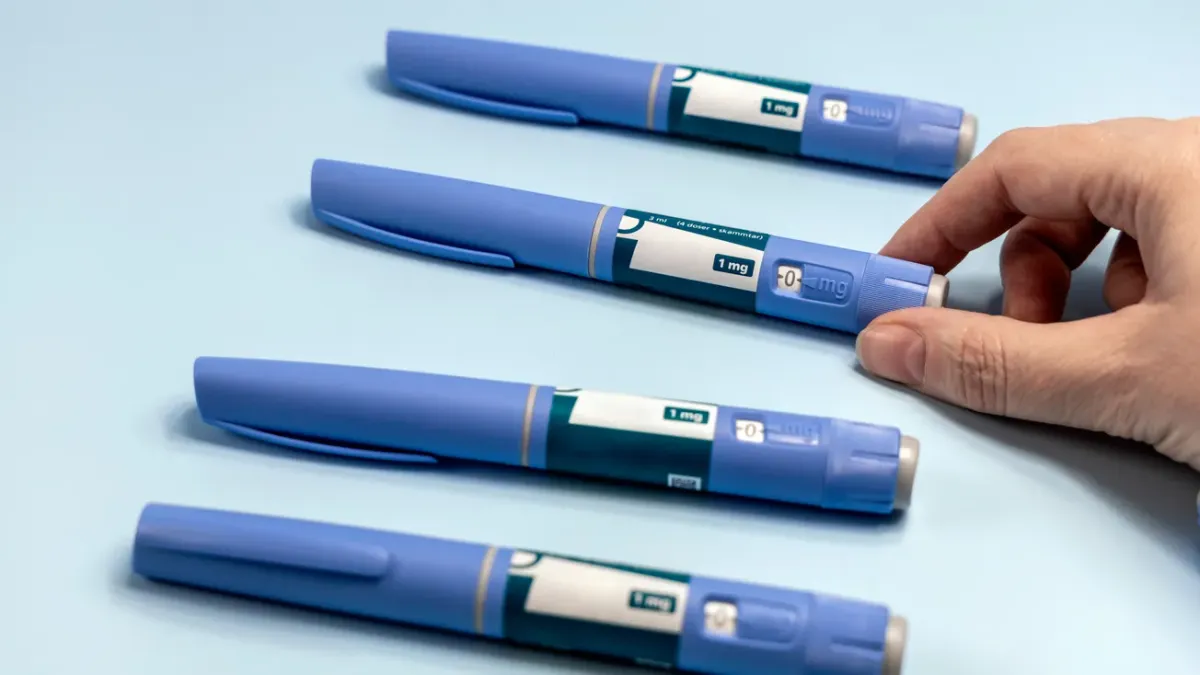
The high cost of GLP-1 medication is the biggest impediment, though consumer adoption has also been hindered by the lack of insurance coverage, drug shortages, and the medication’s physical side effects.
But observers monitoring the dynamics around GLP-1 see signs that obstacles to their use are coming down and that enthusiasm is spreading among consumers and primary-care providers on favorable coverage of positive health outcomes.
Focus has shifted away from market's 'outsized potential'
“While the effect of these changes on the food market has been minimal so far, packaged food manufacturers should prepare for GLP-1 drugs to hinder growth in snack food consumption in the coming years and for the sector’s current 3% to 4% annual growth rate to slow significantly,” according to a survey from strategy consultant EY-Parthenon. “[The study] shows the degree of penetration and the eventual impact are likely to grow faster and will have a greater influence on food consumption than previously understood, potentially impacting up to $12 billion in snacking sales over the next 10 years.”
Investment bank TD Cowen recently revised its estimate of global GLP-1 sales in 2030 to $139 billion, up from $101 billion. “Focus appears to have shifted away from the GLP-1 market's outsized potential and toward the challenges that greet a successful drug class as it matures,” the firm wrote in a report to clients. “[B]ut concerns may be overstated. Achieving our estimate requires uptake in only 8% of diabetes patients and 2% of obesity patients worldwide.”
Lower prices would catalyze GLP-1 uptake. The GLP-1 market is dominated by Novo Nordisk (Ozempic, Wegovy, Rybelsus) and Eli Lilly (Mounjaro, Zepbound). Eli Lilly has strategically undercut Novo Nordisk’s pricing via discounts on Zepbound for cash-paying customers. And the Centers for Medicaid and Medicare Services announced that Medicare’s next drug price negotiations will treat Novo Nordisk’s semaglutide as a single product, regardless of whether the medicine is used to treat diabetes or heart risk, and whether it is delivered by shot or pill.
Analysts project annual price declines of 10% or more by 2027, especially as Medicare price negotiations begin.
Trump pushes 'most favored nation' policy on drug costs
President Trump signed an executive order last spring that aims to link the price paid for drugs in the U.S. to the lowest price paid in other high-income countries. This “most favored nation” policy is also meant to spur price negotiations between the federal government and companies, and push drug makers to establish new ways to distribute medicines to patients at a reduced cost.
Trump followed up in July with a letter sent to 17 large drug makers threatening to use “every tool in [the federal government’s] arsenal” if they don’t take steps to lower the prices of their products in line with those charged in other industrialized nations.
As for insurance coverage, fewer than one in five employer-sponsored health plans covered GLP-1s for weight loss in 2024, but coverage is expanding. Cigna’s health services subsidiary recently partnered with Novo Nordisk and Eli Lilly to discount GLP-1s for employer and health plan clients, and to cap patients’ copays for weight loss medications. That deal followed a similar deal between CVS Caremark and Novo to give Wegovy preferred access on the PBM’s standard formulary.
While peak potential is a ways off, the U.S. market for drugs that lower blood sugar levels and inhibit appetite is immense. CDC data classifies nearly three-quarters of U.S. adults as either overweight (30%) or obese (45%). Based on mid-2025 population estimates, that’s 200 million adults in the two categories.
KPMG: caloric intake of GLP-1 users declines 21%
Adoption of GLP-1 drugs increased nearly 600% between 2019 and 2024, according to a FAIR Health report, which concludes that 2% of adult patients with an overweight or diabetes diagnosis were treating their condition with glucagon-like peptide-1 receptor agonists. About half were taking the drugs to lose weight.
Beau Madsen, a retired realtor in New York, is among them. Since getting a prescription for Wegovy, Madsen has shed 45 pounds and is spending a lot less on groceries. “Nowadays I hardly get beyond the produce section, which at my store is right next to the front door,” he said. “Veggies, some chicken. That’s about it.”
A 2024 report from financial services firm KPMG estimates that GLP-1 drug users’ caloric intake declined 21%, and their monthly grocery spending fell by 31%. Households with at least one GLP-1 user reduced their grocery spending by 5.3% within six months of adoption, with higher-income households reducing spending by 8.2%, according to a research paper from Cornell SC Johnson College of Business and Numerator.
The largest reductions are concentrated in calorie-dense, processed categories, including a 10.1% decline in savory snacks. In contrast, a small set of nutrient-dense categories, most notably yogurt, show directionally positive changes, according to the authors.
The researchers reported modest increases in spending on fresh produce and yogurt, suggesting that weight-loss users are avoiding unhealthy items more than adding healthier foods.
Innovation brings opportunity for CPG companies
Major CPG companies see opportunity in developing products specifically for consumers on weight-loss medications. Recent examples include BOOST Advanced Nutritional Shake, a high-protein, nutrient-packed beverage from Nestlé Health Science designed to support adults on weight management journeys, including those using GLP-1 medications.
Conagra Brands is adding “GLP-1 Friendly” labeling to its Healthy Choice frozen meals to highlight the products’ protein and fiber content.
General Mills has launched healthier alternatives to popular products, including protein-packed Annie's Macaroni & Cheese "Super Mac" with 15 grams of protein compared to nine grams in the regular version. It is also introducing lower sodium and lower sugar products across its Betty Crocker line of cakes, cookies, and brownies.