

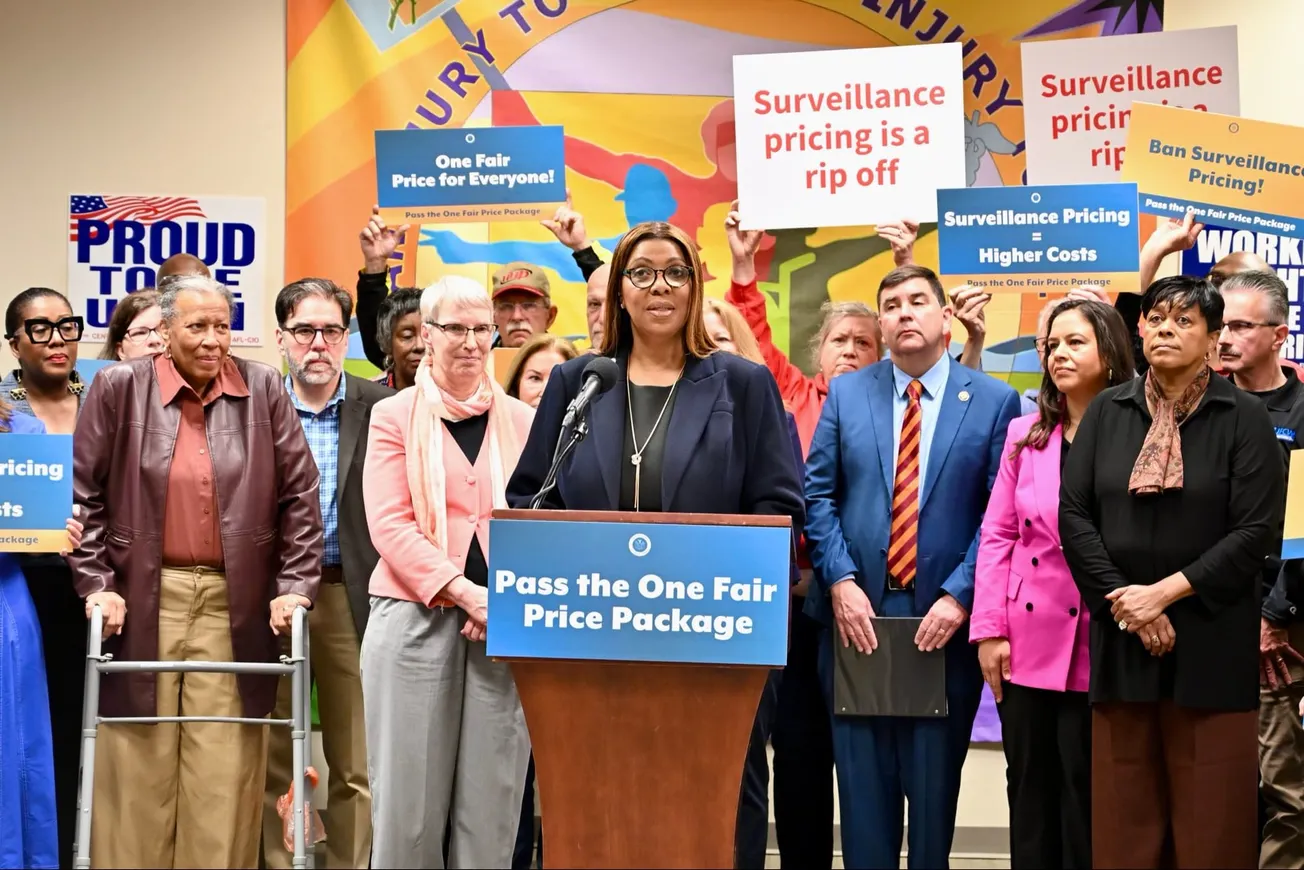
ALBANY, NY — New York lawmakers have passed the One Fair Price Act, legislation that limits the use of consumers’ personal data in personalized pricing, moving the state closer to becoming the third in the nation to curb the increasingly scrutinized practice.
The bill, supported by Consumer Reports, would prohibit companies from using personal information, including browsing history, location data, and inferred household size and income, to set prices or discounts for individual consumers. The measure now heads to Kathy Hochul for consideration.
Consumer advocates argue that personalized pricing, also known as surveillance pricing, enables companies to charge consumers different prices for the same products based on extensive data profiles.
“If signed, New York’s legislation will help protect consumers from personalized pricing. It will put limits on how companies can use consumers’ data to profile them and charge them the most they are willing to pay,” said Grace Gedye, senior policy analyst at Consumer Reports.
Supporters of the legislation celebrated its passage on Friday. In a post on X, New York Attorney General Letitia James called the bill’s approval “a big victory in our fight to ban surveillance pricing and help make life more affordable in New York.” James thanked state Sen. Rachel May and Assemblymember Emerita Torres for their work on the legislation and urged state leaders to “get it over the finish line” by securing the governor’s signature.
The One Fair Price Act passed the legislature in New York!
— NY AG James (@NewYorkStateAG) June 5, 2026
This is a big victory in our fight to ban surveillance pricing and help make life more affordable in New York.
Thank you, @AMEmeritaTorres and @RachelMayNY for your work on this bill. Let's get it over the finish line! pic.twitter.com/vdbwbm4AzW
The organization also urged Hochul to strengthen the bill by restoring a private right of action, enabling consumers to pursue legal remedies if they believe their rights have been violated.
The legislation follows similar measures enacted earlier this year in Maryland and Connecticut. Additional states, including California and New Jersey, are considering comparable proposals.
The issue has gained attention following recent investigations into data-driven pricing practices. Consumer Reports found that grocery retailer Kroger collected extensive consumer profiles that included inferred information such as income, family size, education level and gender. One shopper who requested their data reportedly received a 62-page profile.
In a separate 2025 investigation conducted with Groundwork Collaborative and More Perfect Union, Consumer Reports found that shoppers using Instacart were sometimes shown different prices for identical products from the same retailer at the same time. The study found price differences of up to 23% on certain items, potentially adding more than $1,200 annually to a household’s grocery bill. Following the report, Instacart ended the pricing experiment but said retailers and brands could continue testing promotions and discounts through its platform.
If signed into law, the One Fair Price Act would add New York to a growing list of states seeking to limit the use of consumer data in pricing decisions.
Submit Your Press Release
Have news to share? Send us your press releases and announcements.
Send Press Release