
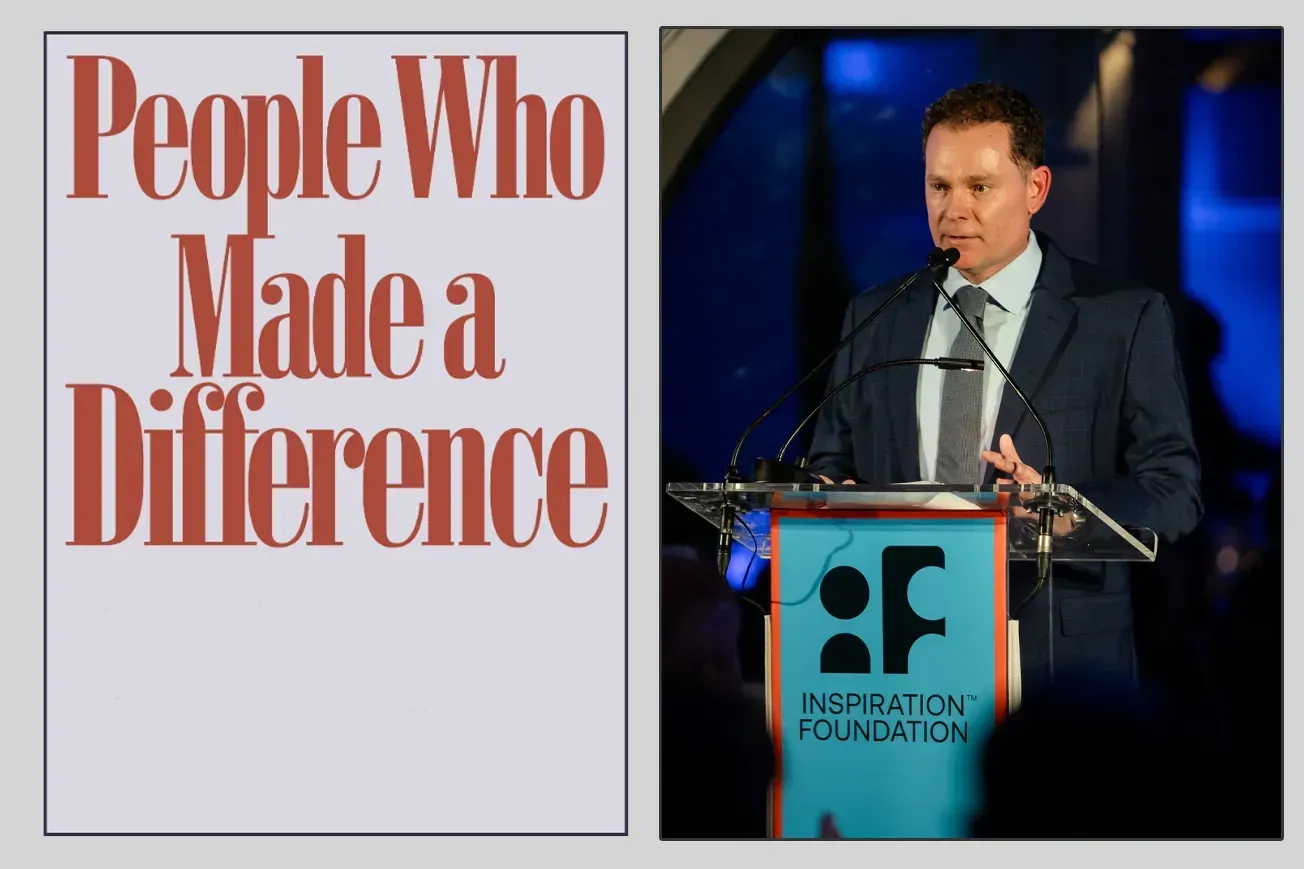
Isaac Shapiro and his longtime business partner, Mike Ghesser, launched Cleanlogic in 2006 as a purpose-driven business making bath accessories and exfoliating skin care products, with a mission to promote the hiring of individuals with disabilities and improve accessibility in the workplace.
The combination of Cleanlogic’s compelling story and its quality products offered at an affordable price resonates with consumers as well as retail partners from Ahold Delhaize to Walmart.
Success in the domestic marketplace has allowed the company to expand its distribution into Europe and Africa.
| Click here to see all the People Who Made a Difference |
The centerpiece of the Cleanlogic co-founders’ mission is a 10% increase in employment of Americans with all disabilities, such as autism, hearing loss, vision impairment or “neurodivergence,” an umbrella term referring to variances in how the brain processes information. Neurodiversity includes conditions such as autism, dyslexia, Tourette’s syndrome, and attention deficit hyperactivity disorder (ADHD).
“One in four people has a disability yet only 37% are employed,” Shapiro says.
Employing people with disabilities is good for business, he says.
Numerous studies conclude that brands demonstrating a clear purpose increase sales, improve loyalty and enhance engagement. And hiring disabled workers is an opportunity for employers to hire an untapped, capable workforce that shows up every day and will stay and grow with the company.
The production floor at Cleanlogic’s Audubon, Pa., headquarters serves as a model for how the co-founders’ mission might be realized.
Modifications to the former warehouse space involved changes as simple as attaching magnifying glasses to sewing machines and applying raised adhesive tape to the floor to help visually impaired workers who use a cane navigate the workplace.
“For National Disability Awareness month we interviewed our employees with disabilities and asked, ‘What does Cleanlogic mean to you?’ And they said, ‘Family and friends; I was an outcast in my school or had limited friends and then I come here and have friends and they can count on me to deliver and we trust each other.’ They all said the same thing,” Shapiro says.
“If you want to see the cultural impact you have to experience it. Walgreens has experienced it; the Meijer’s team has experienced it. An Anderson University case study shows cultural impact happens when 20% of the workforce are individuals with disabilities. It’s a mind-shift. You look at life differently; it’s not just about you,” he says. “We think, ‘Oh my god, what a tough day,’ but when the employee next to you doesn’t have a car, who takes public transportation and sometimes arrives an hour early to work and sometimes an hour late because they have to take public transportation, you understand the troubles they’re going through. And they bring such positive energy.”
Sephora, Publix Super Markets, Walmart and H-E-B are among retail industry stalwarts in terms of hiring individuals with disabilities. A Walgreens distribution center in Anderson, S.C., has been a model for disability inclusion for nearly two decades, with 40% of its workforce comprised of individuals with a disability.
“We’ve learned that retailers were hiring people with disabilities, but they weren’t talking about it,” he says. “We asked ourselves, ‘What can we do to get retailers to talk about their amazing work and to inspire other companies to do the same?’ ”
At around the time that Shapiro and Ghesser launched Cleanlogic they founded the Inspiration Foundation as a complement that would advance the company’s mission and spread its goals to others.
A portion of Cleanlogic’s profit is contributed to the foundation to help cover costs of administering training programs that help blind or visually impaired individuals develop the skills needed to live independently and compete for and retain jobs.
Shapiro’s inspiration for becoming a social entrepreneur comes from his mother, Beatriz, or Bea, who started losing her vision at age seven from a disease affecting the retina that left her legally blind.
Despite having a disability, Bea graduated from school for the blind and later established a program to train blind and visually impaired students to use adaptive computer technology to gain employment.
“In the 21st century, you have to be thinking about accessibility for all,” says Shapiro. “Our industry is leading in a lot of these discussions, because we’re involved in communities. We want all industries to get behind this.”