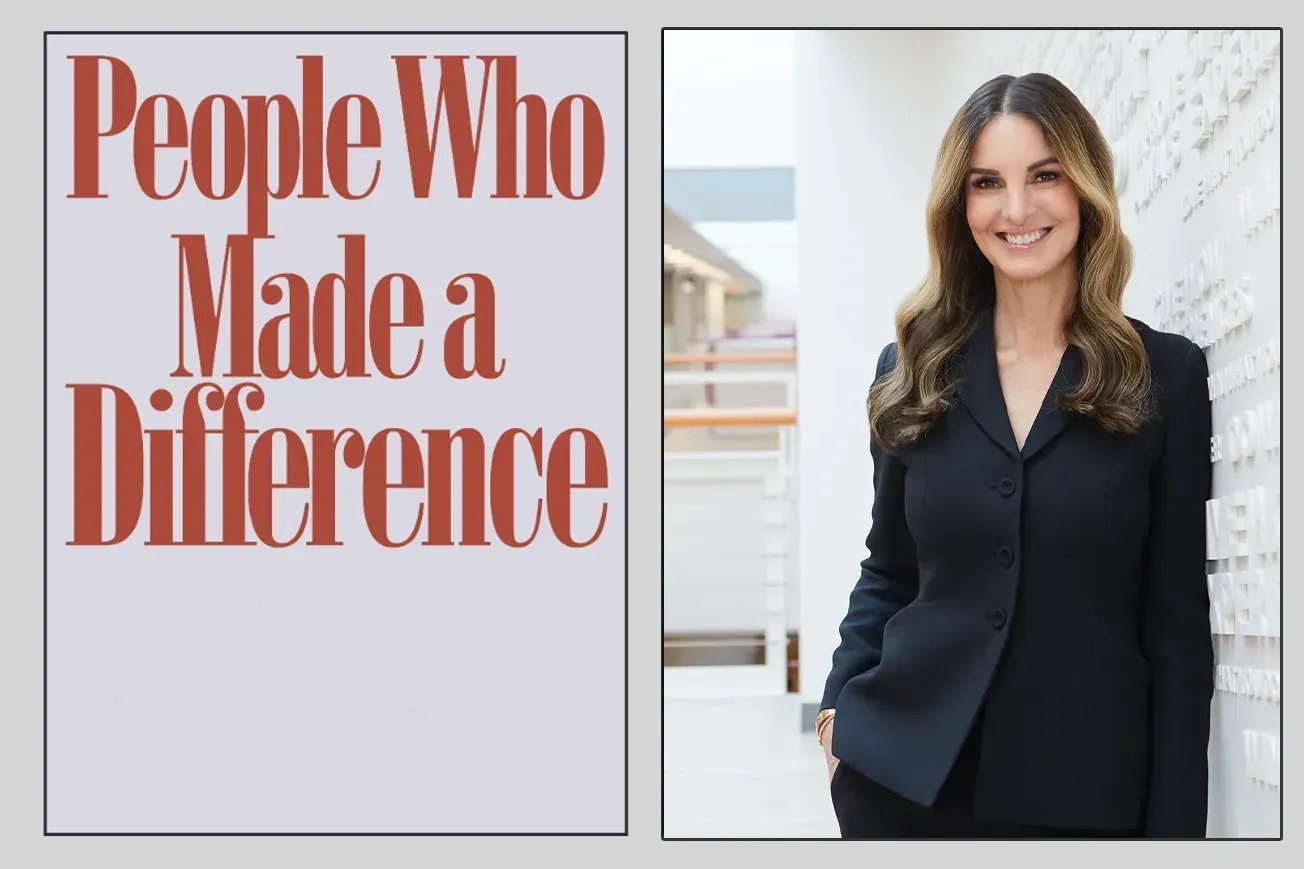


When someone is passionate about his or her work, it’s not a job, says Jim Kirby, chief commercial officer of Kroger Health.
“It’s what you’re just meant to do.”
For Kirby, that passion is for Nourishing Change, a movement to reimagine the future of retail health that has been spearheaded by Kroger Health president Colleen Lindholz and himself.
| Click here to see all the People Who Made a Difference |
The momentum building behind the movement led to a conference this year in Cincinnati and an event scheduled for next year in Des Moines.
Kirby traces his involvement in the movement to his career roots as a pharmacist and his effort over more than 20 years at Kroger to help the company’s pharmacists practice at the top of their license. He’s committed to that goal because he believes that retail pharmacy is “the hub for health care” in the community. “It’s a place where people go to get medications and get healed. It’s where they go to get information and education and help. And sometimes it’s help that they didn’t even know they needed. What we try to do is serve all of their needs — known or unknown — and ultimately to create relationships with these individuals that we’re blessed to have come across our path, and uplift them in some way, shape or form.”
Kroger’s supermarkets are integral to that effort because nutrition is a cornerstone of the treatment of chronic disease. So it’s only natural for the grocer to help people who are food insecure or nutritionally deficient. To that end, Kirby, Lindholz and their team have sought to make Kroger “not just be a purveyor of food, but a source of information for nutrition and a resource for helping people who are looking for specific products for their unique needs, and hopefully elevating their health and wellness,” he says.
The effort led to a scoring system that Kroger worked on for the better part of a decade. Developed internally, it took the form of an app called OptUP that was later brought into the grocer’s native and digital experiences. A year ago, Kroger collaborated with FoodHealth Co. (formerly bitewell) to get an even greater percentage of its products scored and “take us to the next level.” With FoodHealth Co. focused on nutrition, data integrity, data science and scoring, the relationship is striving for evidence-based nutrition transparency by empowering consumers with clear insights into the nutritional quality of the foods they purchase. By making this information accessible and trustworthy, the goal is to help shoppers make more informed, healthier choices to increase the consumption of “good foods that actually nourish the body,” says Kirby.
The grocer now has over 90% of its items scored, which Kirby says was “the critical foundation that we needed, because you can’t improve something if you can’t measure it. Now we can measure it. So now it’s a question of what do we do about it? One way is we can suggest better-for-you foods that have a slightly higher score and get people to perhaps try them and improve the nutrition of their basket. We can look at the scores of all the items in the household’s basket, aggregate them and show the trends over time. And we’re on a mission now to study how that score is associated with health care utilization and costs. Everyone knows that better nutrition equals better outcomes, but we want to prove it.”
Kroger endeavors to work with suppliers to offer discounts for more nutritious items and “support this health and wellness mission.” If retailers are transformed into “a purveyor of nutrition and health, and not just grocery, we will have done a great thing,” Kirby says.
Part of the transformation will be taking advantage of the intersection between the food side of the business and the pharmacy side. The accessibility of Kroger pharmacies can help identify unmet health care needs and educate shoppers about the scoring system. They can be referred to Kroger dietitians, and to community organizations that can help them with needs ranging from transportation to modifications for healthier homes.
Pharmacists can explore health insurance benefits and financial incentives customers may have to buy healthy food. “We want to make sure that they are aware of those incentives and know how to access them and use them in the right way in our store. If it’s an open benefit, and somebody has money to spend on any kind of food, we want to ensure that we are guiding them — with the help of the scoring system — to better-for-you products.”
As much as Kroger has played a leading role in Nourishing Change, Kirby stresses that the movement extends well beyond one company. Hy-Vee, CPESN and Ahold Delhaize USA have joined Kroger in steering the movement. The hope is to link different stakeholders in an ecosystem that could coordinate care for a patient and do everything possible to surpass the patient’s expectations and ultimately improve his or her health.
“That’s kind of a grand vision statement for what I think a retail health model could be,” Kirby says. “But given that, there’s no one entity that can do it by itself. It takes collaboration, it takes a network, and there are inherent problems that have to be solved in order for a system to take shape. For instance, payers ultimately are in control of the health care dollar, and everything flows down from there.”
Restrictions on provider status for pharmacists form another barrier, as do data silos and a lack of willingness to share data or have standards around how to share it. Pharmacies that don’t sell produce, for example, have to connect with grocers in their community. “These things can be solved if the relevant people get together in a room and say we’re not about competing for the moment. We’re about solving problems, coming together as one for the benefit of the patient, creating this new retail health model that will transform everything.”