
When more than 23,500 convenience and fuel retail professionals gather at McCormick Place in Chicago from October 14–17, they won’t just be walking an Expo floor — they’ll be stepping into a vision of what the future of convenience retailing looks like. The NACS Show, hosted annually by the National Association of Convenience Stores (NACS), is the industry’s premier event, bringing together global retailers, suppliers, and innovators for four days of learning, buying and selling, networking and fun.
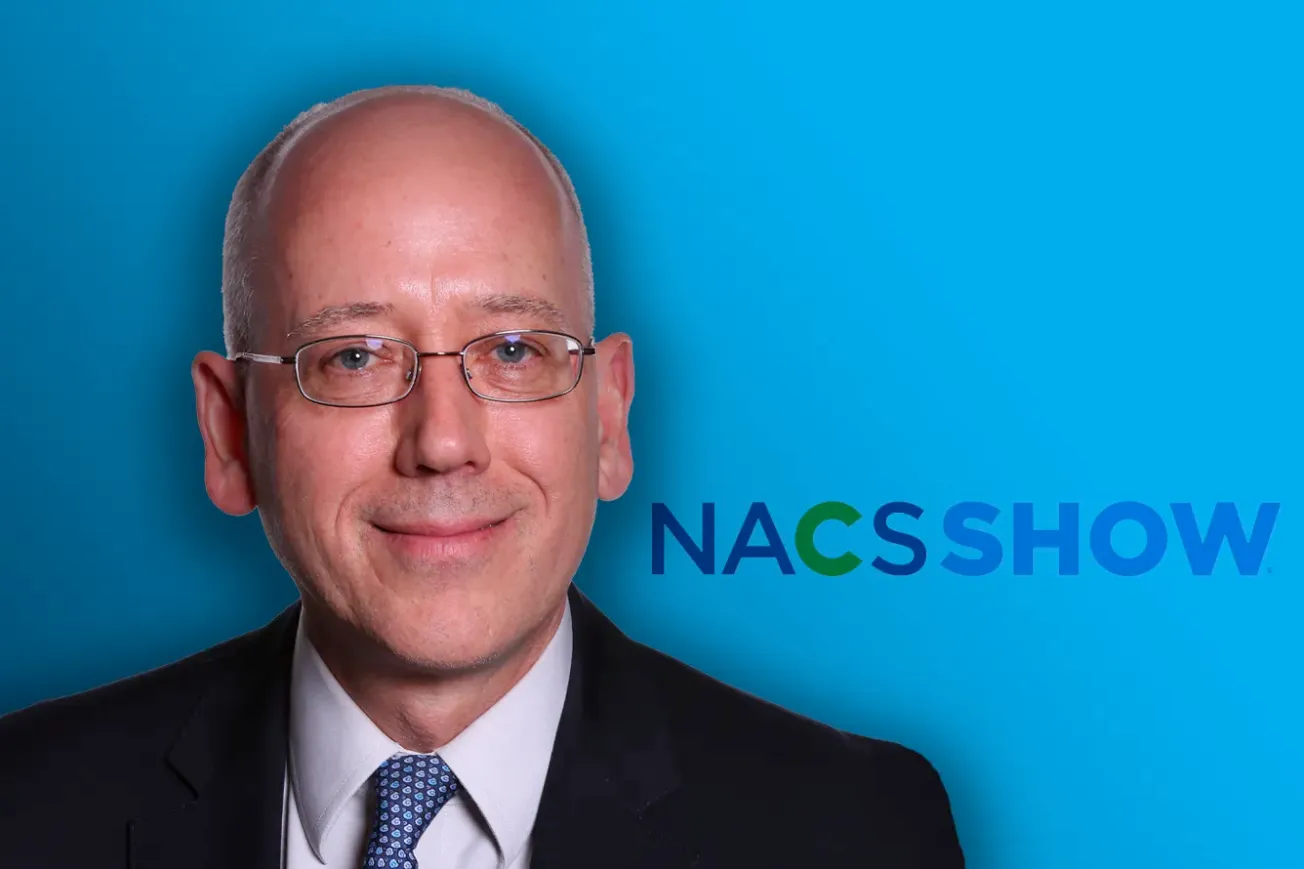
For Jeff Lenard, vice president of strategic industry initiatives at NACS, the essence of the event comes down to a single, simple promise: “We’ll show you the future.”

Seeing the Future in Three Ways
That promise is fulfilled, Lenard explains, in three core ways.
First are the education sessions — more than 50 this year — designed by retailers, for retailers. Each session digs into the challenges operators face on the ground, whether it’s loss prevention, customer service, or generational differences in shopping habits. “The average attendance in these sessions is around 240 people,” Lenard noted. “At most conferences, that’s a big ballroom keynote. For us, that’s the scale of the breakouts.”
Second are the general sessions, which elevate the conversation to the industry’s highest levels. This year will feature both motivational voices and internal leadership, including incoming NACS chairman Annie Gauthier. Attendees will also see the latest edition of Ideas 2 Go, the popular video series that takes participants inside standout stores around the world. “We’ll be showing examples from the U.S. and abroad,” Lenard said, “including one retailer who built a hidden speakeasy — a full bar and restaurant — inside a suburban Minneapolis convenience store. The point isn’t that everyone should do that. It’s that retailers should always be looking for ways to make customers smile.”
The third, and perhaps most dynamic, way is the Expo floor. Spanning 430,000 square feet, the Expo showcases thousands of products and services across five key areas: Facility Operations, Foodservice, Fuel Equipment & Services, In-Store Merchandise, and Technology. “Last year, pickle-themed foods were everywhere,” Lenard laughed. “This year, the trends will be different. That’s the beauty of it — you don’t know what’s going to pop until you’re there.” The Cool New Products Preview Room acts as a launch pad, giving attendees an early look at innovations and helping them map their “shopping lists” before hitting the main floor.
A People Business at Its Core
While technology often dominates headlines, Lenard insists that people remain the proper drivers of convenience retail. “Convenience stores conduct about 160 million transactions a day in the U.S.,” he said. “That’s nearly half the population walking through our doors daily. The real challenge is how we attract and keep great people — and how we use them to create customer experiences that keep shoppers coming back.”
That focus on human connection stands in contrast to some competitors. Lenard pointed to quick-service restaurants (QSRs), which, in many cases, have downsized their dining rooms and pushed traffic through drive-through lanes. “Drive-throughs are efficient, but you’re talking into a box and hoping the bag you get handed is correct,” he said. “It’s not the same as walking into a store and having a conversation with someone who knows you.”
For many consumers, especially in urban neighborhoods, that relationship can be deeply personal. “You probably know the guy at your local bodega,” Lenard said, “and he knows you. That kind of human connection is something convenience stores are uniquely positioned to provide.”
Foodservice as a Growth Engine
Another area transforming the industry is the foodservice sector. In 2004, prepared foods and dispensed beverages made up just under 12% of in-store sales. Today, they represent nearly 28%. “That’s more than one out of every four dollars,” Lenard said. “And it’s thanks to companies like Sheetz, Wawa, and Buc-ee’s showing customers that great food can come from a convenience store.”
Advances in equipment have enabled even small-format stores to expand menus, while international examples — particularly in Japan — point to new models. “In Japan, stores may get fresh food deliveries three times a day,” Lenard explained. “It’s not made on-site, but it’s still high quality. There’s no reason U.S. retailers couldn’t adopt more of that commissary model. We’ve already educated consumers once — that convenience stores can be great for food. Now we just need to take it a step further.”
The shift has changed how consumers perceive the channel. “It used to be desperation food,” Lenard said. “Now it’s a destination.”
The DNA of Sharing
For Lenard, who has been with NACS for 25 years, the culture of collaboration remains one of the industry’s defining traits. “NACS was founded in 1961 because convenience stores didn’t have their own trade group,” he explained. “From the beginning, it was about sharing ideas. Even today, you’ll see executives on stage at the NACS Show explaining what works for them, in detail, so that others can adopt it. That kind of openness is rare in business — but it’s part of our DNA.”
The Ideas 2 Go series exemplifies that ethos, spotlighting retailers who are doing something different and then making those insights available to the entire industry. “It’s the secret sauce,” Lenard said. “Most businesses guard those ideas closely. Our industry shares them.”
Why Convenience Thrives
That collaborative spirit helps explain why convenience retail continues to thrive even as grocery and pharmacy sectors struggle. “Convenience is defined by the customer, not by a product mix,” Lenard said. “Grocery stores sell groceries. Drugstores sell prescriptions. But convenience is about how you deliver — and that definition keeps changing.”
From 24-hour operations to mobile apps to commissary kitchens, convenience retailers adapt quickly as consumer expectations evolve. “That makes it incredibly challenging,” Lenard admitted. “But it also makes it incredibly exciting.”
Practical Advice for First-Timers
For those heading to Chicago this fall, Lenard offered both lighthearted and practical advice. “Wear comfortable shoes — you’ll walk miles every day,” he laughed. “Most of our staff ends up doing the equivalent of a marathon over the course of the week.”
But his bigger point was strategic. “Don’t just wander the Expo. Identify two or three specific challenges you want to solve in your stores, and then use the NACS Show to find solutions. The timing in mid-October is perfect — a lot of retailers take what they’ve learned back to their strategic planning retreats for the following year.”
Looking Ahead
For Lenard, the NACS Show remains both a reflection of the industry and a catalyst for its next stage of growth. “We promise to show you the future,” he said. “But the real value comes when attendees take what they’ve learned back home and use it to shape their own future. That’s what makes this industry so dynamic — and why the NACS Show is the one event you can’t afford to miss.”