
NEW YORK – After eight years building the largest direct-to-consumer kids' food brand in the U.S., Little Spoon is strategically expanding its retail footprint. Following a record-setting retail debut at Target—where Little Spoon has achieved top-decile velocity and quickly gained share against legacy category leaders—the company will expand this October into H-E-B, Wegmans and Harris Teeter, their first new retail partners beyond Target.
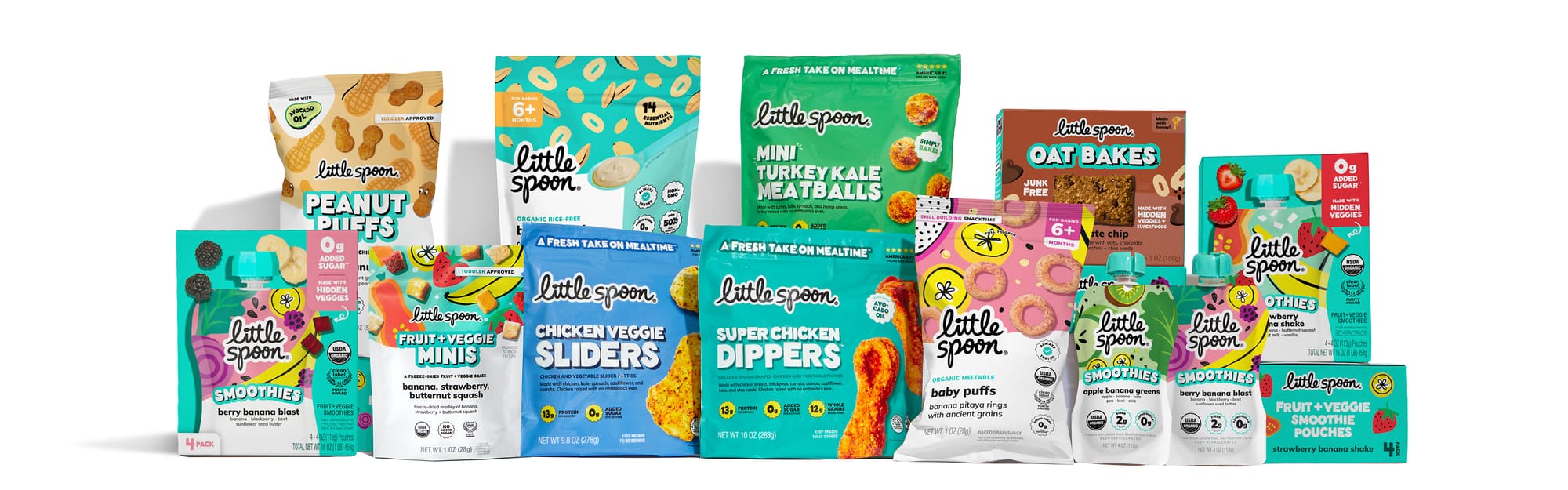
The expansion reflects a deliberate approach to retail growth: prioritizing depth in product offering over door count. Rather than building retail around a single hero product and maximizing distribution, Little Spoon is going deep within each retailer, with broad assortments spanning categories, aisles and stages of childhood. It's an extension of Little Spoon's mission to be a trusted nutrition partner throughout early childhood, building a portfolio that grows with families and meets more of their needs as their children grow. Each partner will launch with between 21 and 32 Little Spoon products, bringing the multi-category platform the company built through DTC into the grocery aisle.
Little Spoon is also using eight years of first-party consumer data to prioritize markets where it already sees meaningful demand and partnering with trusted regional grocers that have deep relationships with families in those communities. Together, the launches will add approximately 570 stores across Texas, the Northeast, Mid-Atlantic and Southeast, deepening household penetration in key markets while introducing the brand to new families. The Northeast is Little Spoon's strongest region in the country, with demand well above the national average and New Jersey ranking as its #1 state per capita, while Texas is the company's second-largest state by customer base.
- Wegmans: Launching October across 110 stores in nine Northeast states with 21 products across ambient and refrigerated. The Northeast is Little Spoon's strongest region, with New Jersey its single largest state, and the brand already has a significant customer base shopping at Wegmans markets. Wegmans' focus on quality, health and convenience closely mirrors what Little Spoon has learned its own customers prioritize, making the retailer a natural partner for expanding access in a region where demand is already strong.
- H-E-B: Launching October in stores across Texas with 32 products across refrigerated, frozen and ambient—the broadest assortment of Little Spoon products of the three new retailers.
- Harris Teeter: Launching October across 260+ stores in the Mid-Atlantic and Southeast with 21 products across ambient, refrigerated and frozen. The launch extends Little Spoon's footprint across two important growth regions through a retailer known for its focus on fresh, high-quality food and strong relationships with local shoppers.
"From the beginning, we built Little Spoon around a simple conviction: parents shouldn't have to compromise when it comes to feeding their kids," said Ben Lewis, Co-Founder and CEO of Little Spoon. "We chose these retailers carefully. Each has built the kind of trust, influence and affinity in their communities that most brands only dream of, the same connection we've spent eight years building with families online. Partnering with retailers this respected, and this far ahead of the curve, is exactly how we want to grow."
The expansion is a deliberate bet on regional, community-favored grocers. These retailers each hold high trust in the markets they serve and offer Little Spoon an opportunity to build trial, household penetration and physical availability in markets where the brand already has meaningful consumer demand. Little Spoon will tailor how it shows up in each retailer and market while maintaining a consistent brand proposition—building on the distinct culture, traditions and consumer relationships that make each regional grocer unique.
The expansion comes as Little Spoon enters its next phase of growth at significant scale. The company has scaled rapidly since its 2017 launch, reached profitability, and delivered well over 100 million meals and products to families nationwide, including tens of millions in the past year alone. It marks an important, additive step in Little Spoon's evolution from a digital-first kids' food company into a true omnichannel platform, grounded in the same consumer insights that have guided the company since its founding.