
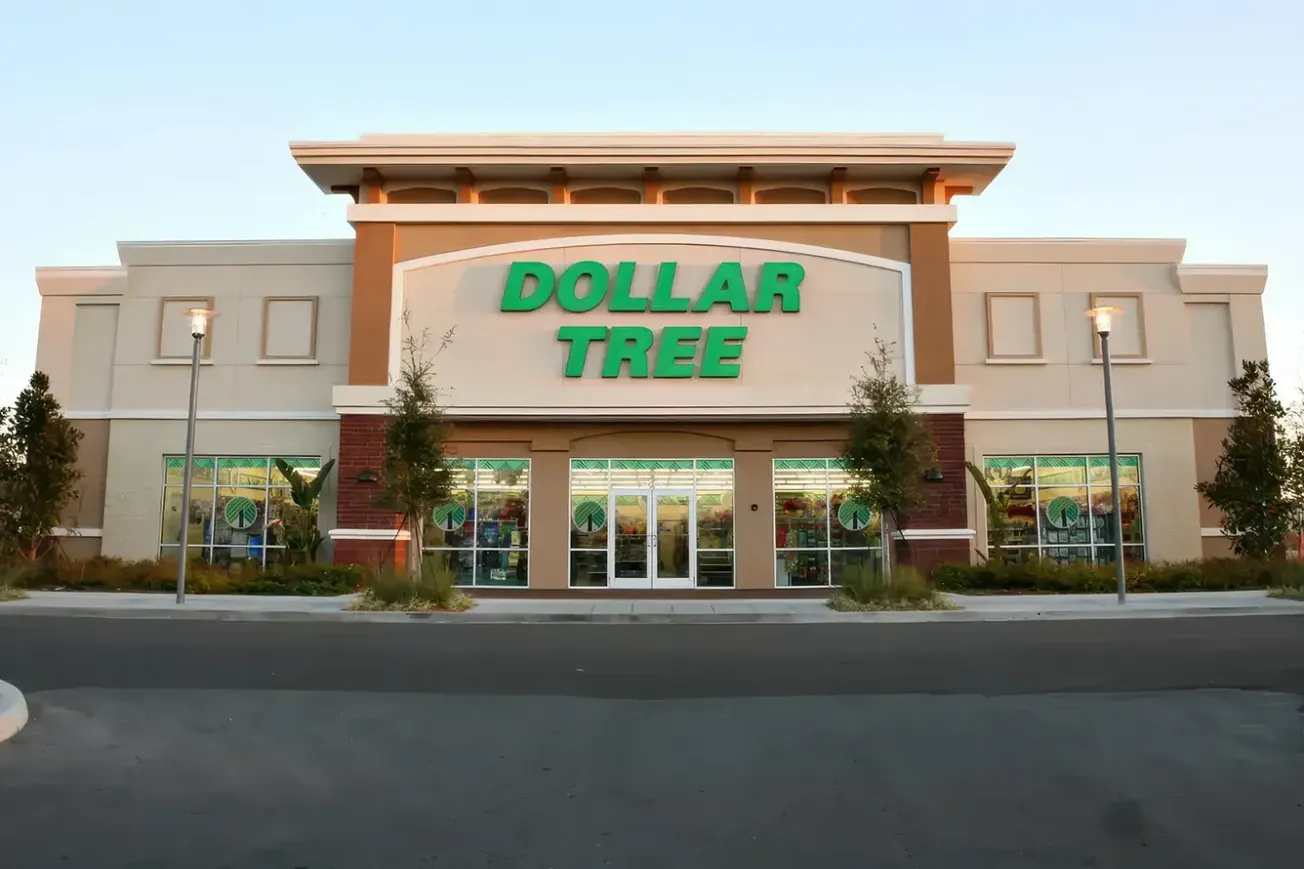
CHESAPEAKE, Va. — Dollar Tree reported first-quarter results that surpassed Wall Street expectations across the board, as the discount retailer's ongoing transformation to a multi-price format continued to pay dividends with consumers still keenly focused on stretching their budgets.
The company posted net sales of $5.0 billion for the quarter, a 7.2% increase from the year-ago period, while comparable store net sales rose 3.5%. Adjusted diluted earnings per share surged 38% to $1.74, clearing the high end of the company's own guidance range. Operating income margin expanded 120 basis points compared to the first quarter of fiscal 2025.
"Our first quarter results reflect continued progress across the business and demonstrate the strength of Dollar Tree's position as the preferred destination for value, convenience, and discovery," said Chief Executive Mike Creedon. "We continued advancing our strategic plan — a more relevant assortment, agile cost management, a stronger customer connection, and new store growth coupled with improved store conditions — all driving operating margin expansion and delivering a strong bottom-line performance."
Multi-Price Push Gains Momentum
At the center of Dollar Tree's growth story is its multi-price initiative, a strategic departure from the single-price-point model the chain built its reputation on over four decades. In the first quarter, the company added or converted approximately 630 stores to the multi-price format, ending the period with roughly 5,900 such locations across its network. The company also opened 113 net new stores during the quarter.
The shift is a calculated bet that offering products at a wider range of price points — while retaining deep value at the low end — will broaden the retailer's appeal and drive larger basket sizes. The strategy appears to be gaining traction in the marketplace, with management pointing to comparable sales growth as evidence that shoppers are responding to the expanded assortment.
Yet Dollar Tree was careful to underscore that its value-first identity remains intact. The company noted that approximately 85% of sales still come from items priced at $2 or below — a figure executives highlighted as central to the brand's promise as it marks its 40th anniversary in 2026.
Operational Improvements Take Hold
Beyond the top-line results, Dollar Tree pointed to meaningful progress on store operations through its G.O.L.D. (Grand Opening Look Daily) initiative, an in-store standards program designed to elevate execution, reduce shrink and improve overall store conditions across the fleet. Management said the program has driven measurable improvements, addressing longstanding concerns from investors and analysts about the chain's in-store experience relative to competitors.
Shrink — the loss of inventory from theft, damage, or administrative error — has been a persistent drag on margins for discount retailers broadly, and Dollar Tree's progress on that front contributed to the quarter's margin expansion.
Capital Returns and Financial Discipline
Dollar Tree deployed $595 million in share repurchases during the first quarter, a signal of management's confidence in the company's financial footing. An additional $98 million in buybacks had already been executed in the current quarter as of the earnings announcement, bringing the cumulative total to nearly $700 million since the fiscal year began.
The pace of capital returns reflects a broader shift in how the company is managing its balance sheet following the completion of its separation from Family Dollar, which was sold earlier this year. Freed from the complexity and underperformance of that banner, Dollar Tree has leaned into sharpening its core business and returning excess capital to shareholders.
Looking Ahead
The results land at a moment of continued uncertainty for the American consumer. Elevated prices across essential categories have kept budget-conscious shoppers gravitating toward value retail, a dynamic that has broadly benefited the discount sector. Dollar Tree's positioning — low price points, convenient neighborhood locations, and a treasure-hunt shopping experience — aligns well with that environment.
Creedon framed the quarter's performance as part of a longer arc. "As we celebrate our 40th anniversary in 2026, we are encouraged by the progress we are seeing across the business and remain focused on making thoughtful investments in our stores, assortment and customer experience — building Dollar Tree to last for decades to come."
With the multi-price rollout still expanding, the G.O.L.D. initiative scaling across the fleet, and a leaner operating structure in place, the company enters the back half of fiscal 2026 with momentum — and, by its own accounting, a much clearer strategic identity than it has had in years.
Dollar Tree, Inc. operates approximately 8,600 stores across 48 states and five Canadian provinces.
Submit Your Press Release
Have news to share? Send us your press releases and announcements.
Send Press Release