
NEW YORK — TCC Global, the global loyalty marketing company that has partnered with more than 120 of the world's leading retailers over the past three decades, today announced the release of its new e-book, Loyalty 3.0 in the Age of Agentic Commerce: Why Emotional Loyalty Becomes the Fourth Dimension and Multiplier of Agentic Grocery Decision-Making.
The report explores how the rapid rise of AI-powered shopping agents is poised to reshape grocery retail and challenges retailers to rethink loyalty strategies before autonomous purchasing becomes mainstream.
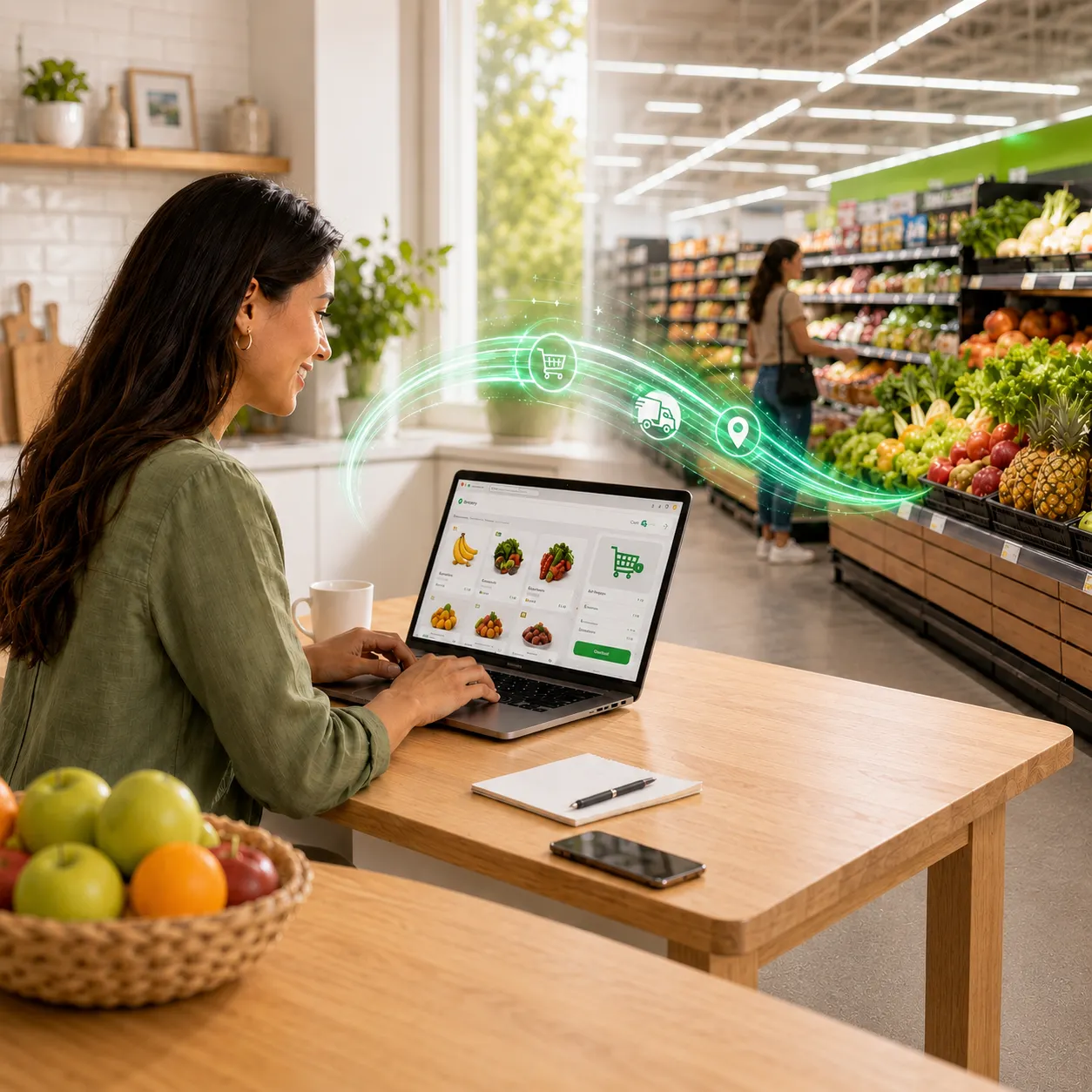
According to the report, AI shopping agents are evolving beyond product discovery and comparison to actively creating and purchasing grocery baskets on behalf of consumers. As these tools become more prevalent, traditional loyalty drivers such as points, discounts and coupons risk losing effectiveness, potentially reducing retailers to fulfillment providers competing primarily on price and convenience.
To address this shift, TCC Global presents a two-track, 18-month framework designed to help retailers prepare for the next phase of commerce.
The first track, Becoming Agent-Ready, focuses on helping retailers make loyalty programs understandable and actionable for AI agents by simplifying loyalty economics, improving product and pricing data quality, building API capabilities, testing subscription models and implementing governance safeguards.
The second track, Building Emotional Defensibility, outlines how retailers can create cultural, aspirational and community-driven loyalty experiences that encourage consumers to direct AI agents toward their preferred retail ecosystems. The report identifies emotional loyalty as a critical new factor in agent-driven decision-making, complementing financial, lifestyle and mission-based considerations.
"AI agents are moving grocery from a world where retailers compete for shopper attention to one where they compete for algorithmic inclusion," said Seb Hill, chief marketing officer at TCC Global. "That's a fundamental shift, and most loyalty programs simply weren't built for it. If your rewards require manual clipping or your pricing logic is inconsistent, an agent won't just ignore it, it will actively route around it."
The e-book highlights growing momentum behind agentic commerce. Morgan Stanley estimates that agentic shoppers could account for between $190 billion and $385 billion in U.S. e-commerce spending by 2030, while industry research cited in the report projects the global AI agent market will expand from $7.8 billion in 2025 to more than $50 billion by 2030.
At the same time, the report notes that grocery retail is particularly vulnerable to disruption because many purchases are frequent, routine and highly price-sensitive, making them ideal candidates for automation.
"The retailers that win in an agentic world will be the ones who treat this as infrastructure, not a marketing campaign," said Julie Lyle, board member at TCC Global. "You have about 18 months to make your loyalty economics computable, your data clean and your pricing logic trustworthy enough for a machine to act on. Wait until agents control a third of the basket, and you're rebuilding under pressure instead of leading from strength."
The report combines analysis of emerging industry initiatives, including AI-powered shopping experiences from retailers such as Albertsons, Walmart and Schnucks, with proprietary TCC research and a five-stage framework that maps the progression of consumer trust in AI-assisted shopping. The publication also introduces new metrics designed for the agentic era, including "share of baskets AI-assisted" and "loyalty prompt preference rate," along with case studies demonstrating how emotional loyalty can influence purchasing decisions.
Additional findings cited in the report include:
- 55% of consumers would welcome AI automatically reordering household items when supplies run low.
- 64% are open to receiving AI-generated brand recommendations.
- 43% of retailers are already piloting autonomous AI agents, while another 53% are evaluating potential use cases.
- In-store shopping still accounts for approximately 80% of U.S. grocery purchases, underscoring the continued importance of physical retail experiences.
Loyalty 3.0 in the Age of Agentic Commerce is available as a free download at www.tccglobal.com.