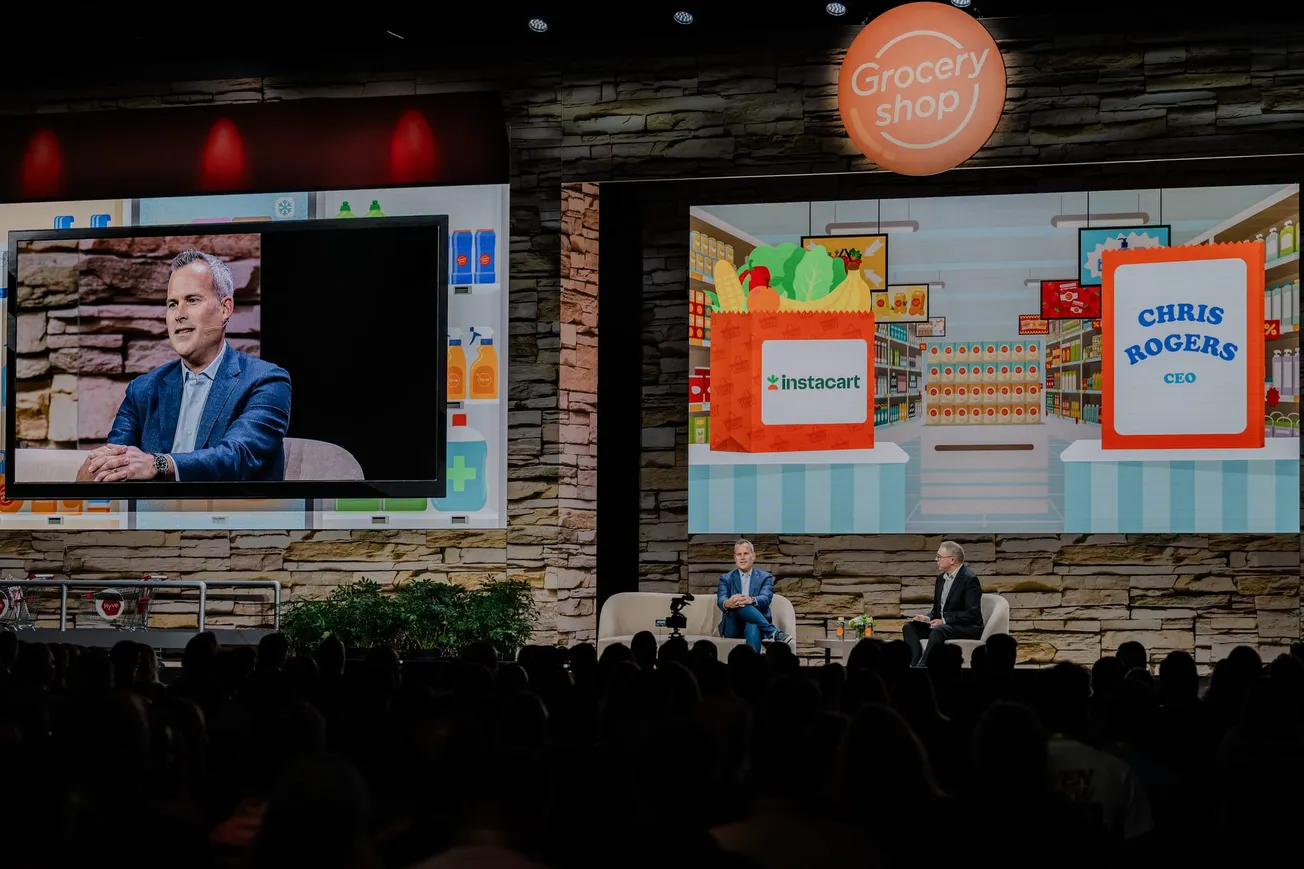


LAS VEGAS — The average U.S. food retailer runs on a net profit margin of about 2.1%, according to FMI, and independent grocers average 1.9%. At Groceryshop 2026, Brendan Witcher, Global VP of Product and Content at Shoptalk & Groceryshop, presented Groceryshop's Grocery Industry Outlook, Hot Items on Today's Grocery List. He argued that margins this thin leave no room for guesswork as GLP-1s, retail media and Al reshape the industry.
"That 2% is why those in the grocery industry must be smarter and more purposeful about the decisions they make than the average retailer," said Witcher. "Grocery's next competitive advantage won't come from any single technology or trend. It will come from how effectively retailers connect them."
Do you have a plan for a greater GLP-1 impact?
According to a June 2026 study by PwC, GLP-1 adoption has more than doubled in 16 months. Users now live in 21% of US households, up from 9%, and 54% have been taking the drugs for more than a year.
In households with at least one user, grocery spending falls 5.3% within six months, and 8.2% in higher-income homes. (Source: AMA - Journal of Market Research)
Yet, according to Shoptalk 2026 Grocery Pulse Survey (Aug. '26), only 17% of grocery executives expect GLP-1s to cut top-line sales by 5% to 10% over the next five years, and just 2% expect a bigger hit. With 72% of US adults overweight and 40.2% classed as obese, Witcher warned the impact could be far greater than the industry expects.
"Brands are already starting to market to GLP-1 users on their packaging, and Walmart is advertising in its stores that it's the source for 'all your GLP-1 needs," said Witcher. "Retailers with pharmacy services, like Walmart, Albertsons and CVS, may have an advantage."
Is your retail media built for a shopper who's cutting back?
80% of Americans are trying to cut spending, and 28% are actively cutting back on groceries, according to Bain & Company. Of those, 49% are buying fewer items, 56% are trading down to cheaper brands and 44% are leaning harder on discounts.
"Retail media gives grocers a way to respond to each of those behaviors," said Witcher. "You can suggest higher-margin items to protect profit, lower-priced brands to keep the number of items in each trip up, and discounted items to protect the average order value."
According to Shoptalk's Grocery Pulse Survey (Aug 26'), 58% of brand executives expect placement on grocers' websites, apps and in-store displays to matter significantly more over the next one to five years.
Are your associates ready for Al?
Grocery leaders are more positive about Al than most Americans. 64% of Americans worry Al will displace jobs, according to Anthropic. But Shoptalk's survey says 85% of grocery executives expect store associates to become customer advisors, product specialists or experience managers as Al removes or reduces their tasks. 92% say Al-enabled mobile devices for associates are important, rising to 97% among grocers.
"Employees will evolve into shopper experience specialists," said Witcher. "That means grocers and brands will need to rethink, reprioritize and retrain for how employees interact with shoppers, helping them find and compare products, understand ingredients and discover new products they haven't tried before. Shoppers already use their phones to look up product information and reviews and to load coupons. Associates should have those same tools if grocers want to meet shoppers' expectations for service."