
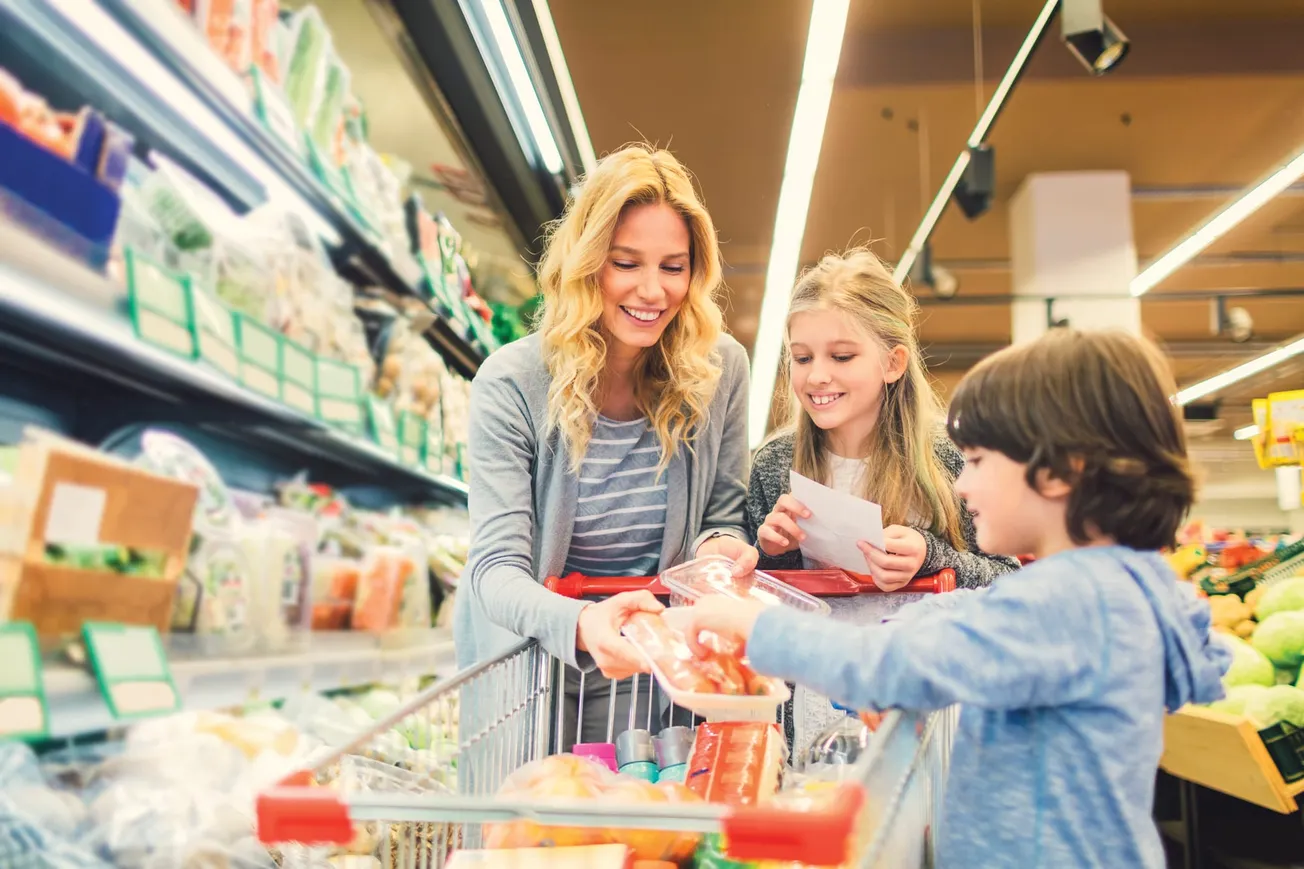
As families transition from the relaxed pace of summer to the structure of the school year, grocery budgets are coming under renewed scrutiny. With the return of packed lunches, after-school snacks and nightly family meals, shoppers are increasingly searching for ways to stretch their food dollars while maintaining healthy eating habits.
According to Jordan Schenck, chief executive officer of Flashfood, September has emerged as a key behavioral reset point for consumers, rivaling the New Year as a time when households reassess spending habits and routines.
“September really replicates New Year resolution behavior for consumers,” Schenck said. “Summer is usually a time when routines slack a little bit. Vacation disrupts the usual schedule, meals can be last-minute, and people may be eating out more. Fall is about resetting those routines and healthy habits so they can last through the holiday season.”
That reset is happening against the backdrop of ongoing grocery inflation. Schenck noted that grocery prices remain roughly 33% higher than they were in 2019, creating new pressure on family budgets as back-to-school expenses pile up.
“It’s not just the spend for back-to-school shopping,” Schenck said. “You’ve suddenly got lunches to pack, snacks to buy and dinner to figure out every night.”
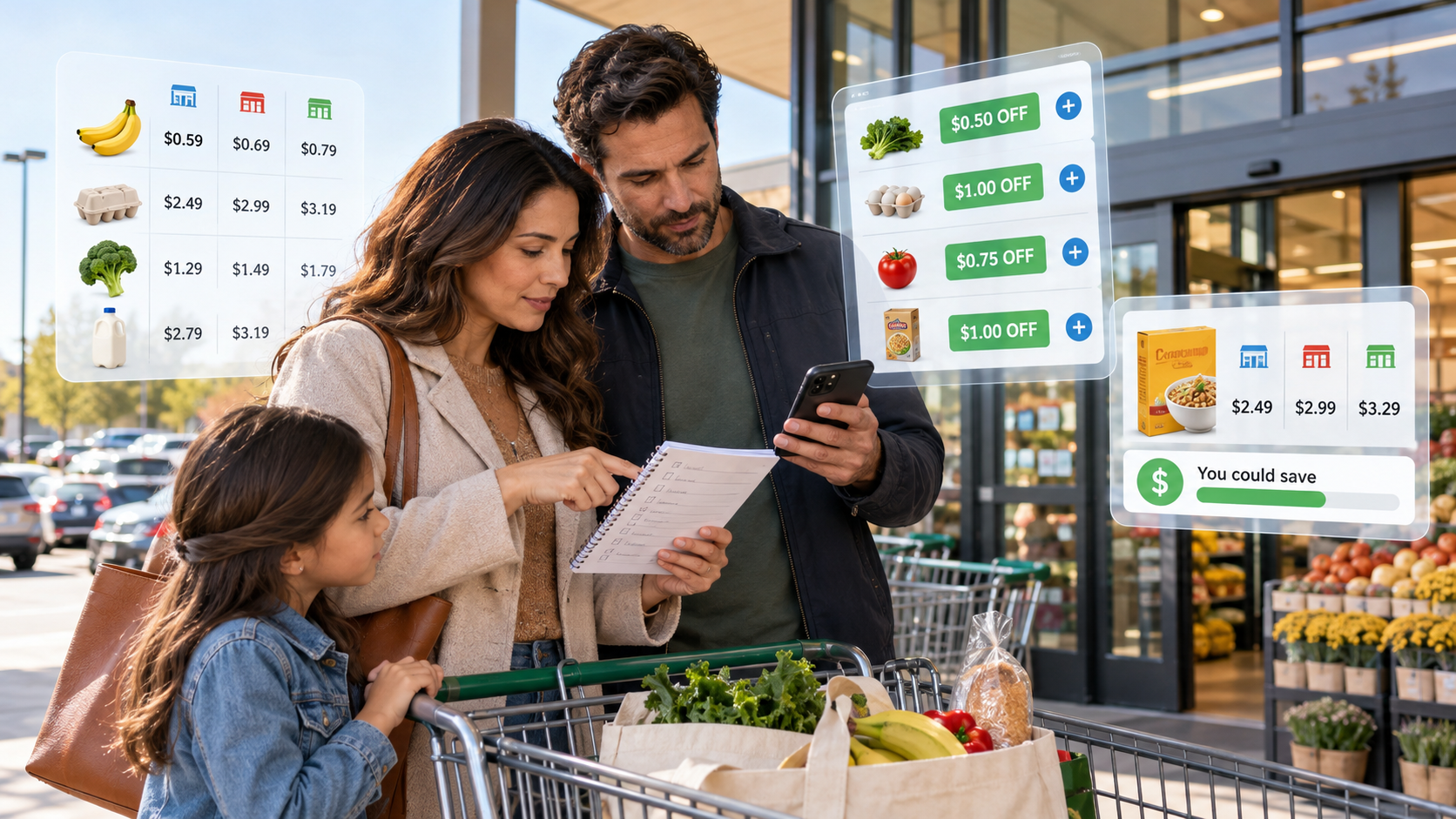
As a result, shoppers are becoming more intentional about where and how they spend money on groceries. Flashfood, a platform that connects consumers with discounted food nearing its best-by date at participating retailers, saw significant engagement during last year’s BTS season. More than 170,000 Flashfood shoppers collectively saved $13 million during the period.
Looking for Value And Nutrition
“From lunch boxes to lunchrooms, families are looking for meals that deliver both value and nutrition. But value doesn’t necessarily mean the lowest price. For many parents and caregivers, it means getting something that feels worth the cost, and our research suggests that health and quality are important parts of that calculation,” said Natalie Martini, vice chair of Deloitte and U.S. retail and consumer products leader.
She noted that the price of school lunch is a top concern for parents and caregivers. “Based on our 2026 Deloitte Back-to-School Survey, 50% of caregivers said the cost of lunch on school days this year will likely be higher than last year’s. And even though data from our school lunch index shows only a moderate upswing, that trend may not hold through the year. Over the next few months, production pressures such as higher diesel and fertilizer costs may work their way through the supply chain to consumers.”
Martini said whether their kids eat the cafeteria’s daily special or from a lunch box (and what goes into that box) is inherently an economic call for many parents, especially when the cost of groceries is 26% higher than it was five years ago across major U.S., cities, according to Bureau of Labor Statistics data. To assess how things are looking for the school year ahead, the Deloitte school lunch index tracked four years of lunch-related food and beverage prices (see chart on next page).
She noted that kids’ dietary preferences and needs vary widely, so the index evaluates prices for five lunch types: classic with a peanut butter and jelly sandwich, contemporary with a chicken and avocado quesadilla, salad with hummus and pretzels, convenience with a meat and cheese lunch kit, and, new for 2026, protein in the form of a popular bowl-style lunch.
She added that since healthy brown bag lunches get their start at the grocery store, another way to measure the influence of new health trends and guidelines is consumers’ willingness to pay. Half (50%) of consumers say they’d pay an average of 7% more at the grocery checkout for food products reformulated to remove artificial dyes, additives and ultra-processed ingredients or have added ingredients like protein. The survey also indicates that grocers that have pledged to reformulate their private label offerings could sway a similar 50% of shoppers to choose their store over competitors.
“For grocers, food companies and school meal providers, there is an opportunity to make healthier meals convenient, affordable and appealing. Families want more fresh food, more protein and fewer highly processed options, and they indicate a willingness to pay more when those improvements are tangible. Bringing together health, taste and convenience can help providers demonstrate value beyond price,” Martini concluded.
Returning to More Staple Food Categories
Schenck said his company is also seeing a return to staple food categories as families settle into school-year routines. “We do see people returning to those core basket items that can make a healthy meal: protein, produce and dairy,” Schenck said.
According to Flashfood shopper data, 70% of users report that using the platform has improved the healthiness of their diets. The company also found that 60% of shoppers are eating more protein, while 65% say they are consuming more fruits and vegetables.
The search for savings is no longer limited to budget-conscious households. Schenck said value-seeking behavior now spans nearly every income bracket.
“What’s changed is that now shoppers across the full spectrum of incomes are seeking value,” he said. “The vast majority of people are shopping for discounts and deals.”
That trend is evident in shopper behavior on the Flashfood platform, where many users check inventory multiple times each week, and in some cases multiple times each day, to find savings opportunities.
For retailers, this heightened value consciousness presents both challenges and opportunities. Grocers face increasing competition from a wide range of retailers while simultaneously trying to preserve brand equity and customer loyalty.
“Grocers are seeing increased competition from other retailers and pressure to figure out how to create value without eroding their brand in-store,” Schenck said. “Flashfood is unique in that we’re able to support brand building and loyalty while moving food that might otherwise go to waste.”
As consumers head into the fall season, affordability remains the dominant theme. Families continue to look for savings on everyday essentials rather than altering what they buy altogether.
To support new users during the seasonal reset, Flashfood is offering a fall promotion. First-time shoppers can use the code FRESHSTART to receive $6 off their first Flashfood order of $10 or more.
With BTS routines firmly under way and consumers increasingly focused on getting more value from every grocery trip, fall is shaping up to be one of the year’s most important shopping seasons for retailers and grocery savings platforms alike.According to Jordan Schenck, chief executive officer of Flashfood, September has emerged as a key behavioral reset point for consumers, rivaling the New Year as a time when households reassess spending habits and routines.
“September really replicates New Year resolution behavior for consumers,” Schenck said. “Summer is usually a time when routines slack a little bit. Vacation disrupts the usual schedule, meals can be last-minute, and people may be eating out more. Fall is about resetting those routines and healthy habits so they can last through the holiday season.”
That reset is happening against the backdrop of ongoing grocery inflation. Schenck noted that grocery prices remain roughly 33% higher than they were in 2019, creating new pressure on family budgets as back-to-school expenses pile up.
“It’s not just the spend for back-to-school shopping,” Schenck said. “You’ve suddenly got lunches to pack, snacks to buy and dinner to figure out every night.”
As a result, shoppers are becoming more intentional about where and how they spend money on groceries. Flashfood, a platform that connects consumers with discounted food nearing its best-by date at participating retailers, saw significant engagement during last year’s BTS season. More than 170,000 Flashfood shoppers collectively saved $13 million during the period.
Looking for Value And Nutrition
“From lunch boxes to lunchrooms, families are looking for meals that deliver both value and nutrition. But value doesn’t necessarily mean the lowest price. For many parents and caregivers, it means getting something that feels worth the cost, and our research suggests that health and quality are important parts of that calculation,” said Natalie Martini, vice chair of Deloitte and U.S. retail and consumer products leader.
She noted that the price of school lunch is a top concern for parents and caregivers. “Based on our 2026 Deloitte Back-to-School Survey, 50% of caregivers said the cost of lunch on school days this year will likely be higher than last year’s. And even though data from our school lunch index shows only a moderate upswing, that trend may not hold through the year. Over the next few months, production pressures such as higher diesel and fertilizer costs may work their way through the supply chain to consumers.”
Martini said whether their kids eat the cafeteria’s daily special or from a lunch box (and what goes into that box) is inherently an economic call for many parents, especially when the cost of groceries is 26% higher than it was five years ago across major U.S., cities, according to Bureau of Labor Statistics data. To assess how things are looking for the school year ahead, the Deloitte school lunch index tracked four years of lunch-related food and beverage prices (see chart).
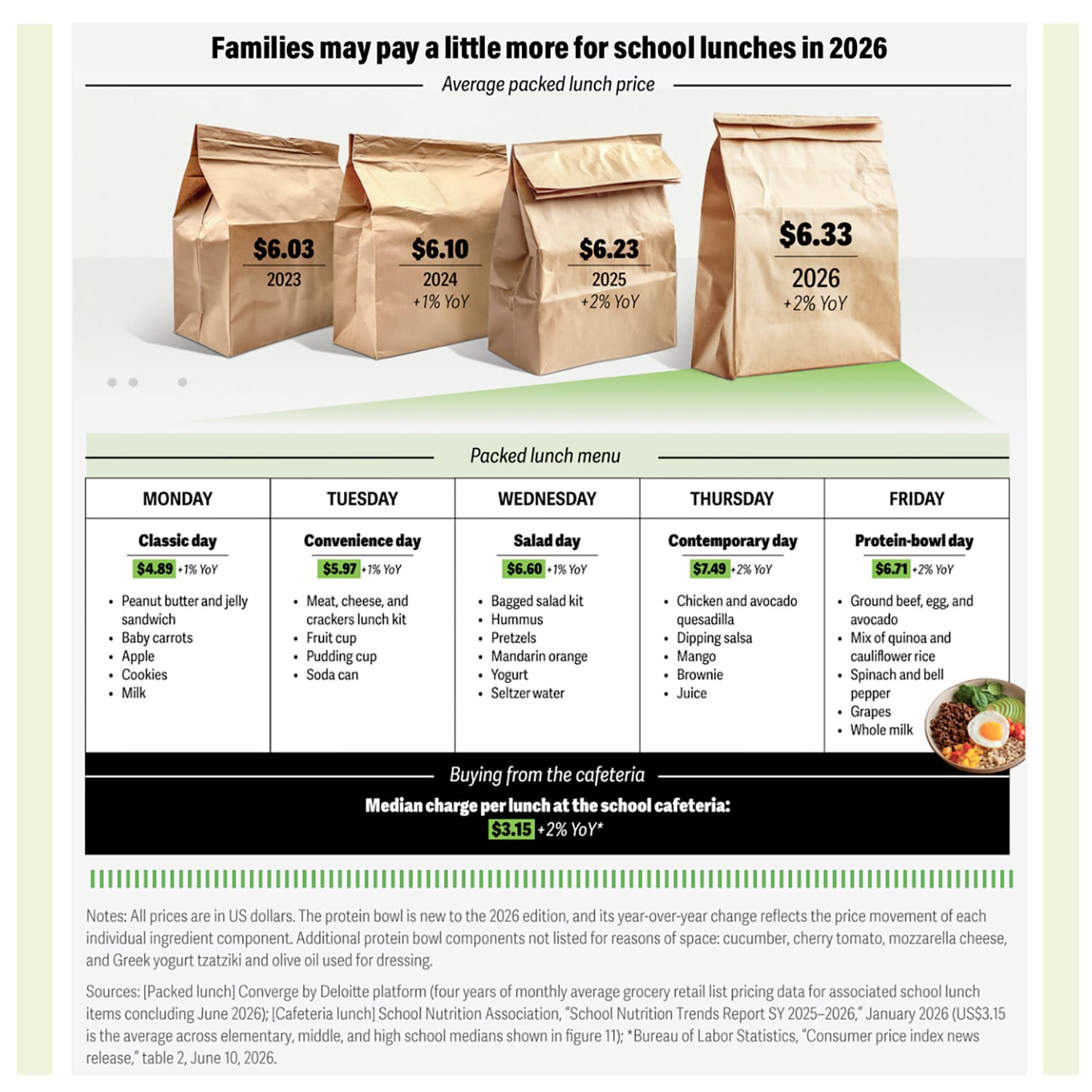
She noted that kids’ dietary preferences and needs vary widely, so the index evaluates prices for five lunch types: classic with a peanut butter and jelly sandwich, contemporary with a chicken and avocado quesadilla, salad with hummus and pretzels, convenience with a meat and cheese lunch kit, and, new for 2026, protein in the form of a popular bowl-style lunch.
She added that since healthy brown bag lunches get their start at the grocery store, another way to measure the influence of new health trends and guidelines is consumers’ willingness to pay. Half (50%) of consumers say they’d pay an average of 7% more at the grocery checkout for food products reformulated to remove artificial dyes, additives and ultra-processed ingredients or have added ingredients like protein. The survey also indicates that grocers that have pledged to reformulate their private label offerings could sway a similar 50% of shoppers to choose their store over competitors.
“For grocers, food companies and school meal providers, there is an opportunity to make healthier meals convenient, affordable and appealing. Families want more fresh food, more protein and fewer highly processed options, and they indicate a willingness to pay more when those improvements are tangible. Bringing together health, taste and convenience can help providers demonstrate value beyond price,” Martini concluded.
Returning to More Staple Food Categories
Schenck said his company is also seeing a return to staple food categories as families settle into school-year routines. “We do see people returning to those core basket items that can make a healthy meal: protein, produce and dairy,” Schenck said.
According to Flashfood shopper data, 70% of users report that using the platform has improved the healthiness of their diets. The company also found that 60% of shoppers are eating more protein, while 65% say they are consuming more fruits and vegetables.
The search for savings is no longer limited to budget-conscious households. Schenck said value-seeking behavior now spans nearly every income bracket.
“What’s changed is that now shoppers across the full spectrum of incomes are seeking value,” he said. “The vast majority of people are shopping for discounts and deals.”
That trend is evident in shopper behavior on the Flashfood platform, where many users check inventory multiple times each week, and in some cases multiple times each day, to find savings opportunities.
For retailers, this heightened value consciousness presents both challenges and opportunities. Grocers face increasing competition from a wide range of retailers while simultaneously trying to preserve brand equity and customer loyalty.
“Grocers are seeing increased competition from other retailers and pressure to figure out how to create value without eroding their brand in-store,” Schenck said. “Flashfood is unique in that we’re able to support brand building and loyalty while moving food that might otherwise go to waste.”
As consumers head into the fall season, affordability remains the dominant theme. Families continue to look for savings on everyday essentials rather than altering what they buy altogether.
To support new users during the seasonal reset, Flashfood is offering a fall promotion. First-time shoppers can use the code FRESHSTART to receive $6 off their first Flashfood order of $10 or more.
With BTS routines firmly under way and consumers increasingly focused on getting more value from every grocery trip, fall is shaping up to be one of the year’s most important shopping seasons for retailers and grocery savings platforms alike.