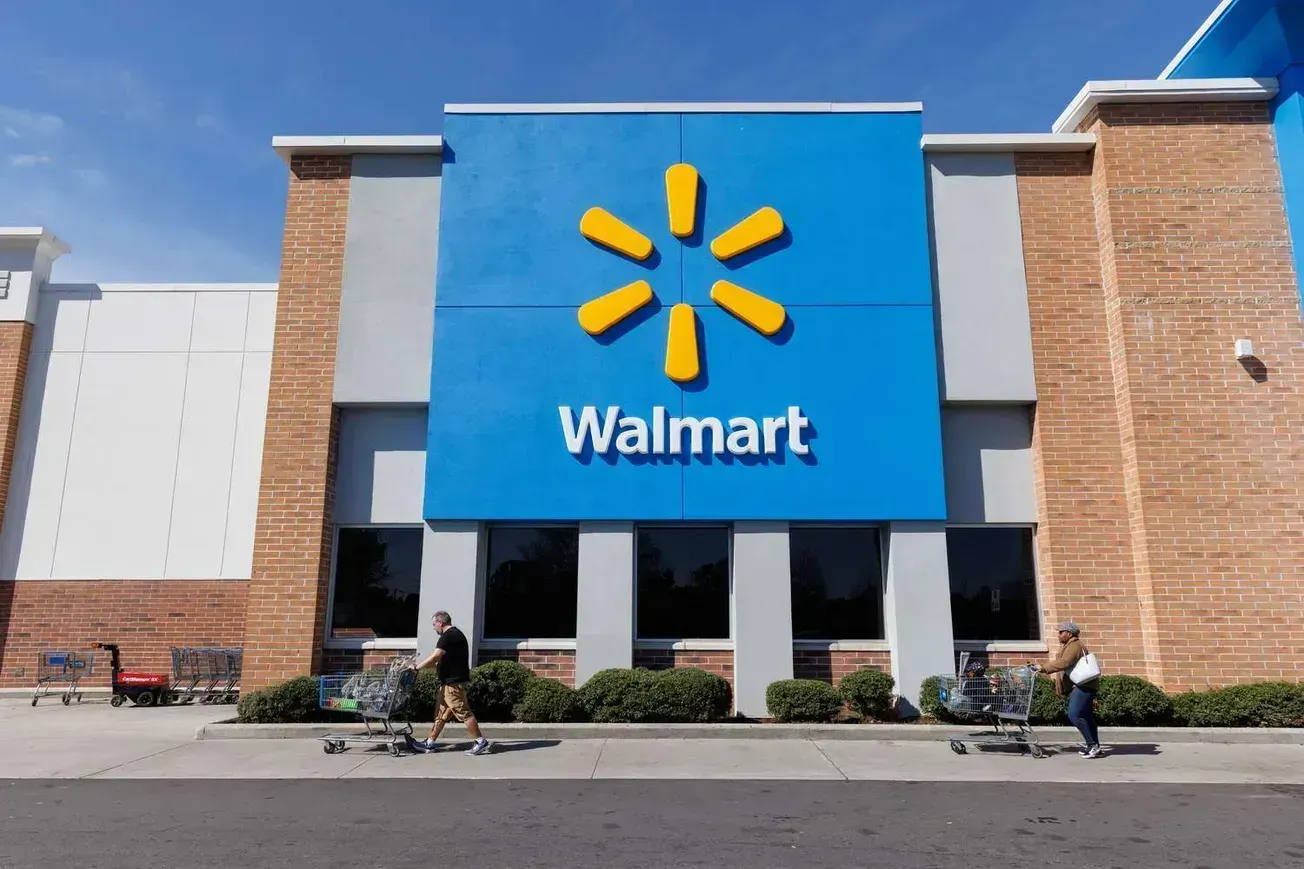


NEW YORK — A wave of private-label activity across the retail industry in recent months signals a structural shift in how store brands are built, marketed and scaled. At the center of that shift is Walmart, whose evolving private-brand strategy is helping shape the broader market’s direction.
The company’s latest move, a sweeping redesign of its Great Value brand, is the most visible example. The update, spanning nearly 10,000 SKUs, focuses on clearer packaging, improved shelf navigation and a more cohesive visual identity. It marks the first full refresh in more than a decade and underscores Walmart’s repositioning of private label as both a value driver and a brand experience.
 MMR
MMR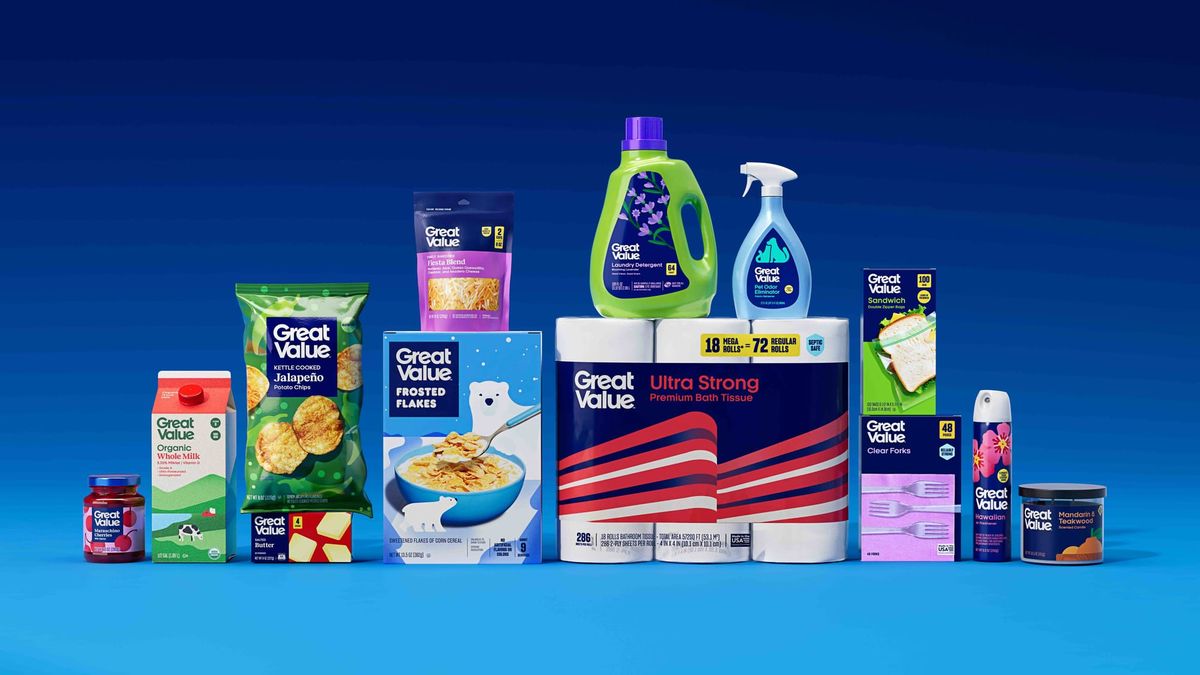
But the redesign is only one part of a broader strategy that has been unfolding over the past year.
Walmart has also undertaken one of the most extensive private-brand reformulation efforts in the industry, committing to remove synthetic dyes and dozens of other ingredients from its food portfolio by 2027. The initiative, which affects brands including Great Value and Marketside, reflects rising consumer demand for transparency and cleaner labels and signals that product standards are becoming a competitive differentiator.
Taken together, those moves illustrate a multi-layered approach. Walmart is upgrading how its brands look, what they contain, and how they are positioned, all while maintaining its core price advantage.
The rest of the industry is moving in a similar direction, though often on a smaller scale.
Recent coverage has highlighted Hannaford’s packaging refresh across its private-label portfolio to improve shopability and reinforce quality messaging. The redesign emphasizes clearer product descriptions and more consistent branding across categories, mirroring Walmart’s focus on navigation and clarity.
Thorvardur de Shong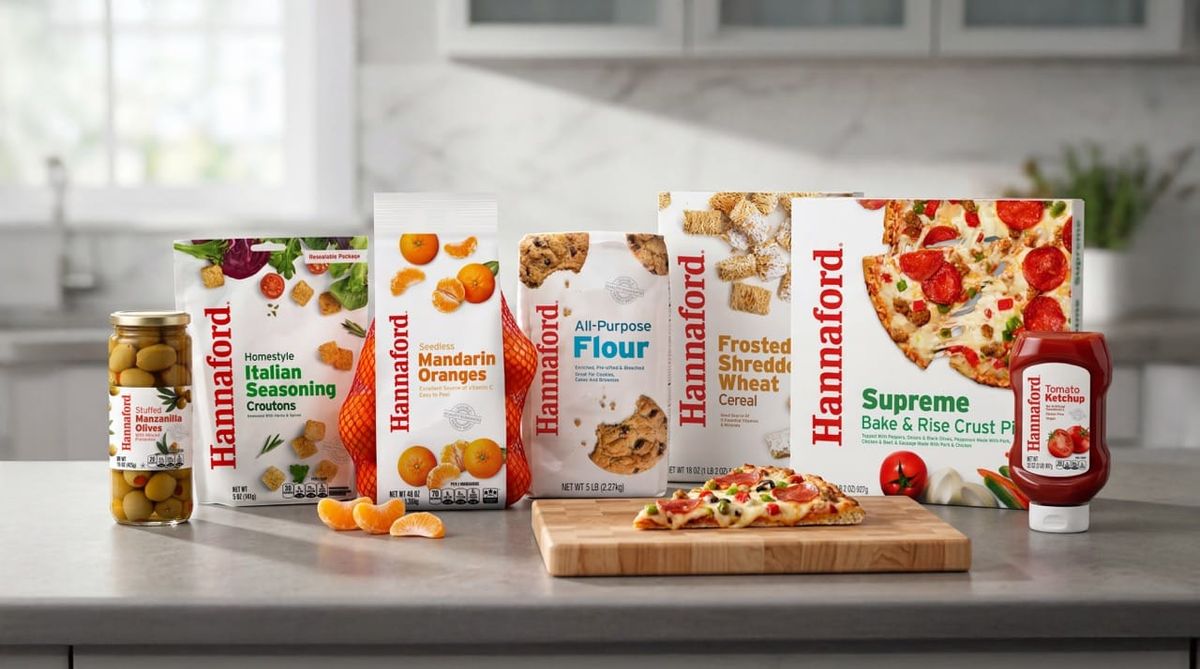
Meanwhile, Aldi has doubled down on its private-label-first model, rolling out a systemwide packaging overhaul that prominently displays its name across products. With more than 90% of its assortment already private label, Aldi is leaning into brand recognition as a core differentiator.
Thorvardur de Shong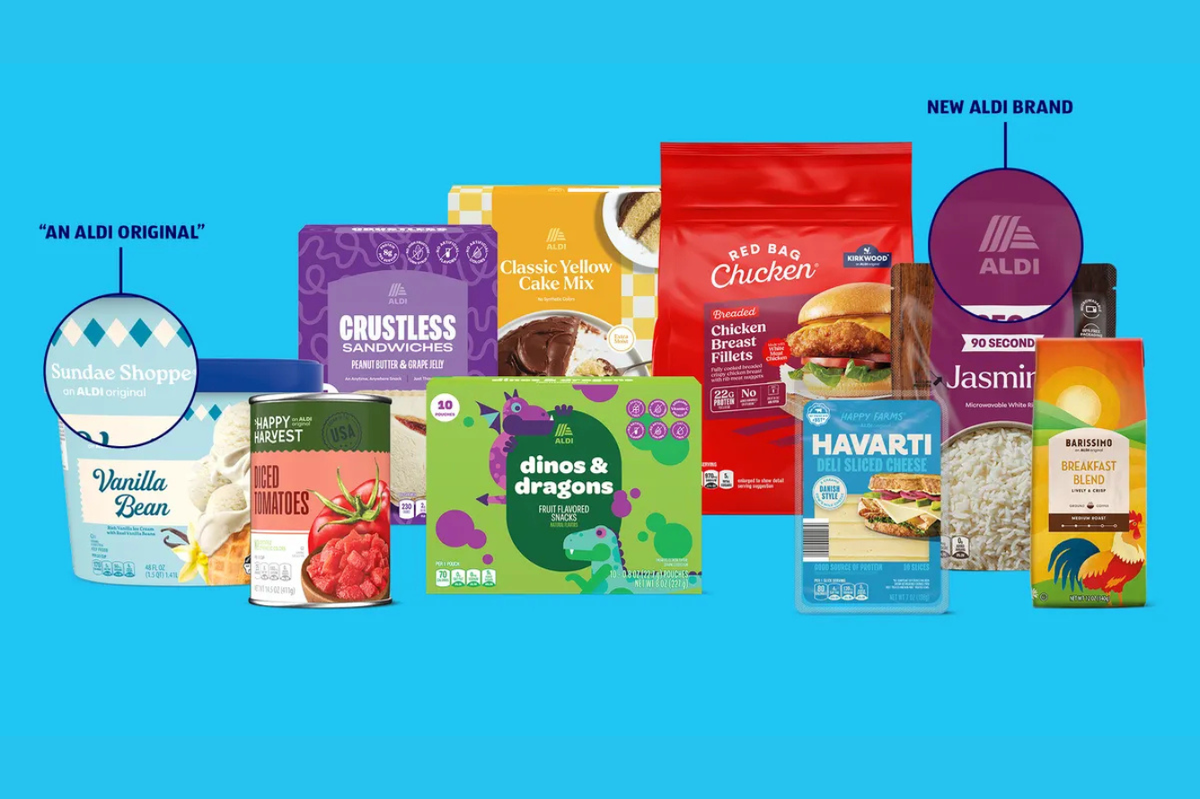
Natural grocer Fresh Thyme Market is taking yet another approach, relaunching its Own Brand portfolio with a curated “better-for-you” focus. The strategy centers on eliminating more than 100 unwanted ingredients and expanding natural and organic assortments, underscoring how wellness and ingredient transparency are becoming central to private-label development.
Thorvardur de Shong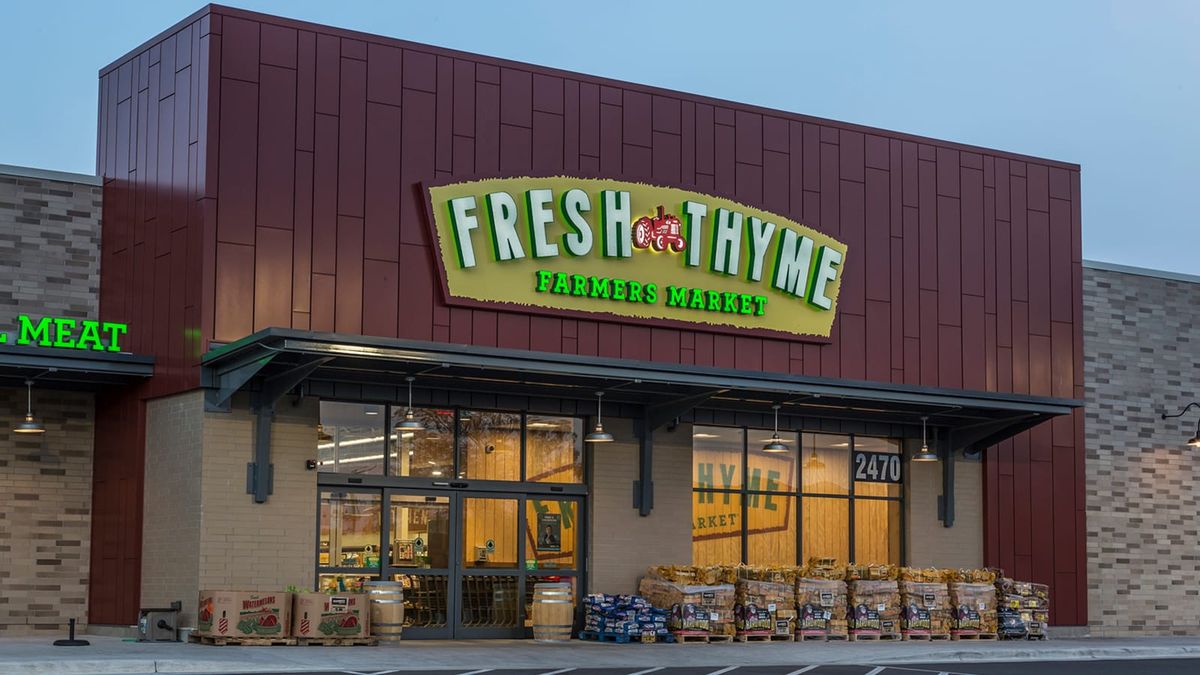
Underlying these moves is sustained category growth. According to the Private Label Manufacturers Association, U.S. store-brand sales reached a record $282.8 billion in 2025, outpacing national brands and continuing a multi-year trend of share gains. Over the past five years, private-label dollar sales have increased by 30%, and unit share has also reached record levels.
“Store brands are outperforming national brands across the U.S., growing faster, expanding share, and delivering record-setting sales results,” said Peggy Davies, president of PLMA.
MMR
For Walmart, that growth environment raises the stakes. Great Value already reaches nine out of 10 U.S. households, giving the retailer unmatched scale. The challenge now is not only to maintain price leadership but also to strengthen brand equity in a market where competitors are investing heavily in design, quality and differentiation.
That is where Walmart’s size becomes both an advantage and a constraint. While regional players can move quickly with curated assortments or targeted innovation, Walmart’s changes must work across thousands of items and millions of shoppers. The current redesign reflects an effort to build a system that can scale while continuing to improve the customer experience.
The result is a clear industry throughline. Private label is no longer a secondary offering positioned primarily on price. It is increasingly a portfolio of brands competing on quality, transparency, design, and trust.
Walmart’s recent moves suggest that even at the largest scale, retailers are recalibrating to that reality. As others follow with their own updates, the competitive landscape for store brands is shifting from price comparisons to full brand comparisons, with implications across the entire retail sector.
Submit Your Press Release
Have news to share? Send us your press releases and announcements.
Send Press Release