
As consumers continue to navigate a high-cost environment, the definition of value is evolving. While price remains important, shoppers are increasingly looking for products that deliver tangible benefits, whether through health and wellness, convenience, quality or transparency.
According to Chris Costagli, vice president of Thought Leadership, Food & Non-Alcoholic Beverage Insights at NIQ, retailers and brands that focus solely on low prices risk missing the larger shift under way.

“The most important value driver is justification, not price,” Costagli said. “It’s in the relationship between price and the justification for price that value is found. Consumers are asking, ‘What am I getting in return?’ ”
Value Goes Beyond the Price Tag
Costagli said several factors are helping shoppers justify premium purchases.
Health and wellness benefits remain among the strongest drivers. Consumers are increasingly willing to spend more on products that provide recognizable benefits such as protein, functional ingredients and better-for-you formulations.
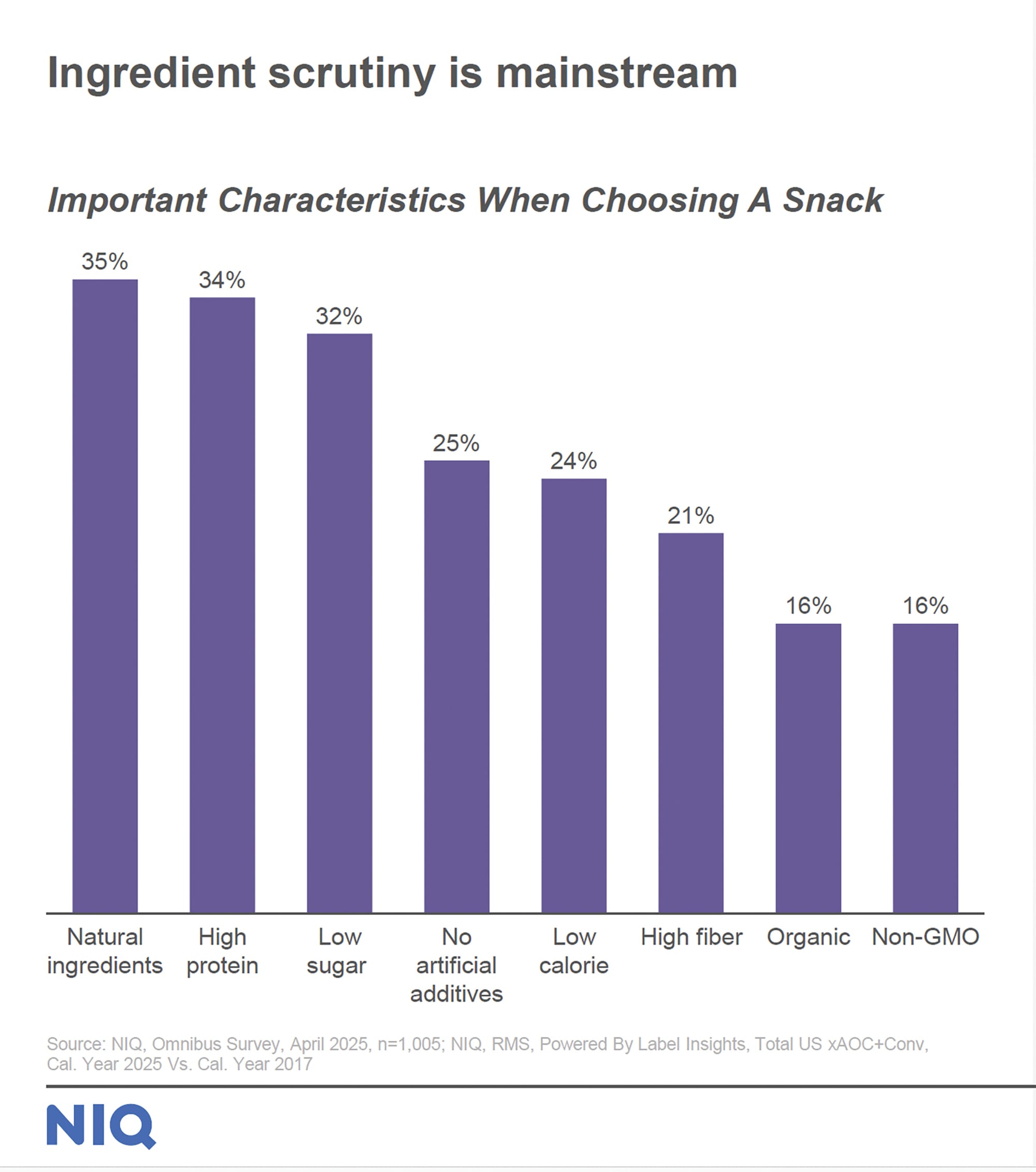
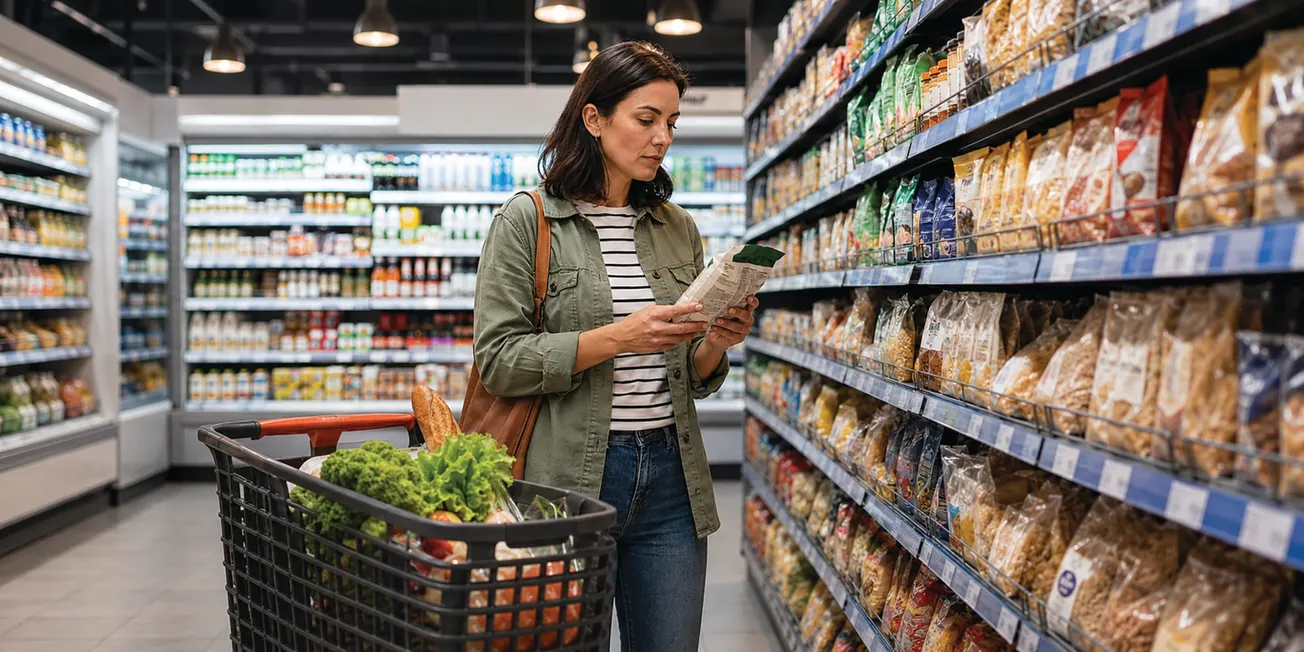
Trust and transparency are also becoming critical differentiators. Shoppers are paying closer attention to ingredient lists, sourcing practices and product claims, driven in part by social media and AI-powered product comparison tools. Brands that communicate clearly about what is in their products are earning credibility with increasingly informed consumers.
Convenience continues to carry significant value as well. Products that save time, reduce waste, improve portability or simplify meal preparation often resonate with consumers regardless of price.
At the same time, shoppers are demanding clear evidence of quality and performance.
“Higher prices are far more acceptable when consumers believe quality has improved,” Costagli noted. “Many shoppers feel products have become smaller, reformulated or more expensive without a corresponding increase in value.”
The Rise of Curated Assortments
Retailers are responding by rethinking how assortments are presented and personalized.
Rather than simply expanding product selections, many retailers are moving toward curation, particularly in digital environments. As online grocery platforms become more sophisticated, consumers can increasingly tailor the digital shelf around individual priorities such as health, protein, convenience, value or ingredient transparency.
“The real shift is happening online,” Costagli said. “Winning products won’t just be available; they’ll be the products that earn a place in a shopper’s personalized view of the shelf.”
Food as Medicine Gains Momentum
Health continues to influence purchasing decisions across nearly every grocery department. Costagli sees consumers shifting from a “food as fuel” mindset toward a “food as medicine” approach.
Today’s shoppers increasingly seek products that support specific goals, including digestive health, satiety, healthy aging, weight management and overall wellness.
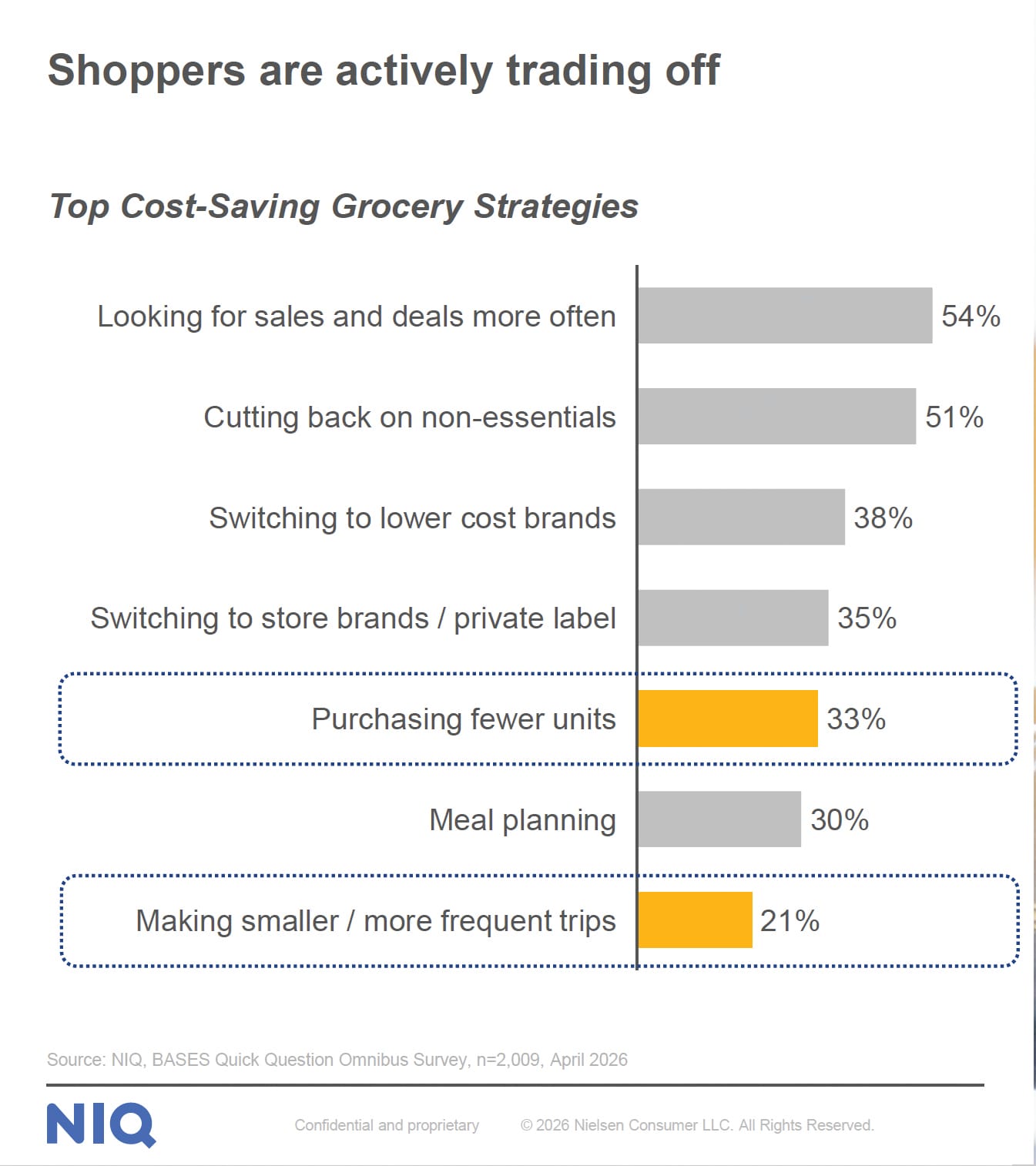
Protein and fiber have emerged as particularly powerful purchase drivers because consumers readily understand their benefits. Costagli added that growing adoption of GLP-1 medications is accelerating demand for foods that deliver greater nutritional utility.
“We’re seeing consumers gravitate toward products that help them accomplish something,” he said.
Private Label Continues to Evolve
Private label’s growth story is no longer solely about affordability.
According to Costagli, years of innovation, premiumization and quality improvements have transformed private brands into destination products in many categories.
“Private label has outgrown its role as a budget substitute,” he said. “For many consumers, private labels aren’t a trade down.”
Among the fastest-growing private label food and beverage super-categories, according to NIQ’s Total U.S. Full View + Convenience data for the 52 weeks ended June 16, 2026, are:
• Performance nutrition (+21%)
• Fruit snacks (+16%)
• Packaged coffee (+15%)
• Baking staples (+10%)
• Yogurt (+10%)
These categories are succeeding because they provide wellness benefits, convenience and functionality at attractive price points.
National Brands Must Innovate
As consumers become more comfortable switching between national brands and store brands, differentiation has become more important than ever.
Costagli believes innovation will be the primary path forward for national brands, particularly through what he describes as “benefit stacking” — combining multiple consumer-desired attributes within a single product.
Consumers increasingly want products that deliver a range of benefits simultaneously, including protein, fiber, digestive support, cleaner ingredients and convenience.
Bringing all of those elements together while maintaining taste and product quality requires expertise that many national brands are uniquely positioned to deliver.
“That combination is often much harder to replicate,” Costagli said. “It creates an opportunity for national brands to differentiate through innovation that delivers a more complete value proposition.”
Beverage Growth Reflects Consumer Priorities
Beverages remain one of the strongest-performing grocery categories, benefiting from several consumer trends at once.
Functional beverages increasingly serve as platforms for protein, hydration, fiber and other wellness benefits. At the same time, they are becoming snack alternatives for consumers seeking portion control and calorie management.
“As food purchasing becomes more centered on utility and food as medicine, beverages are emerging as one of the most efficient ways for consumers to get multiple benefits from a single product,” Costagli said.
Fresh Departments Offer a Competitive Edge
For retailers looking to drive growth through the remainder of 2026, Costagli points to fresh departments as a major opportunity.
Many of today’s most influential consumer trends — wellness, protein consumption, ingredient transparency and “food as medicine” — naturally align with fresh foods.
“The retailers outperforming today are often the ones that have doubled down on fresh,” he said.
Because fresh departments sit at the intersection of health, value and utility, they also provide opportunities for differentiation that are difficult for competitors to duplicate.
Online Grocery Becomes More Intentional
Although online grocery still represents a relatively small portion of total grocery sales, it continues to gain traction.
Convenience remains a key driver, but consumers are increasingly leveraging digital platforms to shop more intentionally. Online environments make it easier to compare prices, evaluate promotions, search for specific product attributes and build baskets around personal goals.
Costagli believes emerging AI tools, health scores and personalization features will further accelerate adoption by helping shoppers dynamically curate assortments that align with their priorities.
At the same time, online grocery supports broader consumer efforts to manage spending, reduce impulse purchases and support health goals.
Online and In-Store Serve Different Missions
Rather than competing directly, online and physical grocery channels increasingly serve different shopping needs.
Online shopping tends to be highly intentional, with consumers focused on replenishment, budgeting and health-oriented decision-making. Digital tools make it easy to compare options and filter products according to specific needs.
In contrast, physical stores continue to excel at discovery, inspiration and fresh-food experiences.
“The biggest difference is that online shopping tends to be more intentional, while in-store shopping remains more exploratory,” Costagli said. “Consumers are increasingly using each channel differently depending on what they’re trying to accomplish.”
The Bottom Line
As grocery shopping continues to evolve, retailers and brands face a marketplace where value means far more than low prices. Consumers increasingly reward products that deliver measurable benefits, greater convenience, trusted ingredients and superior experiences.
For more of Chris' commentary and industry analysis, please visit NIQ's North America Thought Leadership site, where his latest reports are published regularly: North America Thought Leaders - NIQ